











![[FA] SIT One SITizen Alumni Initiative_Web banner_1244px x 688px.jpg](/sites/default/files/2024-12/%5BFA%5D%20%20SIT%20One%20SITizen%20Alumni%20Initiative_Web%20banner_1244px%20x%20688px.jpg)
A chemical engineering internship might conjure up images of working in a plant on Jurong Island. But Ilyas Fergo spent a year in a Thai city he never heard of, and came back with a research paper, a TV appearance and a clearer sense of what engineering can really do.
Nakhon Pathom. A quick search told Ilyas Fergo it was a city west of Bangkok. What it didn't tell him was that he would spend the next year there — researching seaweed-based materials, contributing to a published paper, and eventually pitching the technology on Thai television.
It was not the internship journey the recent Chemical Engineering graduate once imagined. The discipline is often associated with large-scale plants and process engineering, but Fergo was always more keen on discovering how new materials could move from the laboratory into the hands of users. When the opportunity came to join Nano Onions, a Thai startup developing sustainable materials and products, he took it.
Over the following year, Fergo conducted research and testing to improve RiceWave™, a seaweed-based straw, focusing on incorporating plant-derived nanofibrillated cellulose into the company's resin formulations to strengthen the product and extend its shelf life. The work contributed to a paper published in the Thai Journal of Nanoscience and Nanotechnology. It also opened doors he hadn't anticipated — representing Nano Onions at Sustainable Expo 2025 and on Win Win War Thailand, a startup competition series on Thai television.
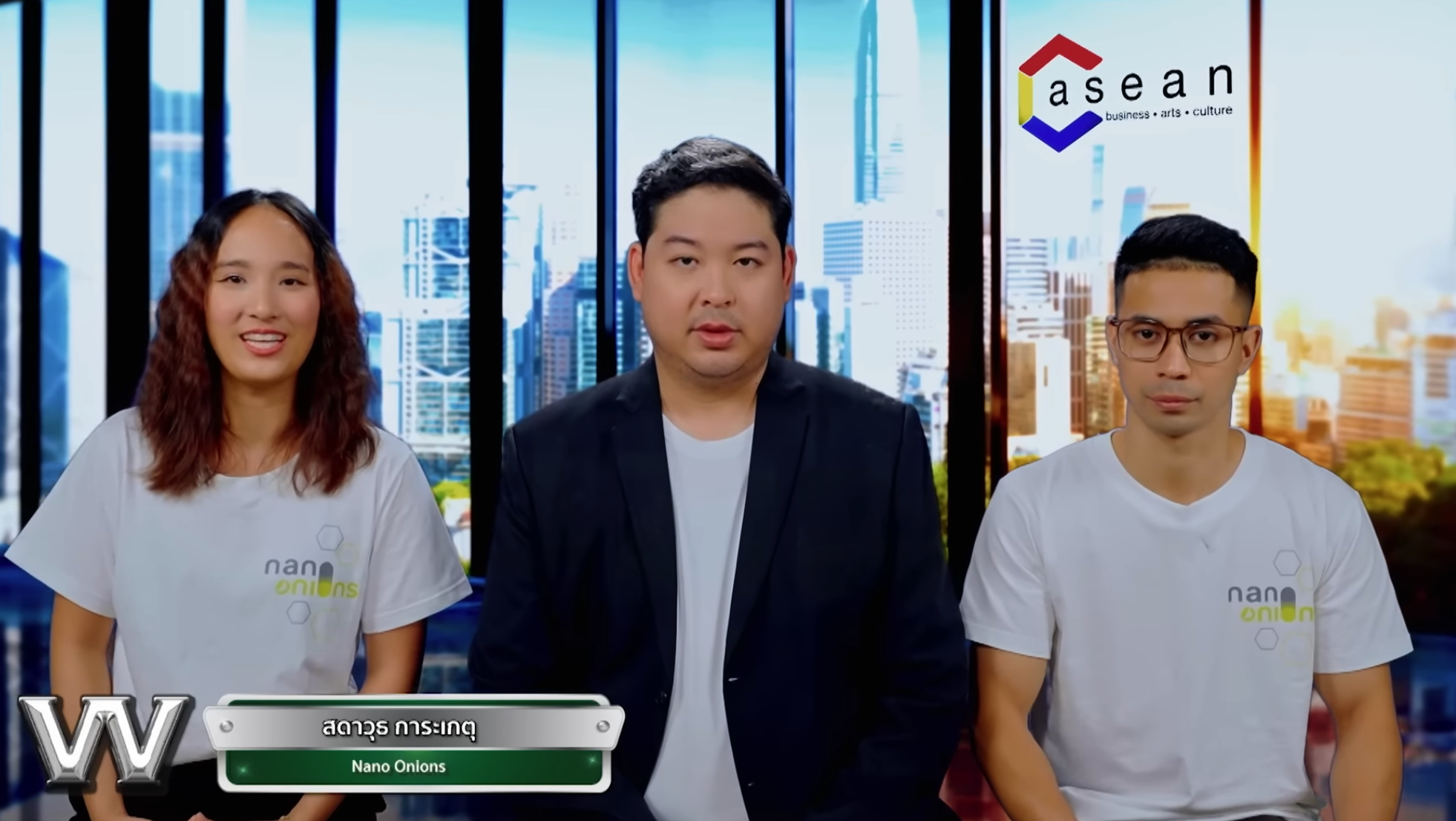
Ilyas Fergo (1st from right) represented Nano Onions on Win Win War Thailand Season 7, pitching the startup’s seaweed-based alternative to plastic alongside the team.
"Going from conducting research in the laboratory to communicating the technology publicly was a very different experience, and it helped me understand that developing a product is only one part of innovation," reflects the recent Class of 2026 graduate.
All of this happened during Fergo’s year-long Overseas Integrated Work Study Programme (OIWSP) as part of his direct-honours Chemical Engineering degree programme jointly offered by SIT and Technical University of Munich (TUM).
Fergo chalks up his achievements during the year to one thing: adapting to new challenges. Though he had always been interested in sustainability since his polytechnic days, leaving for an internship in a country he had never set foot in took a big leap of faith.
“But knowing my internship would span a whole year, I felt motivated to experience what it was like to work in a different environment and culture,” he says.
Learning to Operate Without a Playbook
At Nano Onions, based at Silpakorn University in Nakhon Pathom, Fergo was involved in researching new and improved resin formulations, conducting experiments, analysing material properties and troubleshooting challenges during product development.
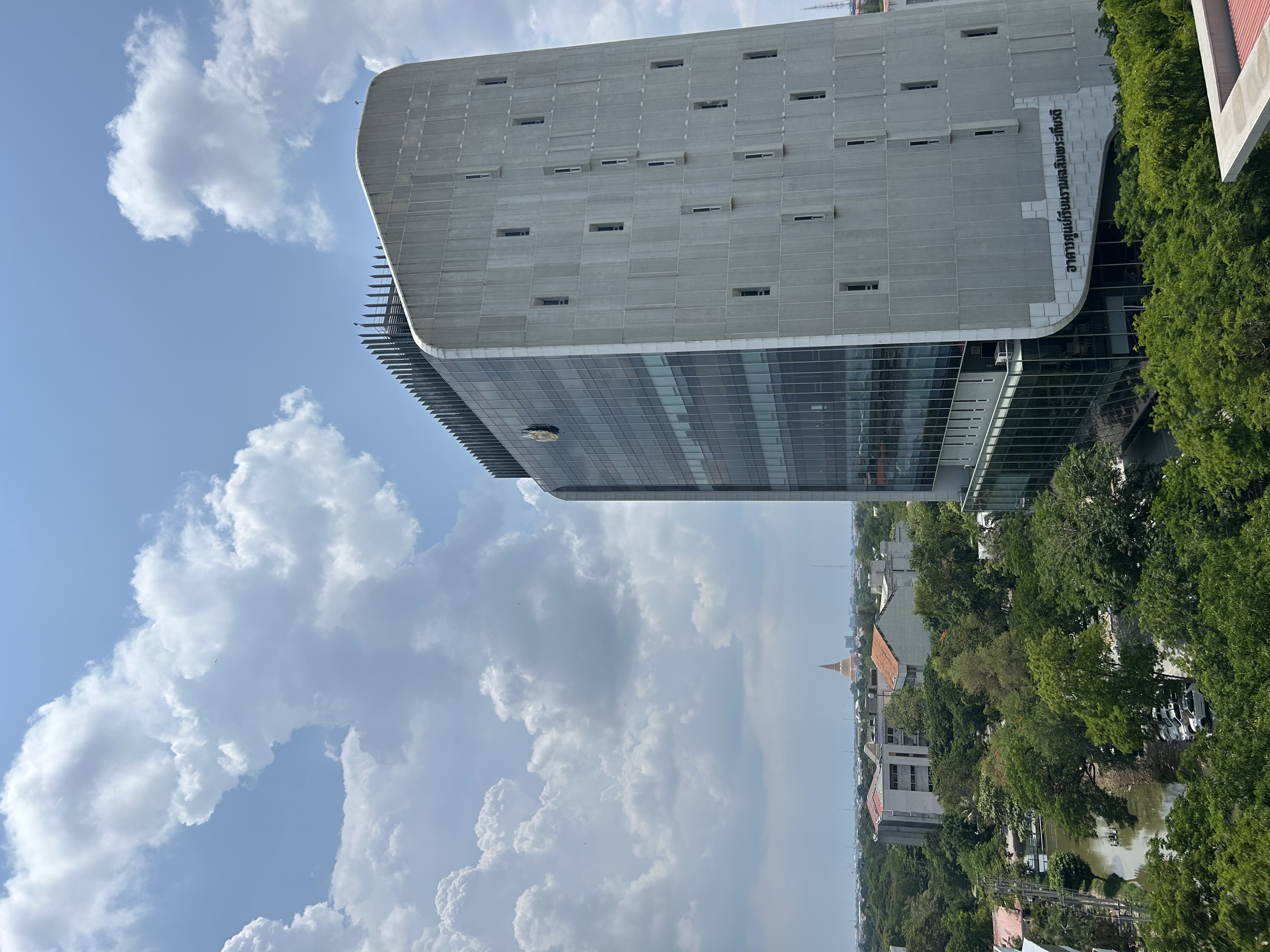
Silpakorn University in Nakhon Pathom, where he conducted research on seaweed-based resin formulations during his year-long OIWSP.
As the only intern involved with resin improvement, one of Fergo’s first lessons was learning how to work with uncertainty. “At school, experiments are often structured around a known objective and methodology. Here, I figured things out independently instead of following step-by-step instructions, which stretched my capabilities and confidence.”
“Drawing from classroom learnings and observations, I learnt how to formulate hypotheses, design experiments, interpret imperfect results and decide what to try next,” adds Fergo.
Not every formulation produced the improvement the team hoped for. Yet even unsuccessful trials helped reveal the material system’s limitations and strengthened Fergo’s ability to troubleshoot and interpret negative results.
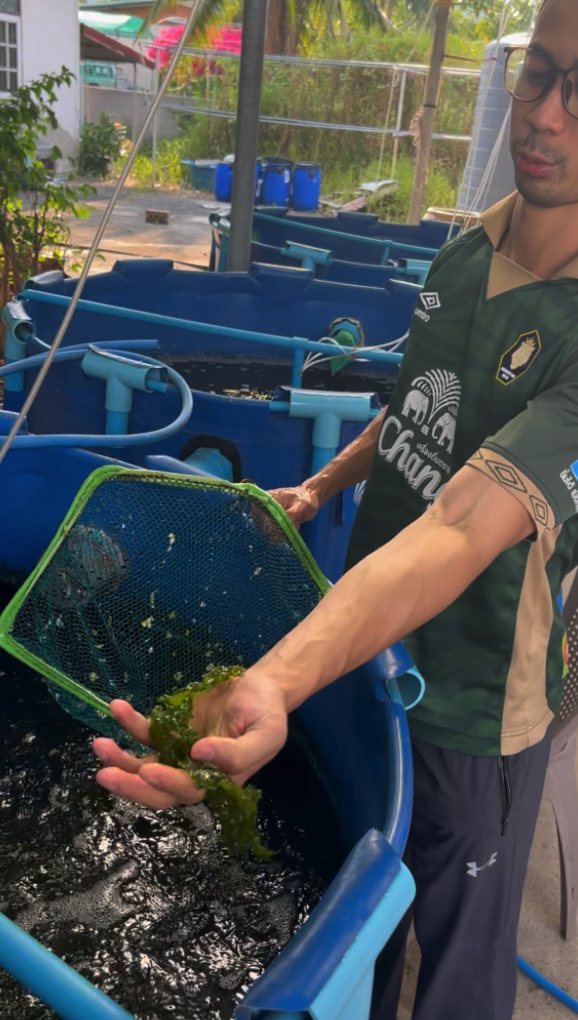
Ilyas Fergo examining seaweed cultivated for use in sustainable materials and products during his OIWSP with Nano Onions.
Ilyas Fergo pitching the potential of Nano Onions’ seaweed-based materials to potential investors.
The adaptability he picked up extended beyond the lab bench. Life in an early-stage startup meant that job boundaries were fluid. Depending on what the company needed, Fergo undertook varying roles in experiments, technical documentation, market research, lead generation, roadshows, university visits and even pitch presentations.
“My experience showed me that engineers can contribute beyond purely technical roles. Technical knowledge can become more valuable when combined with commercial and communication skills,” he shares.
Finding his Footing in Unknown Land
Outside of work, Fergo lived independently in the quieter city of Nakhon Pathom. He sourced his own accommodation and adjusted to a place he had never visited before. The biggest and most inevitable hurdle was cross-cultural communication. But Fergo gamely rose to the challenge.
“I learnt the Thai language mixing with the locals through playing football, café-hopping and going on motorbike tours. I even attempted to sing a Thai song at a local karaoke bar near my condo,” he muses.
By immersing himself in life in Nakhon Pathom, Ilyas Fergo picked up Thai, formed friendships with locals and gained an experience of Thailand beyond that of a tourist.
Technical discussions at work were trickier but Fergo overcame language barriers by slowing down, “I became more patient and proactive. Instead of assuming that someone understood what I meant, I learnt to clarify, ask questions and explain technical concepts in simpler ways.”
Over time, Fergo found himself getting more comfortable navigating unfamiliar situations and adept at switching up his communication style depending on who he was working with. “It’s a very useful skill because workplaces today are increasingly international.”
The OIWSP experience also opened Fergo’s eyes to the breadth of opportunities within chemical engineering. “Chemical engineering can also play an important role in materials development, biotechnology, sustainability, product development and the circular economy," explains Fergo who is now open to a future career overseas should the opportunity arise.
By the end of his internship, Fergo was proudly describing himself as a "Singaporean farang of Nakhon Pathom" — a foreigner who had made the city his own. The friends, the language, the motorbike tours, the karaoke. He had arrived not knowing where Nakhon Pathom was. He left knowing it well enough to call it home.
“OIWSP wasn’t simply an opportunity to gain work experience overseas. It challenged me in many ways and made me apply what I had learnt in university to problems where there was no obvious answer. Growth happens when you are placed in situations where you have to adapt.”
Curious about where engineering can take you beyond the conventional path? Learn more about the SIT-TUM Bachelor of Engineering with Honours in Chemical Engineering.