







![[FA] SIT One SITizen Alumni Initiative_Web banner_1244px x 688px.jpg](/sites/default/files/2024-12/%5BFA%5D%20%20SIT%20One%20SITizen%20Alumni%20Initiative_Web%20banner_1244px%20x%20688px.jpg)
A former SIT Electrical Power Engineering student who now has a successful career in AI, Dr Sam Li Weixian guides the next generation of SIT students as part of its Alumni Mentoring Programme.
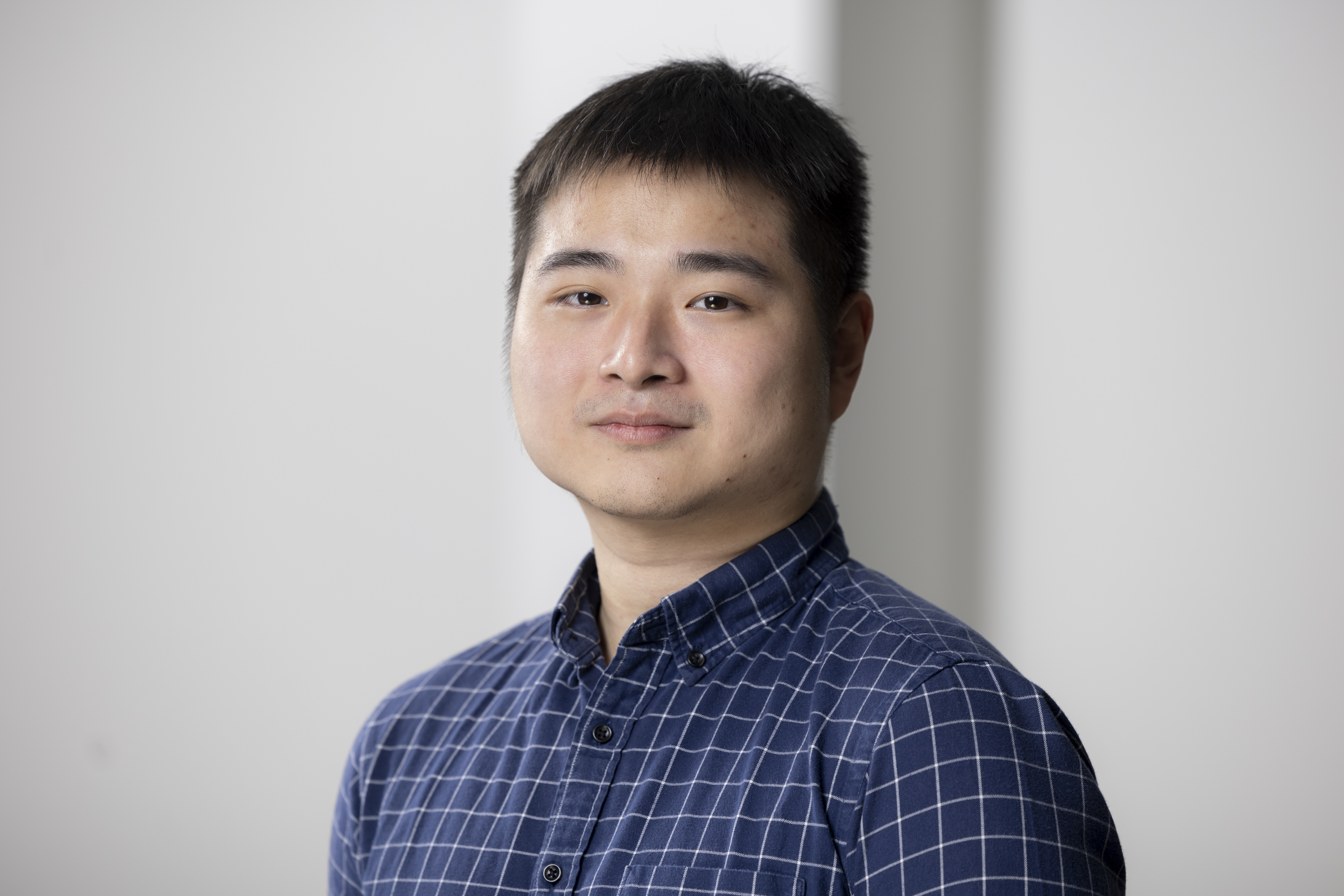
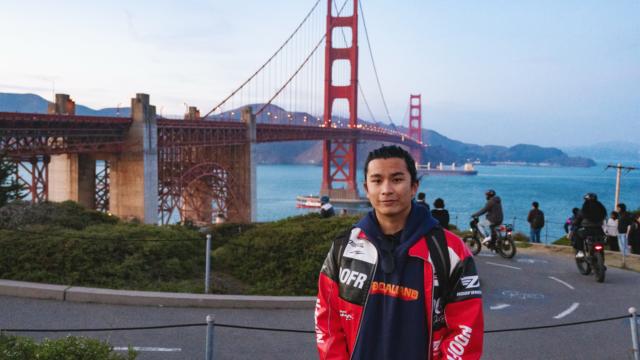
Dr Sam Li (Class of 2015), Director of Artificial Intelligence at Temus and SIT Alumni Mentor. (Photo: Sam Li)
It is yet another weekday afternoon at the food court of the Singapore Institute of Technology (SIT) when Dr Sam Li Weixian meets engineering student Gerald Low, an SIT-Newcastle University’s Mechanical Design and Manufacturing Engineering graduate from the Class of 2023, after his classes. The conversation flowed — about school, friends and family, and life after university.
Dr Li listens encouragingly. After all, he has been in Gerald’s shoes, grappling with the same post-graduation anxieties. Today, Dr Li is one of SIT’s over 390 Alumni Mentors, sharing life experiences with his juniors.
It helps that his own career pathway is one of many turns. Today, Dr Li is Director of Artificial Intelligence (AI) at Singapore digital transformation solutions provider Temus. He holds several AI patents and has authored over 13 peer-reviewed international research papers. He has also delivered keynote speeches at numerous conferences, including the CloudxDC Summit, MoEngage Growth Summit and IEEE Region 10 Conference (TENCON). But the road here was anything but straight.
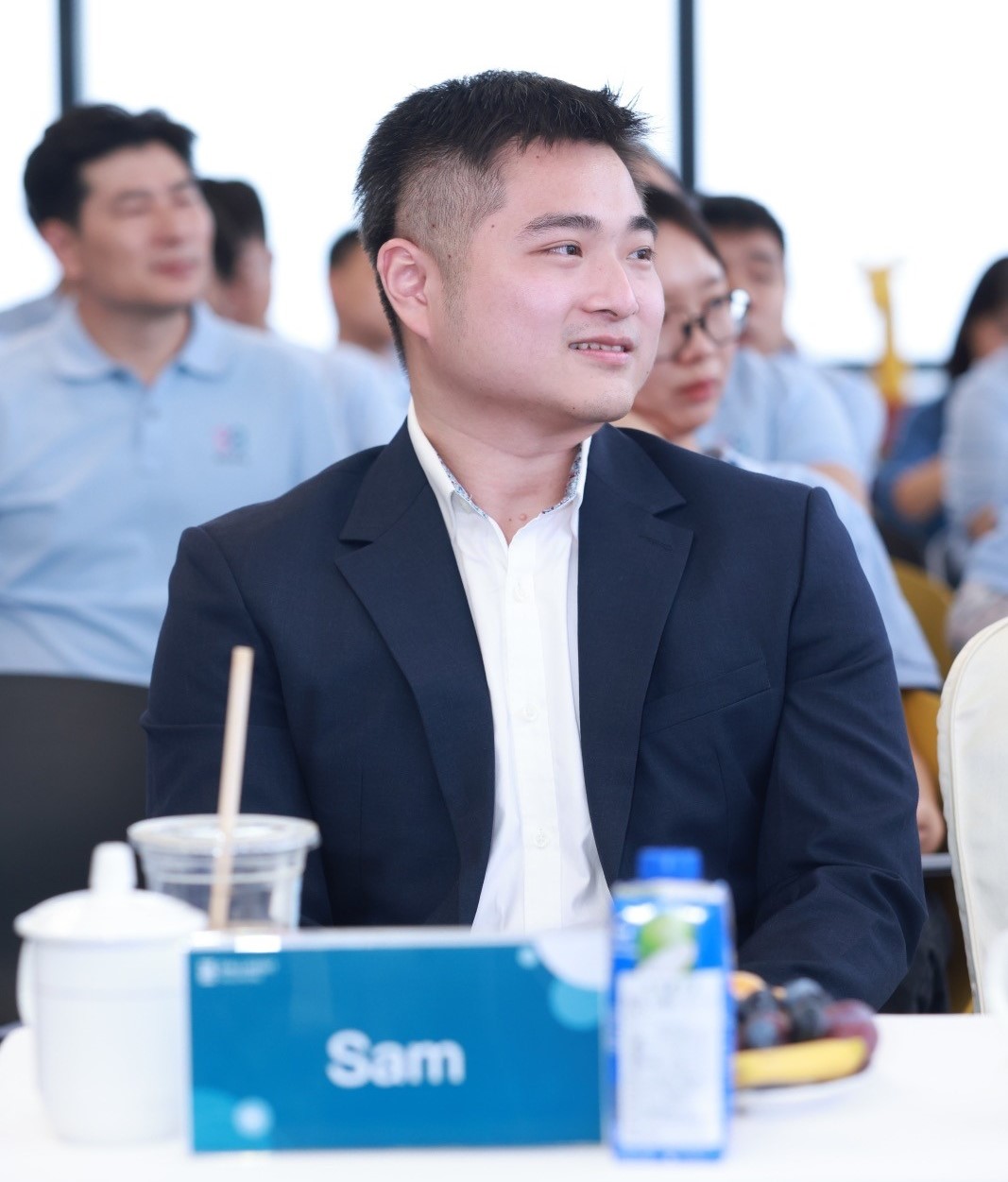
Sam Li at an industry event. (Photo: Sam Li)
An Unplanned Career Pivot
“I didn’t plan to go into AI,” admitted Dr Li, 35. “It was an accident.”
Having graduated from SIT-Newcastle University’s Electrical Power Engineering programme in 2015, he began working as an electrical engineer at A*STAR, focusing on electricity distribution challenges. But as the systems grew more complex, so did the questions he wanted to answer.
He began experimenting with algorithms to optimise processes. A colleague introduced him to what was then called “data mining” or “pattern recognition” — long before “artificial intelligence” became a buzzword.
“I was just trying to solve a problem,” he recalled. “The tool happened to be machine learning.”
That moment ended up reshaping the trajectory of his career. He soon realised the relevance of machine learning and AI in industries across banking, healthcare, manufacturing, and pharmaceuticals, going on to build experience at global technology firms including Autodesk, Dell Technologies, and Hewlett Packard Enterprise.
But it was his time at SIT that truly prepared him to pivot.
A Firm Foundation
Dr Li still remembers his first day of orientation, when a lecturer told his cohort, “This is the place where you are allowed to make mistakes.”
“For me, that was very powerful,” he said. “It gave me the courage to try new things without being paralysed by fear.”
That mindset saw him through his time at SIT, in and out of the classroom. As a founding member and later president of the Aikido club, Dr Li learned how to communicate professionally, manage stakeholders, and build something from the ground up.
Working closely with staff and faculty showed him what professionalism looked like in practice. “You learn accountability, discipline, and respect,” he said. “Those are things I still carry with me today.”
Another defining experience came through SIT’s overseas immersion programme to Newcastle, United Kingdom. It was his first time in Europe, and it opened his eyes to how far the world extended beyond Singapore.
“That trip changed how I saw my future,” he reflected. “It made me realise how many possibilities are out there.”
Guidance Every Step of the Way
As Dr Li prepared to graduate, he joined an external mentorship programme. Two mentors left a lasting impact: Dr Beng Cheah, now Deputy Executive Director, Strategic Operations Management at A*STAR’s Advanced Remanufacturing and Technology Centre (ARTC), and Mr Chow Tat Keong, former Vice President at Hewlett-Packard.
“They gave me very good advice on surviving in my first few companies — tips like staying disciplined and grounded,” said Dr Li. “We’re still in touch today.”
Those early experiences shaped his approach to mentorship – he always makes it a point to be available for his mentees at a moment’s notice. When SIT launched its Alumni Mentoring Programme in September 2020, he signed up without hesitation.
Since its inception, Dr Li has completed nine cycles of the SIT Mentoring Programme, each six-month-long, with at least 15 hours of interaction between mentor and mentee. Dr Li remains closely connected with his mentees, through calls, text messages, or face-to-face gatherings, often even years after they graduate. Among them are Gerald Low, a Mechanical Design and Manufacturing Engineering graduate from the Class of 2023, and Zinnia Ng, an Electrical Power Engineering student from the Class of 2025.
Gerald approached Dr Li while deliberating between furthering his studies and switching careers.
“Thanks to Dr Li’s guidance, I felt free to explore different possibilities rather than be pressured to have everything figured out immediately,” said Gerald, who has become an Alumni Mentor himself.
Zinnia, meanwhile, approached Dr Li when she felt uncertain about her long-term career direction. Although she knew she wanted to enter a related industry, she was unsure which path to pursue or how to make the transition. Through their conversations, Dr Li encouraged her to reflect on the “why” behind her career choices and the impact she hoped to make, while also helping her think through the practical steps needed to get there. With greater clarity and confidence, Zinnia began exploring opportunities more intentionally and eventually found her footing in the semiconductor industry, where she is now building her career.
“They’re both very kind, thoughtful people,” said Dr Li. “Seeing them grow reminds me why mentorship matters.”
Paying it Forward
Dr Li’s journey exemplifies SIT’s approach to applied learning: an education that equips students not just with technical skills, but also the confidence to embrace uncertainty and venture into emerging fields.
Determined to pay forward what he once received, Dr Li has helped students like Gerald and Zinnia navigate the oft-daunting transition from campus to workplace, with not just words of advice but also a reassuring presence.
“SIT taught me that learning does not end at graduation,” he said. “It’s a lifelong process, one that we continue together, as a community.”