










![[FA] SIT One SITizen Alumni Initiative_Web banner_1244px x 688px.jpg](/sites/default/files/2024-12/%5BFA%5D%20%20SIT%20One%20SITizen%20Alumni%20Initiative_Web%20banner_1244px%20x%20688px.jpg)
The same technologies straining our energy systems may also be our best tools for protecting the environment. Sustainability leaders explored that tension – the opportunities and trade-offs - at SIT’s fourth Chief Sustainability Officer Community of Practice (CSO CoP).
In March 2025, a rocket blasted off from Vandenberg Space Force Base in California. It carried a satellite known as FireSat.
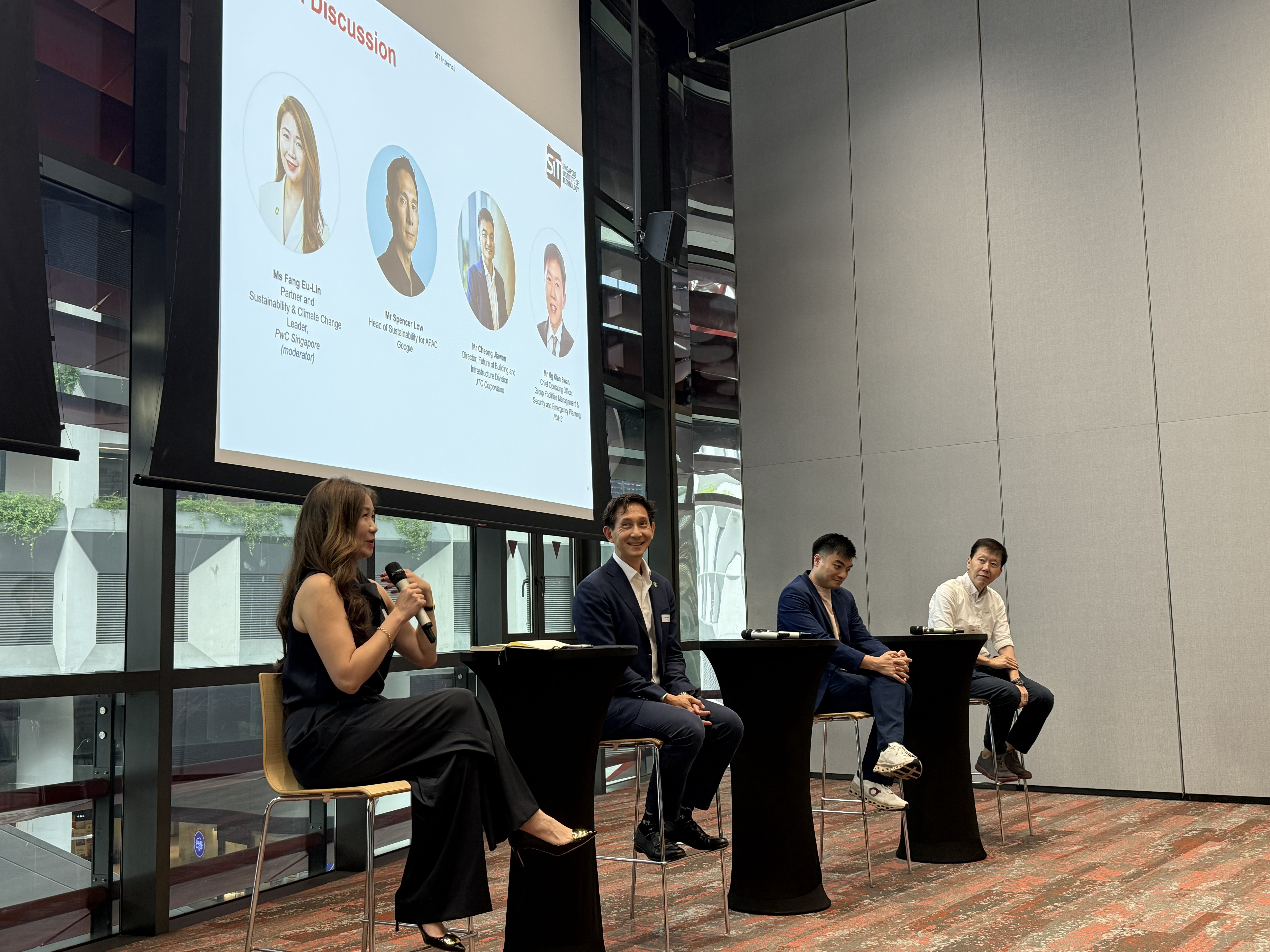
Using artificial intelligence (AI) to detect fires as small as a garage, FireSat is one of the ways in which AI is being used to help people “predict, prepare, and respond to the growing threat of extreme weather events”, said Mr Spencer Low, Head of Sustainability for the Asia-Pacific, Google.
Yet as powerful as these technologies are, they come with growing environmental costs, highlighting a central paradox in sustainability today.
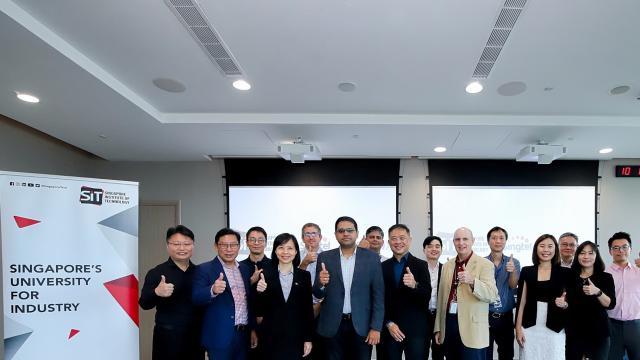
Mr Low was speaking at the fourth edition of the Chief Sustainability Officer Community of Practice (CSO CoP), convened by the Singapore Institute of Technology (SIT). Bringing together sustainability leaders from industry, government and academia, the CSO CoP reflects SIT’s role as a convenor of partnerships to drive actionable, real-world sustainability solutions.
The session, themed “Technology in Sustainability”, examined how organisations can create or leverage technologies to advance sustainability goals while managing their environmental impact.
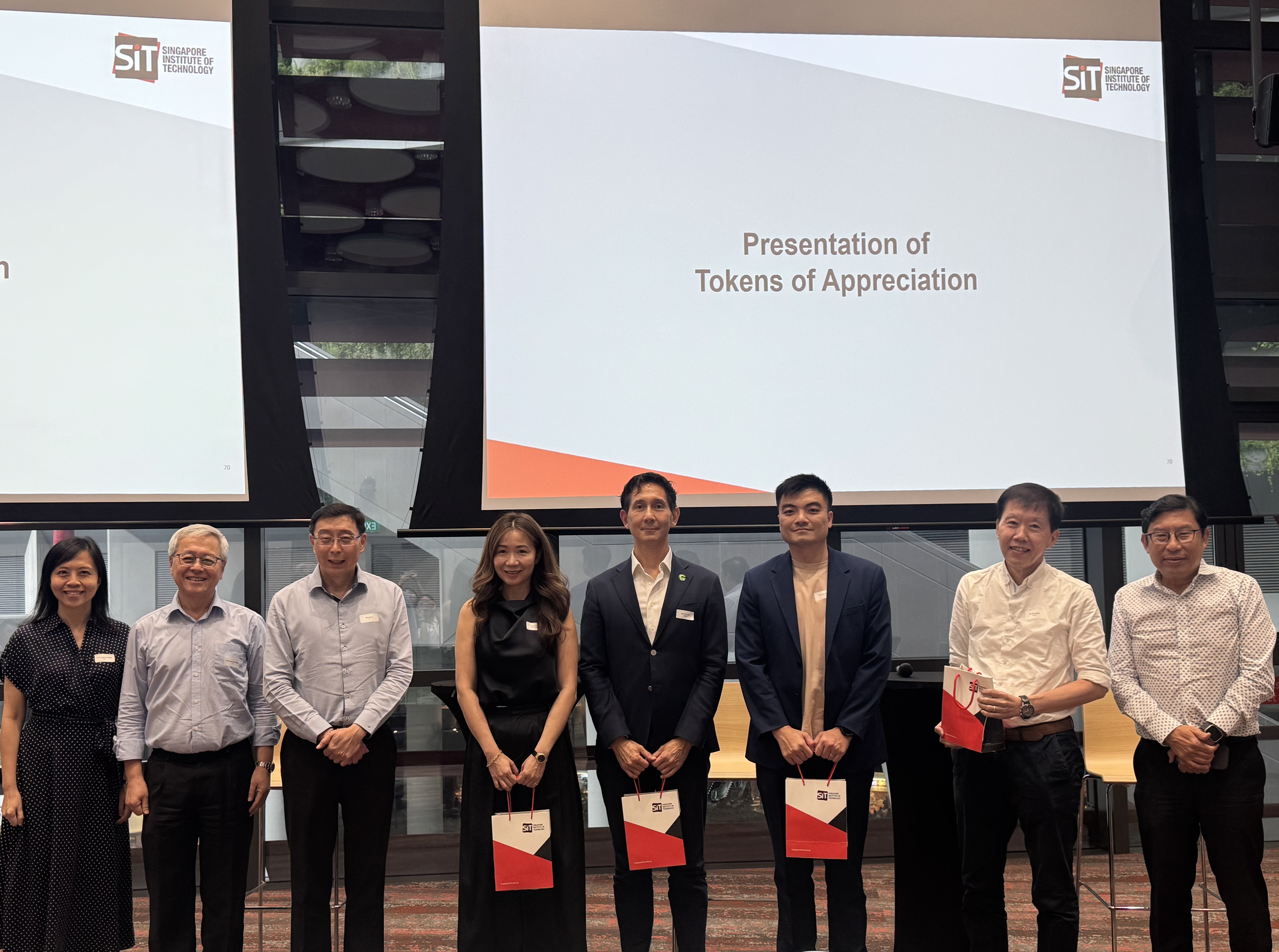
“The truth is, AI is not green today,” said Mr Cheong Jiawen, Director, Future of Building and Infrastructure Division, JTC Corporation. “Data centres are a big draw on resources, from electricity to water. They cause a lot of disamenities to neighbouring communities.”
According to projections from Cornell University, AI usage will emit 24 to 44 million metric tons of carbon dioxide annually into the atmosphere by 2030, equivalent to adding five to 10 million cars to the roads. Increased emissions contribute to climate-related risks that increasingly affect public health.
“The climate crisis is also a health crisis,” said speaker Mr Ng Kian Swan, Chief Operating Officer, Group Facilities Management and Security and Emergency Planning, National University Hospital System (NUHS).
The question facing sustainability leaders, then, is how to mitigate the fallout from technologies like AI while harnessing them for good.
Can AI Be Part of the Solution?
While AI and sustainability may seem at odds, the speakers agreed that they are not mutually exclusive.
Data centres are one good example. These energy guzzlers are spurring innovation in battery technology, waste heat recycling, and more. Breakthroughs will eventually spill over into the built environment sector, benefitting a wide swath of conventional factories and buildings.
At JTC, AI is also helping to “greenify” industrial estates, said Mr Cheong. In line with the agency’s ambition to achieve 30 per cent green cover across all its developments by 2030, teams are using AI modelling to corroborate data from sensors, satellites, and drones against building submissions.
Not only does this help to identify areas where green cover can be increased, but it also reduces the administrative burden on staff, who no longer have to make site visits as frequently to gather data.
AI can even help reduce the environmental footprint of AI itself.
Google's improvements in data centre efficiency have been driven by continuous innovation across hardware, software and infrastructure, from increasingly efficient computing systems to smarter operational practices.
More recently, AI itself has become part of the solution. AlphaEvolve, an AI-powered coding agent developed by Google DeepMind, has enhanced efficiency across data centres, chip design and AI training. One solution developed by AlphaEvolve helps Google run its data centres more efficiently by continuously recovering 0.7 per cent of its worldwide compute resources. While this may sound modest, it translates into meaningful efficiency gains at Google's scale.
“Our data centres deliver over six times more computing power per unit of electricity than they did just five years ago,” said Mr Low.
Building the Talent Pipeline
Addressing the technology paradox also requires a workforce equipped with the right skills.
Organisations will increasingly need talent who can combine an understanding of sustainability principles with the technical expertise of designing and optimising systems in an increasingly digital world.
SIT is already collaborating with polytechnics, the Institute of Technical Education, and Nxera — Singtel’s regional data centre arm — to design courses on data centres that support AI applications. These efforts equip students with the skills needed to address sustainability challenges posed by data centres, from designing energy-efficient infrastructure to applying data and digital technologies to optimise resources.
Sustainability On Campus
Beyond talent development, SIT’s campus itself serves as a testbed for real-world sustainability solutions.
As an applied university, SIT integrates infrastructure, research and education to accelerate innovation at scale. One example is the campus’ multi-energy microgrid (MEMG), developed in collaboration with SP Group, said Mr Bill Chang, Chairman of the Board of Trustees, SIT.
The microgrid uses energy from solar panels to supply 4 per cent of the campus’ energy needs. It also serves as a Living Lab where industry, faculty and students can test and refine sustainability management in real time.
In 2024, SIT researchers developed a digital twin of the microgrid, enabling the grid operator to perform predictive maintenance and improve the system’s resilience in the event of a power surge or generator breakdown.
The MEMG demonstrates how innovations developed on campus can be applied to live energy systems, while providing students with exposure to industry-scale systems and sustainability challenges.
Similarly, SIT’s Punggol Campus relies on a District Cooling System (DCS) for its cooling needs. This technology replaces individual air-conditioning units with a centralised system for better energy savings. The DCS, which was designed and built by energy company ENGIE, is an example of how SIT’s campus infrastructure doubles as a platform for innovation and learning in partnership with industry.
This integration of infrastructure, research, and education reflects SIT’s applied learning approach — where campus developments not only support operations but also cultivate industry-ready talent and advance scalable sustainability solutions.
Applying Sustainability in Practice
The work to advance sustainability using technology is already underway in other sectors. In healthcare, predictive maintenance is helping hospitals optimise building operations and energy efficiency. For example, Ng Teng Fong General Hospital and Jurong Community Hospital both feature an integrated building management system.
Acting as a central “brain”, the integrated building management system controls everything from plumbing to intercoms. It has enabled the hospitals to move from preventive maintenance to predictive maintenance, said Mr Ng.
That said, not everything has to be high-tech. NUHS is replacing 100,000 lightbulbs in its buildings with LED bulbs, improving energy efficiency by almost 4 per cent. Staff are also encouraged to turn off computers and passive devices when they knock off from work. This helps to reduce receptacle load — electricity consumed when appliances are plugged into electrical outlets — which accounts for almost 20 per cent of NUHS’ energy consumption.
“Sustainability is not about chasing the newest technology,” said Mr Ng. “It is about applying the right technology, at the right scale, to achieve impact.”
The paradox won't resolve on its own. But that principle points the way through it. By bringing together leaders to share insights and best practices, the CSO CoP turns individual experience into collective insight.