










![[FA] SIT One SITizen Alumni Initiative_Web banner_1244px x 688px.jpg](/sites/default/files/2024-12/%5BFA%5D%20%20SIT%20One%20SITizen%20Alumni%20Initiative_Web%20banner_1244px%20x%20688px.jpg)
Most internships end with valuable experience. For Samuel Song and Fu Shaoyu, theirs became the launchpad for their careers.
Through an 11-month Integrated Work Study Programme (IWSP) at Panasonic Asia Pacific, the two SIT software engineering undergraduates discovered that curiosity, resilience and a willingness to embrace new challenges could open doors far beyond the classroom.
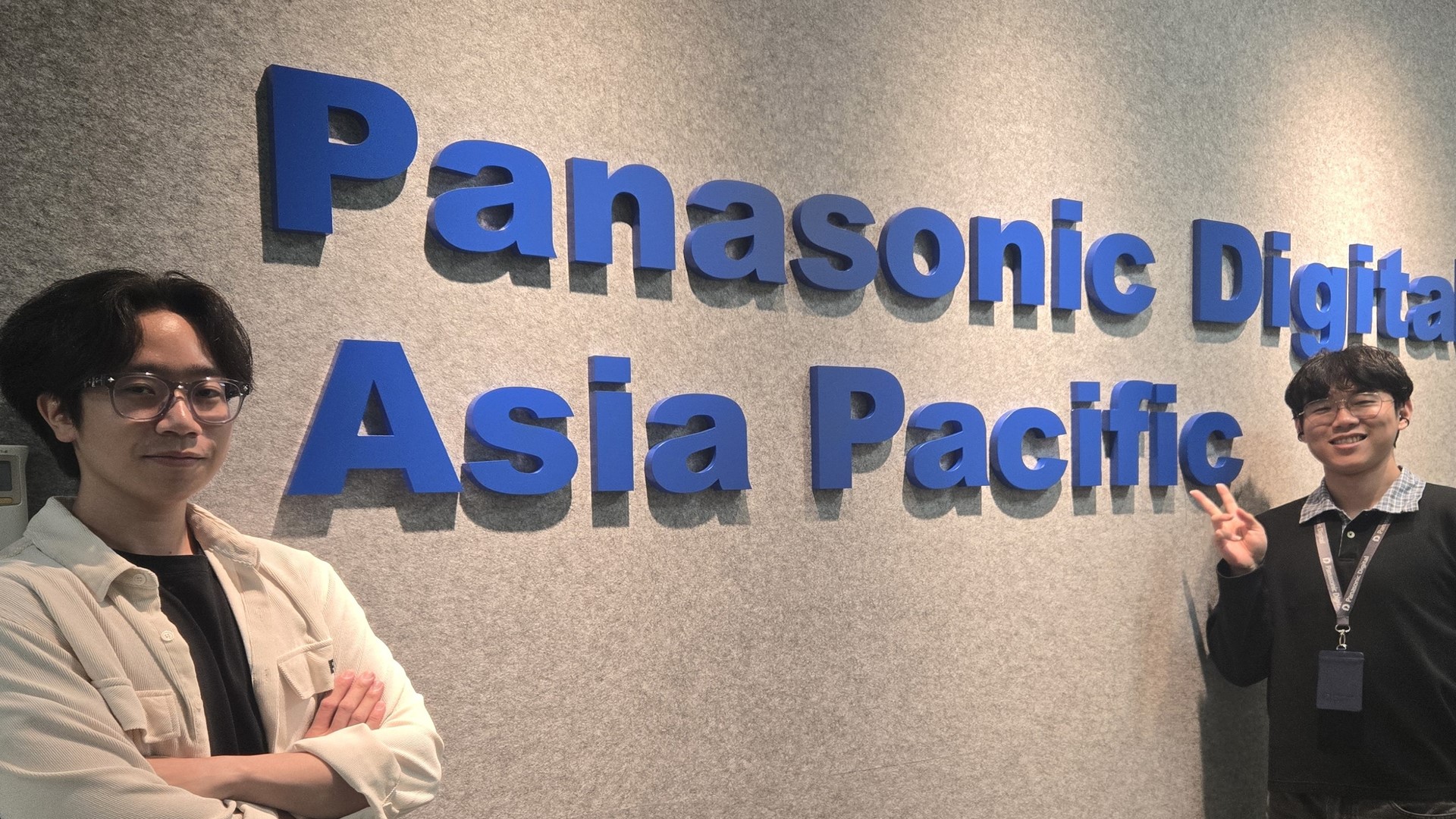
SIT software engineering undergraduates Samuel Song (left) and Fu Shaoyu (right) completed their Integrated Work Study Programme (IWSP) at Panasonic Asia Pacific before joining the company full-time as AI Automation & Digital Workplace Specialists. (Photo: Samuel Song)
Hungry to Learn
"Your job as an intern is to be hungry. Hungry for knowledge."
That was the first piece of advice Samuel Song received from his supervisor when he began his IWSP at Panasonic Asia Pacific—a mindset that would shape the rest of his internship.
At the time, it sounded like simple encouragement. Looking back, Samuel realised those few words shaped the way he approached every opportunity over the next 11 months.
Bridging Technology and Business
As part of Panasonic's IT Business Partner team, Samuel worked on customer relationship management (CRM) and chatbot initiatives supporting the company's regional subsidiaries.
Rather than being confined to observation or administrative work, Samuel found himself collaborating closely with both business users and developers, gathering requirements, preparing project documentation and supporting project delivery.
"It was my role to translate what the developers were saying to the business teams, and vice versa," he shares.
The experience taught him that successful projects depend as much on communication as they do on technical expertise. Every discussion required him to ask thoughtful questions, manage different expectations and help stakeholders stay aligned.
One project, in particular, stood out.
As Panasonic upgraded its customer-facing chatbots from natural language processing (NLP) to large language models (LLMs), Samuel helped improve the quality of the data powering the system. Months of cleaning, organising and refining the data enabled the chatbot to better understand customer enquiries, reducing the proportion of queries it failed to interpret correctly from 10 per cent to just 3 per cent.
"It was rewarding to see how my efforts improved people's experiences," says Samuel. "It felt exciting to tinker with something that people use in the real world."

Samuel Song (middle) at Panasonic Asia Pacific, where he works on customer relationship management (CRM) and chatbot initiatives. (Photo: Samuel Song)
Turning Classroom Knowledge into Workplace Impact
While the technologies were new, the experience itself felt familiar.
Samuel credits his fulfilling IWSP experience to the foundation laid during his SIT coursework. Beyond learning and applying technical concepts, the many school projects he worked on also prepared Samuel to communicate his ideas clearly, collaborate with others, and present technical information in a simple way for others to understand.
Fu Shaoyu, a fellow software engineering SITizen who also completed his IWSP at Panasonic, agrees. He shares that the SIT projects taught him how to create structure amid uncertainty and constant change, which he encountered a lot when working on “messy, real business challenges”.
He adds: “The biggest thing SIT gave me was being comfortable working on problems with no clear answers. That's the same instinct I relied on at Panasonic whenever I was handed something new — I wasn't an expert going in, but I trusted I could figure it out.”
When Form(s) Meet Function
Posted as an IT consultant trainee, Shaoyu was in two workstreams where he worked on platform management including ServiceNow, an enterprise workflow and IT service management platform and proposed business solution designs. This combination allowed him to build technical depth in managing an enterprise platform, while also learning consulting skills.
One of his highlights was working on a workflow automation project where his team built digital forms for travel expenses, general claims, declarations, approvals, and more. He helped gather requirements from stakeholders, studied the various forms and approval chains, and proposed faster, more standardised digital workflows to replace the manual, paper-based processes.
“Every form had its own quirks, and there was a lot of back-and-forth with the business units before development even started. Seeing the digital forms eventually go live, getting used by staff, and simplifying people's day-to-day work was a proud moment for me,” shares Shaoyu.
Trusted to Deliver
By the end of their IWSP, Panasonic didn’t say goodbye to the two interns — it welcomed them as new colleagues after offering both Samuel and Shaoyu full-time roles as AI Automation & Digital Workplace Specialists.
Christina Teng, Senior IT Business Partner at Panasonic Asia Pacific, and Samuel’s supervisor who encouraged him to learn as much during the IWSP, says that SIT students tend to be very practical and productive.
“There's still a learning curve for company-specific systems, but they generally adapt fast and are close to work-ready from the start,” says Christina. “With the longer duration IWSPs, students can spend the first three months getting up to speed, before moving on to real, independent project work.”
Compared to short internships, the longer duration of the IWSP gives employers a good basis to judge students’ work ethic, professionalism and fit, she says.
Both Samuel and Shaoyu were pleasantly surprised when Panasonic offered them full-time roles.
To make the most out of their IWSP, both of them recommend that students volunteer to help out in areas outside their job scopes when opportunities arise.
Aside from building technical expertise, Samuel quickly learnt that these opportunities also meant strengthening his professional skills — navigating uncertainty, collaborating across teams and earning the trust of senior stakeholders to assume bigger responsibilities.
“Some of my biggest growth came from tasks I wasn’t originally assigned, such as joining an AI hackathon and taking on a project manager role for two proof-of-concept projects. There were moments the different stakeholders weren't aligned, and I wondered if I, as an intern, was the right person to be sorting this out,” reflects Shaoyu. “By testing things, getting feedback and improving as I went, both projects were delivered successfully. Don’t wait for a perfect answer before you start.”
“Staying open-minded was crucial to help me make the most out of my IWSP. It changed the way I viewed certain tasks,” shares Samuel. “At first, you may be given basic and tedious tasks such as documentation. If you do your best even for smaller tasks, you’ll gradually build trust with your team, and they’ll be more willing to give you more ownership.”
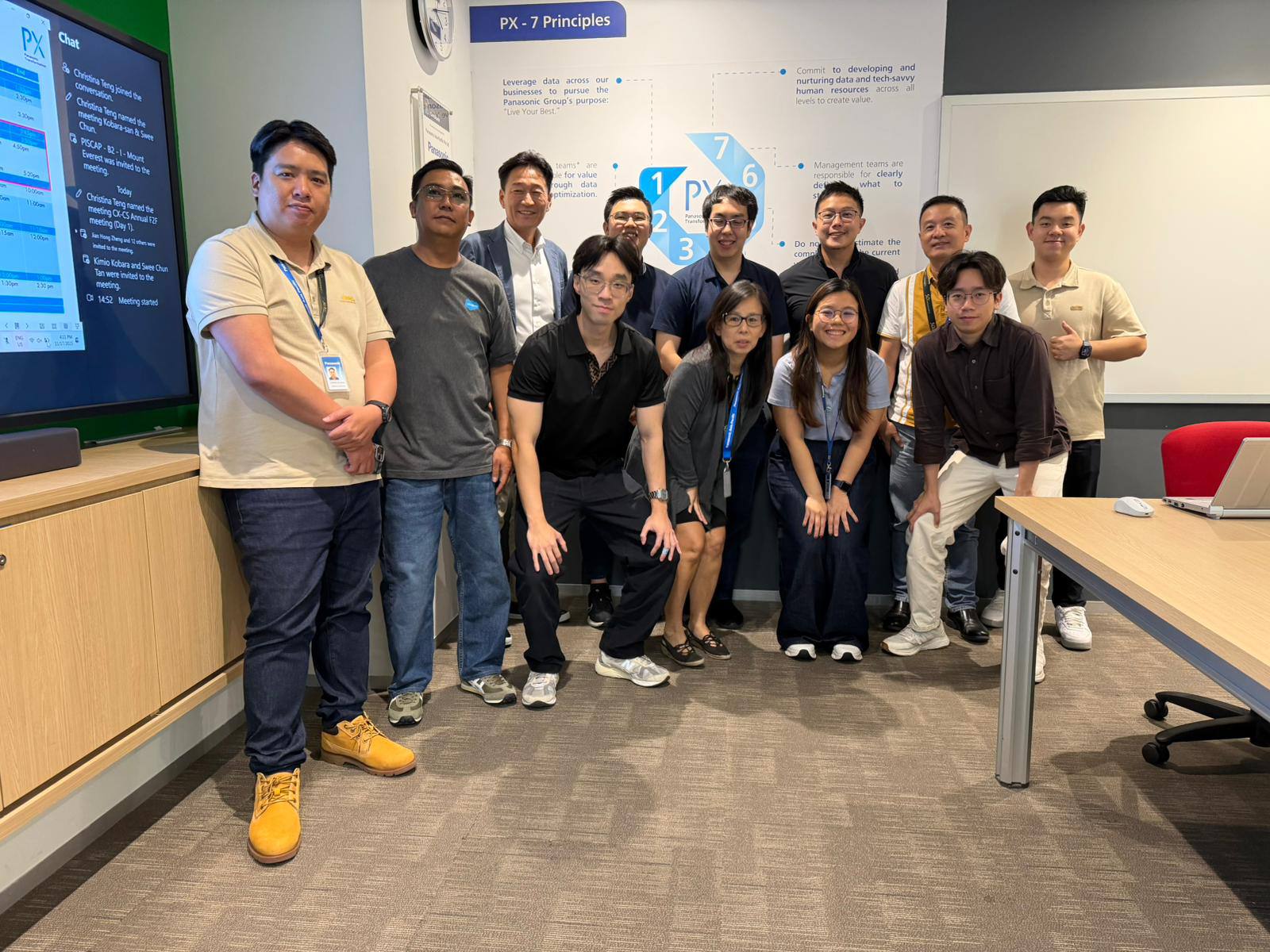
SIT software engineering undergraduate Samuel Song (front row, first from right) with colleagues from Panasonic Asia Pacific, including Christina Teng (front row, third from right).