











![[FA] SIT One SITizen Alumni Initiative_Web banner_1244px x 688px.jpg](/sites/default/files/2024-12/%5BFA%5D%20%20SIT%20One%20SITizen%20Alumni%20Initiative_Web%20banner_1244px%20x%20688px.jpg)
New joint lab enhances PDD as a hub for robotics and autonomous systems through applied research, real-world test-bedding and talent development in maritime autonomy.
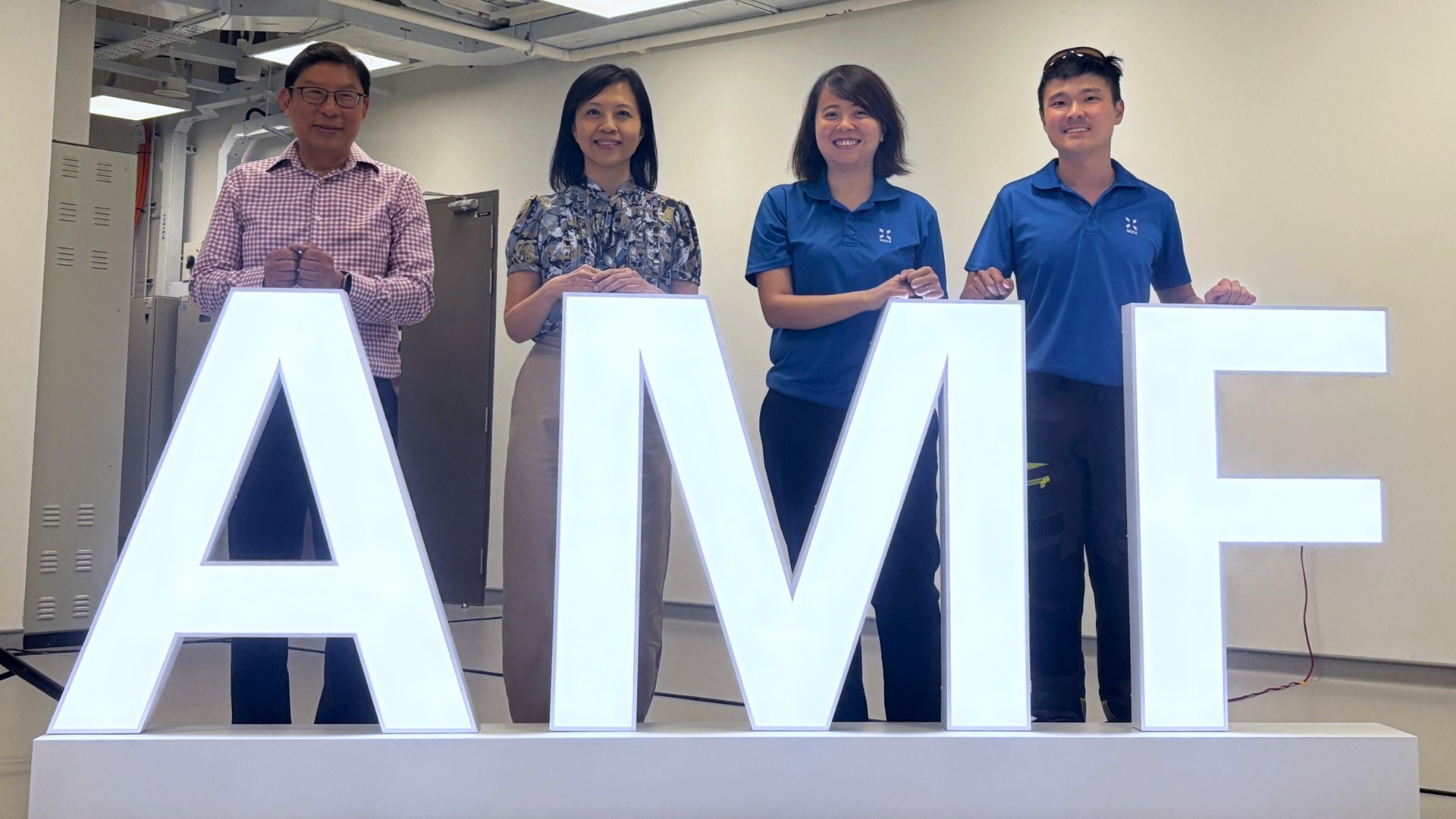
Launch of the Autonomous Marine Foundry (AMF) at the SIT Punggol Campus. (From left) Mr Bernard Nee, SIT Deputy President (Industry & Community); Prof Susanna Leong, SIT Deputy President (Academic) & Provost; Ms Grace Chia, BeeX Chief Executive Officer & Co-Founder; and Mr Goh Eng Wei, BeeX Chief Technology Officer & Co-Founder. (Photo: BeeX)
The Singapore Institute of Technology (SIT), in partnership with autonomous underwater robotics company BeeX, today announced the launch of the Autonomous Marine Foundry (AMF) at the SIT Punggol Campus, strengthening efforts to advance Singapore’s capabilities in maritime robotics, autonomous systems and applied engineering innovation.
Located within the Punggol Digital District (PDD), Singapore’s first precinct-scale test-bed for real-world innovation, the AMF will serve as a platform for applied research, technology development and deployment of maritime robotics and autonomous underwater systems. The collaboration brings together SIT’s strengths in applied learning and research with BeeX’s expertise in autonomous underwater vehicle (AUV) technologies to accelerate innovation in maritime autonomy and underwater robotics, while nurturing industry-ready engineering talent.
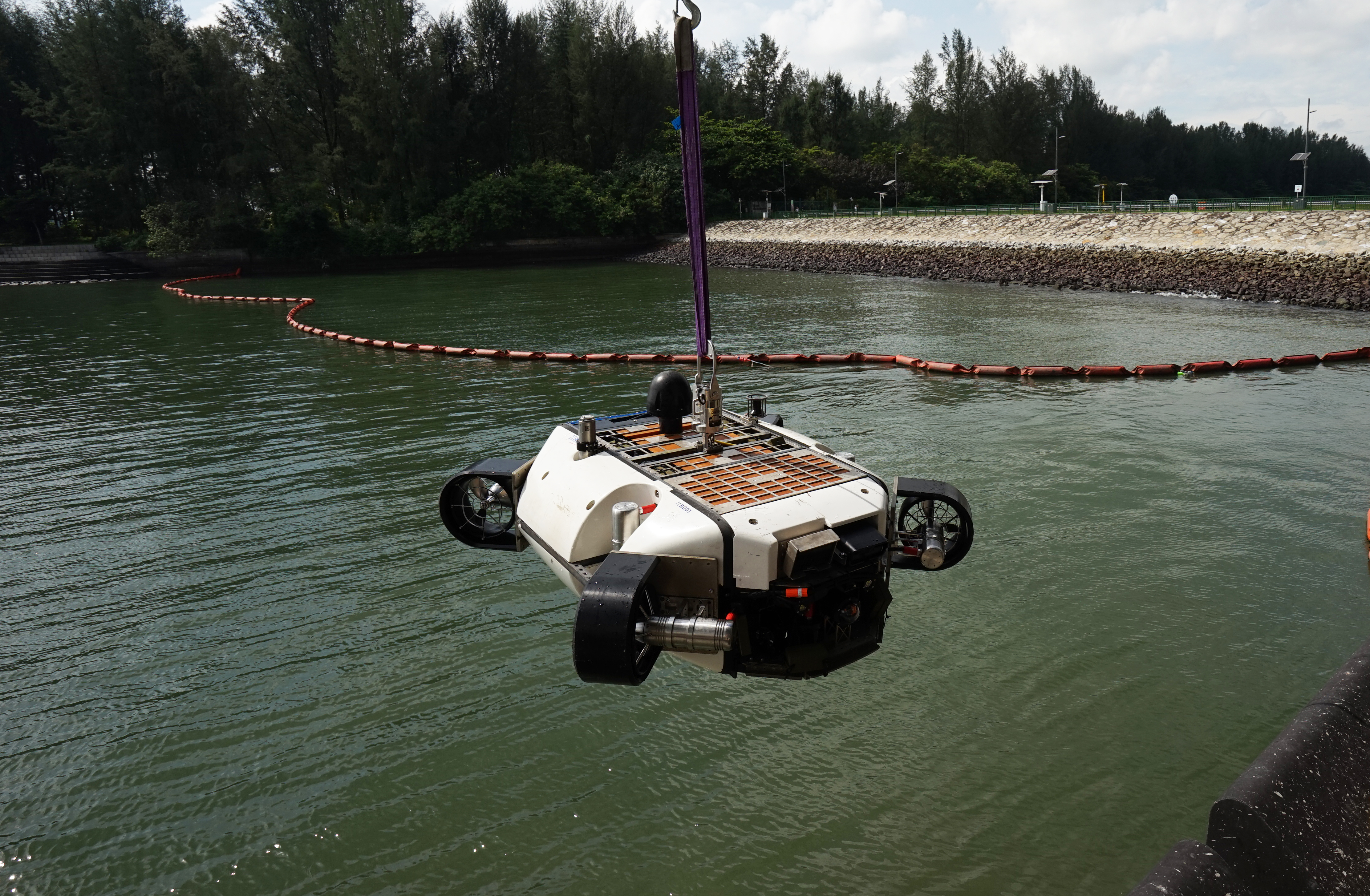
One of BeeX’s autonomous underwater vehicles, designed for high-precision underwater inspection and monitoring operations, being tested at the waterfront near SIT Punggol Campus. (Photo: BeeX)
Leveraging SIT’s waterfront campus environment within PDD, the AMF will enable the testing of autonomous robotics systems for underwater infrastructure inspection, environmental monitoring and coastal protection. Through close collaboration with industry partners, the facility aims to translate research into practical solutions that address operational and environmental challenges, while supporting Singapore’s broader push in robotics and autonomous systems innovation.
Strengthening Singapore’s Applied Research in Coastal Resilience
The SIT–BeeX collaboration will explore applied research opportunities in areas such as coastal protection, maritime robotics and underwater autonomy. This collaboration intends to explore the use of BeeX’s autonomous underwater drones as sensor platforms for automated monitoring and anomaly detection of coastal protection structures, supporting Singapore’s long-term efforts in coastal resilience and infrastructure protection amid growing climate and sustainability challenges. As the partnership develops, SIT and BeeX will continue exploring research opportunities in maritime robotics, underwater autonomy, infrastructure monitoring and autonomous maritime operations. The AMF is expected to serve as a catalyst for future collaborations between industry, researchers and government stakeholders in these emerging areas.
Developing Future Robotics Talent
Talent development is another key pillar of the SIT–BeeX collaboration. Through Integrated Work Study Programme (IWSP) attachments, capstone projects and mentorship opportunities, SIT students will gain hands-on experience working alongside BeeX engineers on real-world engineering challenges involving autonomous systems, robotics integration and maritime applications.
The collaboration also supports student-led initiatives, such as the SIT team participating in the 2026 Maritime RobotX Challenge[1] in Singapore, with BeeX engineers providing mentorship in areas including autonomous systems, underwater sensing, drone integration and robotics deployment. In addition, SIT and BeeX plan to co-develop technical workshops, hackathons and applied learning opportunities to strengthen Singapore’s pipeline of robotics and engineering talent and provide students with industry-relevant exposure to emerging technologies.
“The launch of the Autonomous Marine Foundry with BeeX embodies what it means for SIT to be the University for Industry – combining applied learning, industry collaboration and research with real-world impact. By integrating advanced maritime robotics into our education and research ecosystem, we are providing students with opportunities to work on emerging technologies while supporting innovation in areas important to Singapore’s future economy,” said Professor Susanna Leong, Deputy President (Academic) & Provost, SIT.
“Partnering with SIT to establish the Autonomous Marine Foundry allows us to accelerate the development and deployment of autonomous underwater systems while nurturing future engineering talent. Together, we hope to contribute to a stronger ecosystem for maritime robotics innovation in Singapore and beyond,” said Grace Chia, CEO and Co-founder, BeeX.
_______________________________________________
About Singapore Institute of Technology
As the university for industry and Singapore's first university of applied learning, the Singapore Institute of Technology (SIT) offers industry-relevant degree programmes that prepare its graduates to be work- and future-ready professionals. Its mission is to maximise the potential of its learners and to innovate with industry, through an integrated applied learning and research approach, so as to contribute to the economy and society.
The University’s unique pedagogy integrates work and study, embracing authentic learning in a real-world environment through collaborations with key strategic partners. Its focus on applied research with business impact is aimed at helping industry innovate and grow. SIT’s new centralised campus within the larger Punggol Digital District features a vibrant learning environment where academia and industry are tightly integrated with the community.
For more information, visit www.SingaporeTech.edu.sg.
[1] The 2026 Maritime RobotX Challenge is an international university-level autonomous robotics competition where student teams design and operate integrated robotic systems in real-world maritime environments: https://robotx.org/programs/2026/. The 2026 edition will take place in Singapore from 8–14 November 2026 at The Promontory at Marina Bay. SIT will participate through Team OtiPrime, a multidisciplinary student team focused on advancing multi-domain robotics technologies and applications.