











![[FA] SIT One SITizen Alumni Initiative_Web banner_1244px x 688px.jpg](/sites/default/files/2024-12/%5BFA%5D%20%20SIT%20One%20SITizen%20Alumni%20Initiative_Web%20banner_1244px%20x%20688px.jpg)
To realise the true value of AI, workplaces must deliberately decide how to reinvest the time that has been saved.

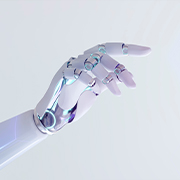
(Image: Shutterstock)
At a recent conference, I asked how many participants used AI at work and felt more productive because of it. Almost every hand went up. But when I asked how many felt less busy or more connected to their colleagues, those hands came down.
This reveals a paradox. AI clearly helps us work faster, but productivity gains do not automatically become free time. Whether time saved through AI translates into deeper learning, better wellbeing, or simply more work depends on the choices made by both employees and organisations.
The defining question in the age of AI is not whether AI can save us time, but what we choose to do with the time saved.
As an occupational therapist by profession, I understand time use not simply as a matter of individual choice, but as an interplay between personal priorities, workplace expectations and social norms. How we spend our time reflects not only what we value, but also what our organisations reward, support and make possible.
Viewed through this lens, AI is not merely a technology story. It is also a story about how we choose – and are enabled – to use our time.
When time saved becomes more work
The natural assumption is that productivity gains create capacity for higher-value work. Yet that is not what many people seem to be experiencing.
The hours freed up by AI should be spent in deeper research, learning new skills, mentoring younger colleagues, or building stronger relationships at work. But productivity gains often do not translate into breathing space. They simply create room for more work.
In many organisations, productivity gains are quickly absorbed into the system. If a task takes less time, expectations rise. Without deliberate decisions about how reclaimed time should be used, efficiency often becomes a pathway to an even greater workload.
Consider virtual meetings. While they have removed the need to travel between appointments, many organisations have used the time saved to schedule more meetings, not fewer.
The lesson is clear: technology creates time, but people and organisations decide where that time goes.
Some organisations have recognised this and begun having deliberate conversations about how time saved through technology should be reinvested. Should it be used for innovation, capability development, relationship-building or wellbeing? Productivity gains should not be left to chance.
Consider the writings of Shakespeare and Li Bai, the music of Mozart and the art of Michelangelo that continue to inspire centuries later. Each word, brushstroke and note was placed with intention. Their value came not from how quickly they were produced, but from the thought, care and meaning invested in them.
AI can help us create more content. A workplace flooded with reports, presentations and meeting summaries is not necessarily more productive than one that produces fewer but more thoughtful outputs. Without intentionality, we risk mistaking volume for value.
Most organisations still reward visible effort and output. If an employee completes a month’s worth of work in three weeks, few employers would encourage them to use the remaining week to learn, reflect or recharge. More often, expectations simply rise.
When technology enables us to do more, the norm becomes doing more. Employees respond accordingly by producing additional analyses, new initiatives and increasingly sophisticated presentations. Everyone remains busy, even as productivity improves.
The result is a workplace culture in which time savings are immediately consumed rather than intentionally invested. Energy is drained and not managed.
The kiasu factor
A Swiss exchange student once observed that Singapore students often hold on to completed assignments until the last possible moment. In contrast, the Swiss would do their best, finish the work and submit early, leaving time to other priorities such as sports. Our Singapore students’ work may already be ready, but our “kiasu” instinct tells us that any remaining time should be used to add more, lest others gain an advantage.
The same tendency appears at work. When technology helps us complete tasks faster, we often fill the time saved with more analyses, initiatives and deliverables. Standing still can feel like falling behind, particularly when everyone else appears to be producing more.
Efficiency gains will not improve our experience of time if our mindset and workplace culture continually demand greater output. Without intentional limits, AI risks accelerating a cycle in which every gain in capacity is met with an expectation to deliver even more.
Perhaps organisations need a more honest discussion about where the benefits of productivity should go.
If we value learning, then some of the time saved through AI should be deliberately protected for serious upskilling. Real expertise is not developed through five-minute videos alone. Competence takes time, practice and reflection.
If we value connection, then some of the reclaimed time should be invested in mentoring, coaching and relationship-building – activities that strengthen trust but are often crowded out by operational demands.
Recently, a student who had been struggling shared that she was doing better. Instead of replying with a quick message, I used some of the time AI had saved me to have lunch with her. The coaching conversation was neither urgent nor efficient, but it was meaningful.
If we value wellbeing, leaders should also ask whether every minute saved must be reinvested into additional work. In an age where burnout seems increasingly common, some of that time may be better directed towards recovery, exercise and sustainable performance.
Some companies are making this shift explicit. Novo Nordisk rolled out GenAI with the expectation of productivity gains, guided by the idea that “time is the ultimate currency.” Yet employees valued not just the saved time, but better work quality, and many reinvested the time into people interactions, strategic planning and creative work.
This is where culture matters. Time saved by AI flows where the organisation permits and rewards it to flow – whether it is towards more output, or towards learning, relationships and better work.
The human skill that matters
Much has been written about critical thinking, creativity and learning agility as essential skills in the age of AI.
Intentionality, as another capability, deserves equal attention.
While technology can save time, it cannot decide how time should be used. That decision belongs to people, managers and organisations.
Without deliberate choices, AI may simply allow us to do more work at greater speed. But if we invest the time saved into learning, relationships, wellbeing and meaningful work, we may discover that the greatest value of AI is not productivity itself, but the opportunity to use our time better.
And that may be the most valuable productivity gain of all.
May Lim Sok Mui is an Associate Professor and Assistant Provost (Applied Learning) at the Singapore Institute of Technology.
The article was first published in The Straits Times.