









![[FA] SIT One SITizen Alumni Initiative_Web banner_1244px x 688px.jpg](/sites/default/files/2024-12/%5BFA%5D%20%20SIT%20One%20SITizen%20Alumni%20Initiative_Web%20banner_1244px%20x%20688px.jpg)
From flooded compartments to podium finishes, Team MAKO’s journey shows how perseverance, multidisciplinary teamwork and the freedom to fail can propel students towards success.
Pull on a wetsuit, plunge six metres into a 13°C pool, and try to squeeze into a slim, oval-shaped pod. Once inside the cramped vessel filled with water, your only glimpse of the outside world is through a cone-shaped window. For the next two minutes, oxygen supply is limited, and you must pedal and navigate as quickly as possible through a winding underwater course.
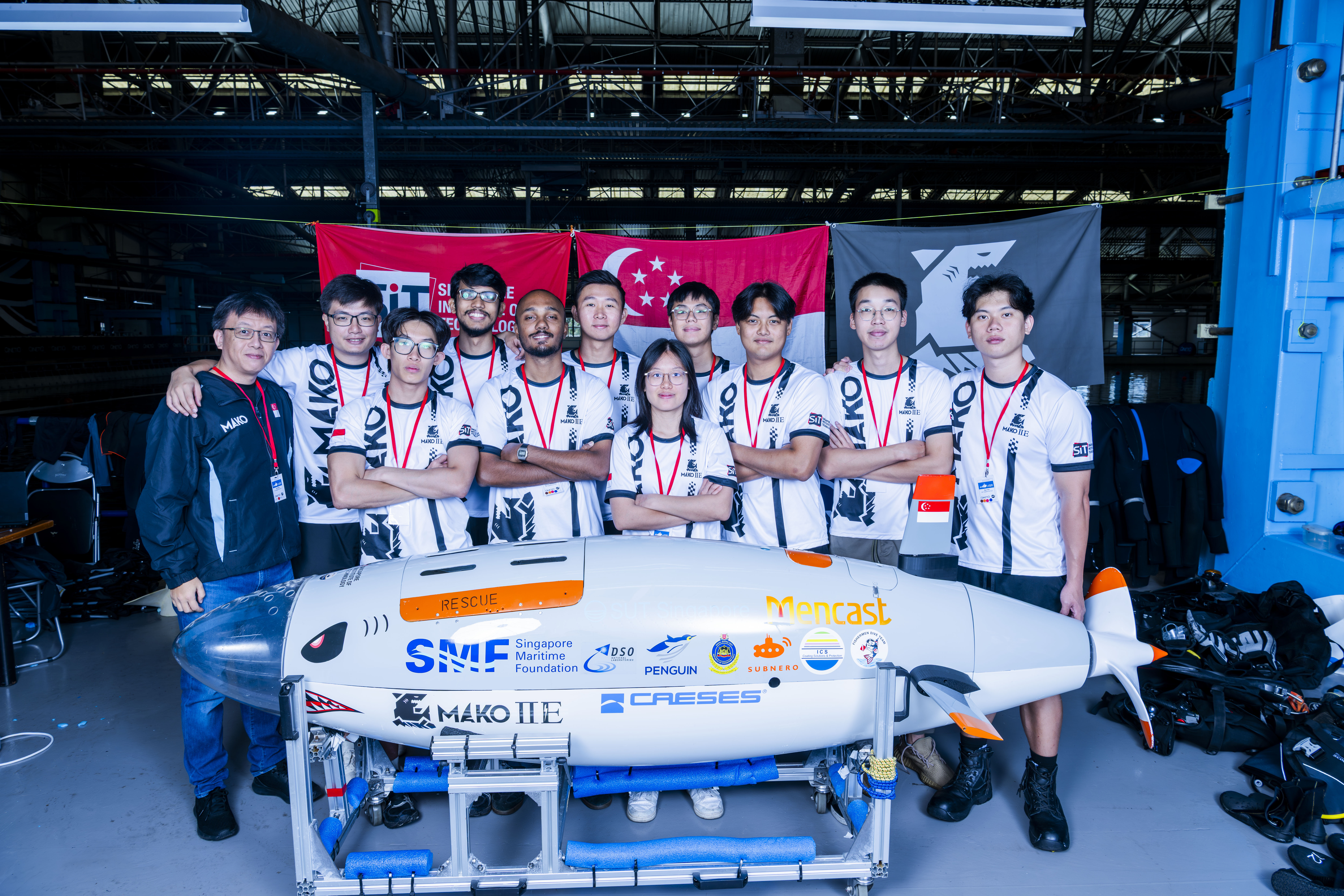
Team MAKO stands out as SIT’s most multidisciplinary team, with SITizens hailing across various degree programmes such as Nursing and Communication and Digital Media. (Photo: Team MAKO)
To some people, this might sound like torture, but it was all part of the job for Tong Ming Yang. He was the pilot of the Singapore Institute of Technology’s (SIT’s) human-powered submarine team at the European International Submarine Races 2026, held in the coastal town of Gosport in the United Kingdom.
Along with captain Madhan Mathivanan, vice-captain Lim Wei Han, and about 30 other students, he was a member of the first Southeast Asian team to clinch podium finishes at the biennial event in June and July this year.
Team MAKO were clear underdogs, facing seasoned teams with big budgets, including one that had won four of the previous six races. But the submarine that they built from scratch at SIT propelled them to fourth place overall, with a third-place finish in three categories: Best Run, Best Speed, and Best Time.
Formed in 2024, the SIT club — known as the Nautical Knights before they renamed themselves Team MAKO, after the fastest shark species — has shown remarkable progress.
“In the first two years (of competing), Team MAKO was focused on gaining experience, learning the ropes and building a strong foundation. But this year, I realised the top teams were concerned that we were catching up,” said Madhan. “When we realised we had gone from a struggling team to a team that was actually competing and not just surviving, it was a proud moment for all of us.”
Madhan, 25, Wei Han, 27, and Ming Yang, 24, are all from SIT’s Naval Architecture and Marine Engineering direct honours degree programme. Madhan and Ming Yang have since graduated, while Wei Han is in his final year.
Turbulent Trials
The team’s 2.9m-long submarine, MAKO II-E, was designed and fabricated by the students themselves — from the fibreglass composite hull to the electrical steering and pneumatic safety systems.
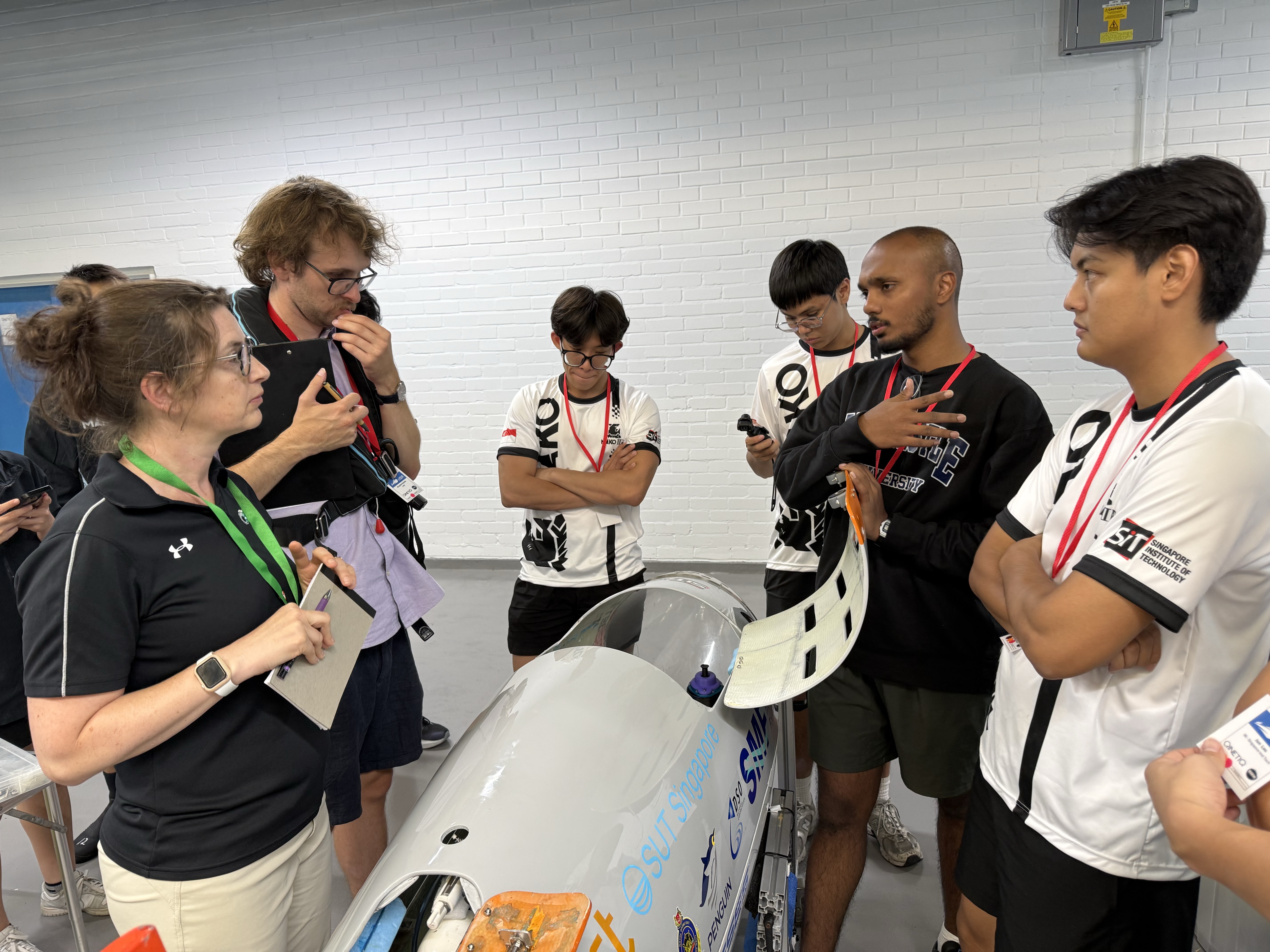
Team captain Madhan Mathivanan (second from right) sharing about the submarine to the eISR committee. (Photo: Team MAKO)
The team is SIT’s most multidisciplinary yet. Previously open only to Naval Architecture and Marine Engineering students, Team MAKO welcomed all SIT students to join them this year.
“We had students from other degree programmes such as nursing, mechanical engineering, and communications courses join us. We could significantly feel the difference in expertise when they brought in their knowledge and strengths,” said Wei Han.
Still, the journey was far from smooth sailing. Team MAKO went through repeated wet tests to make sure everything would work on the big day. “Things that are successfully tested to be working on land may not always work underwater,” Ming Yang explained.
Another challenge was keeping the team morale high after repeated setbacks. “We spent the whole of December and New Year’s Day working on something — only to do a wet test and find that nothing worked,” recalled Madhan.
The lowest point came during an incident that they now call “The Great Flood”. Just a few months before the race, water seeped into a compartment and damaged expensive parts and batteries. With the support of their professors, however, the team quickly replaced the broken equipment, fixed the damage, and pressed on.
“I learnt that you don’t need to have solutions on the day itself,” Madhan added. “By just showing up the next day, the next day, and the next, we figured things out.”
Permission to Fail
Team MAKO’s classes in school, too, proved invaluable. The naval architecture students applied concepts such as buoyancy and density to calculate the changes needed to make the submarine work, saving much trial-and-error time.
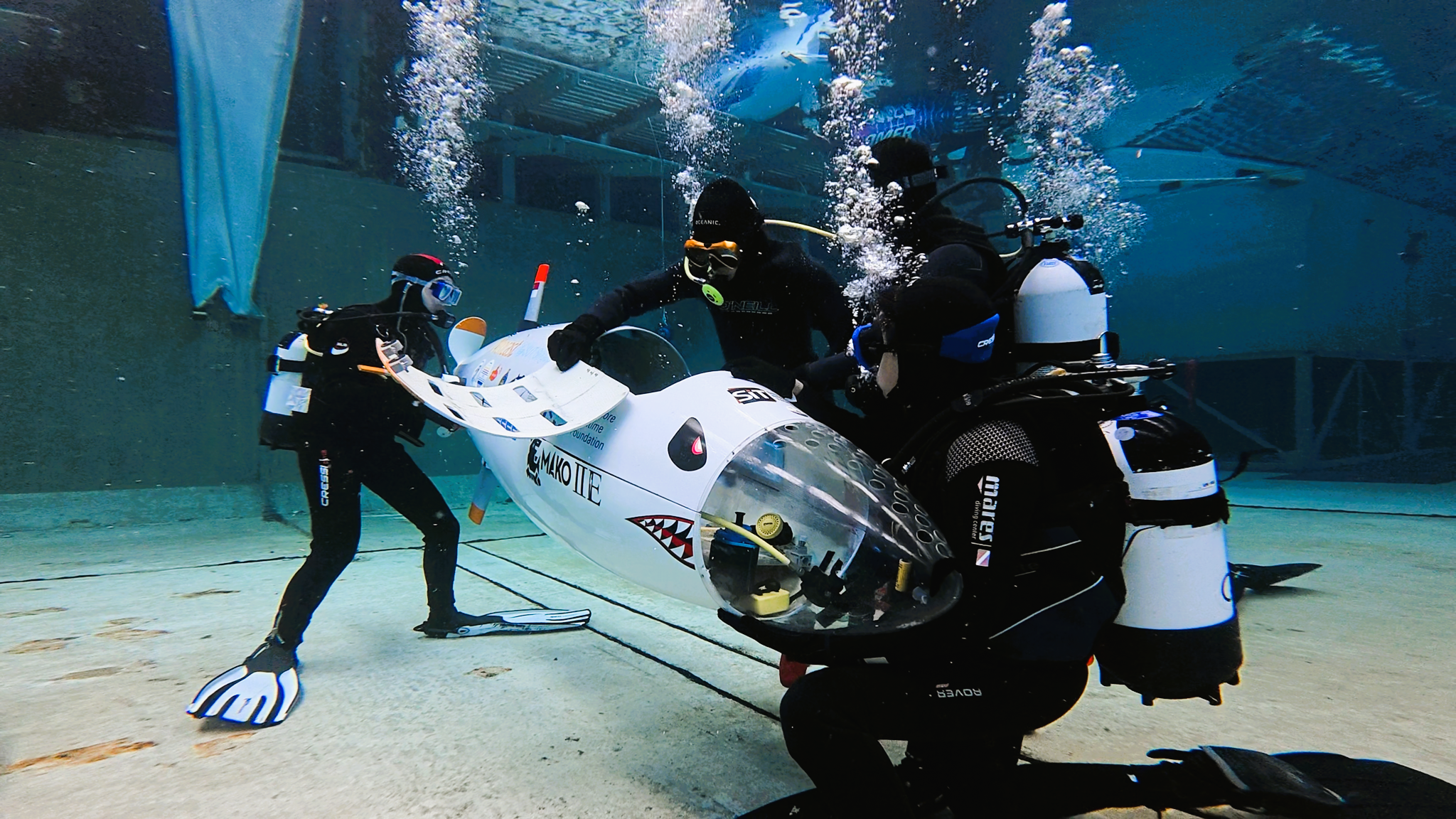
Submarine pilot Tong Ming Yang (second from left) climbing into MAKO II-E as the team prepares for the race. (Photo: Team MAKO)
SIT’s well-equipped facilities also gave the team an edge, providing ready access to equipment such as 3D-printers and soldering machines. The university’s physiotherapy department tailored training plans for Ming Yang to improve his stamina and lung capacity, as piloting the submarine was physically strenuous.
But their strongest source of support was their professors, such as Associate Professor Wang Xin, who gave them a safe space to experiment and fail.
During costly setbacks like The Great Flood, the focus was on solving the problem rather than assigning blame.
“From Prof Xin all the way up to higher management, SIT gave us room to fail. The goal set for the team was never to be ‘first’ or come back with awards. It was always: what do SIT students gain from this,” said Madhan.
“The best way to learn in engineering is by making mistakes. Even during The Great Flood, Prof Xin’s reaction was ‘Okay, what do we do next?’ By giving us a platform to fail, we were able to go ahead and try more crazy stuff.”
Lessons from the Deep
With the competition behind them, the three key students involved in Team MAKO are charting a new course: Madhan is working as a naval architect for ship-building company Penguin International; Ming Yang, a recipient of the SAF Academic Award, is serving as an officer with the Republic of Singapore Navy; and Wei Han, who received the SAF Academic Scholarship, will also join the Republic of Singapore Navy after graduation.
Meanwhile, Team MAKO plans to take part in more water-related races, such as those involving autonomous underwater robotics.
Inspired by his professors, Madhan has a piece of advice for his juniors: “The end goal isn’t to be the best, it’s to learn something from the process. Never be afraid to fail. Just keep trying and have fun.”
Catch Team MAKO in one of their successful race runs below.