










![[FA] SIT One SITizen Alumni Initiative_Web banner_1244px x 688px.jpg](/sites/default/files/2024-12/%5BFA%5D%20%20SIT%20One%20SITizen%20Alumni%20Initiative_Web%20banner_1244px%20x%20688px.jpg)
Real labs, real uncertainty, real breakthroughs. SIT's inaugural mentorship initiative gave three Catholic Junior College students their first taste of university research — with their projects receiving a Silver Award and a Bronze Award at an international competition.
A project that uses butterfly pea flower to detect food spoilage earned Catholic Junior College (CJC) students Brayden Lim and Muruganantham Monicka a Bronze Award at the 27th International Elementz Fair this year.
Their spot in the international research competition was the culmination of months of research conducted at the Singapore Institute of Technology (SIT) under an inaugural SIT mentorship initiative that pairs pre-university students with the university’s researchers.
Guided by Associate Professor Choi Won Jae, Deputy Cluster Director of SIT's Food, Chemical and Biotechnology cluster, their project explored whether naturally occurring pigments in butterfly pea flowers could serve as a visual indicator of food freshness, offering an affordable and environmentally friendly packaging solution to reduce food waste.
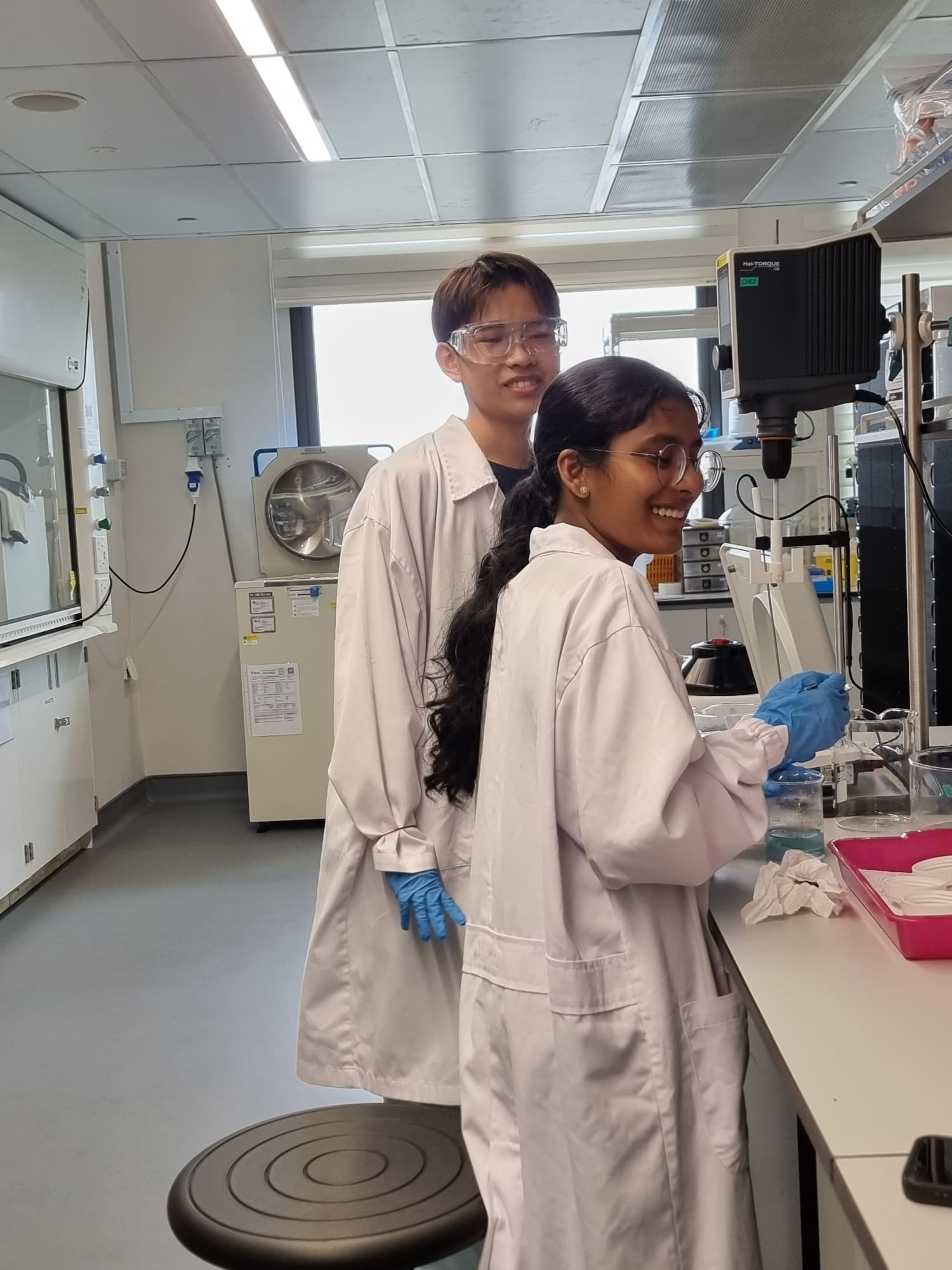
CJC students Brayden Lim (back) and Muruganantham Monicka investigated whether pigments from butterfly pea flowers could be used as a visual indicator of food freshness under the guidance of A/Prof Choi Won Jae. (SIT Photo: A/Prof Choi Won Jae)
Meanwhile, their schoolmate Gabrielle Seow worked with Associate Professor Zhou Kang from the same cluster to explore how biological systems could be harnessed to develop sustainable alternatives to conventional batteries.
The three JC2 students were among the first participants in the SIT mentorship initiative, which also provided them access to SIT laboratories, equipment and expertise.
Thinking Like Researchers
Getting their first taste of university research was both exciting and intimidating.
Days into her attachment, Gabrielle found herself kneeling in a garden, collecting soil samples needed for a microbial fuel cell prototype — a system that uses microorganisms to generate electricity.
“It felt like I was doing gardening when I was actually trying to do science,” she recalled with a laugh.
Her mentor, however, saw this as a necessity, and part of Gabrielle’s introduction to SIT's applied learning approach – learning through doing and applying knowledge to solve real-world problems.
“Concepts can feel abstract in a lecture, but they come alive during practical sessions,” said A/Prof Zhou.
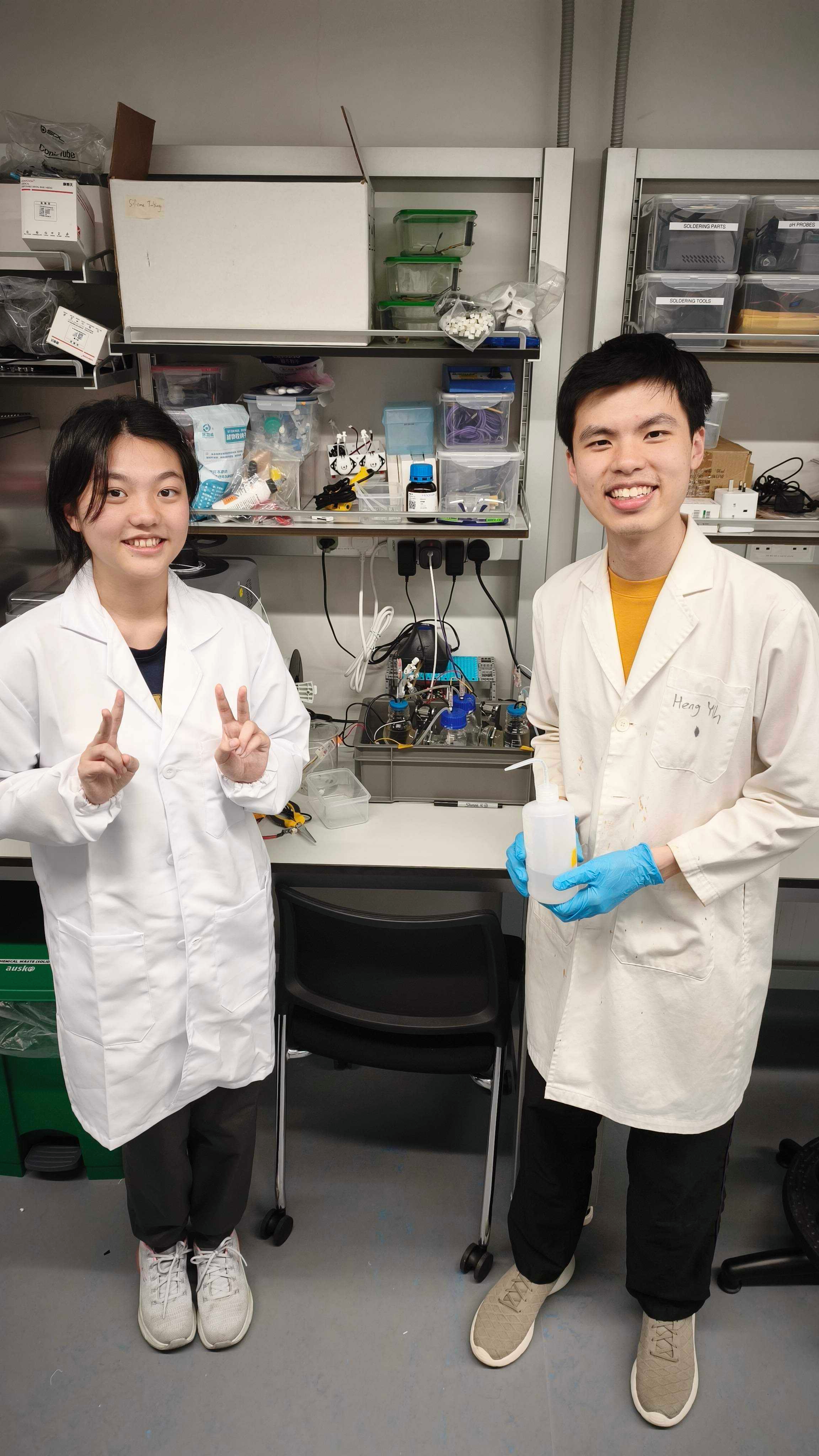
Gabrielle Seow (left) with Tan Heng Yih (right), an NUS PhD student who supervised her day-to-day research activities in the laboratory as part of an SIT-NUS joint research project led by A/Prof Zhou Kang. (SIT Photo: A/Prof Zhou Kang)
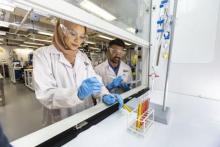
The students met their mentors several times each week and carried out their experiments in SIT laboratories, where they were introduced to research practices rarely encountered at the pre-university level, such as laboratory safety training, literature reviews, and experimental design.
Unlike school assignments with prescribed instructions and expected answers, research often begins with uncertainty.
“We had to spearhead our own project,” said Brayden. “It wasn't like school, where the teacher already knows the answer. We had to figure things out ourselves.”
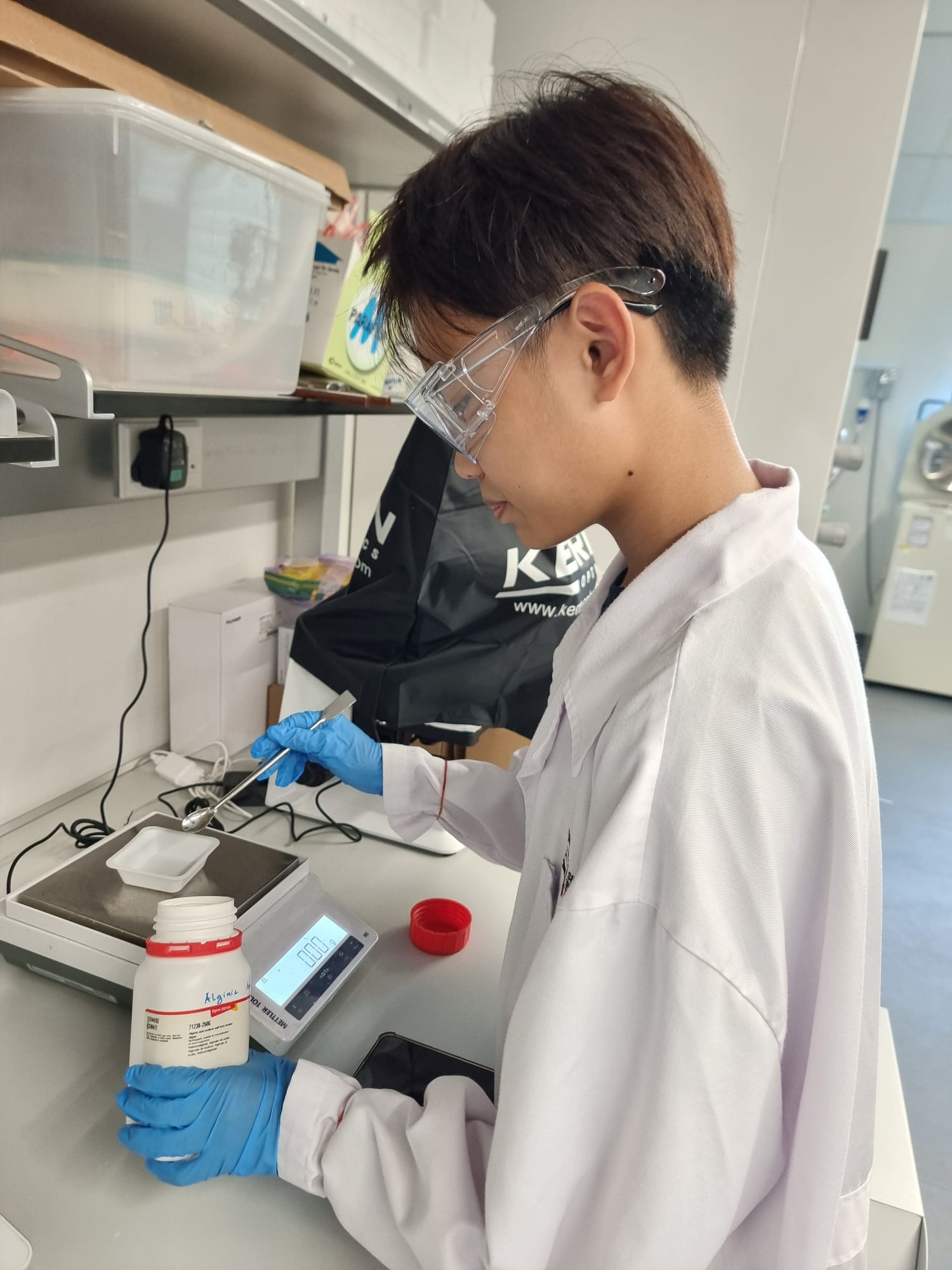
Brayden Lim conducting experiments in an SIT laboratory as part of his research on using butterfly pea flower pigments as a natural indicator of food freshness. (SIT Photo: A/Prof Won Jae)
Brayden and Monica experienced this uncertainty right from the get-go. Their original proposal was interesting but too ambitious to complete within the available time. Instead of giving them a solution, A/Prof Choi helped them reframe the scope and sharpen the project’s objectives.
“I tried to guide them through questions and discussion rather than simply give them answers, so that they could retain ownership of the project.”
With his guidance, the students refined their proposal into a viable study with measurable outcomes. Though the change added pressure to an already tight timeline, A/Prof Choi commended his students’ commitment to being better researchers.
“They were open to feedback,” he said. “They learnt that revising and sharpening a research question is a normal and important part of the research process.”
Learning Through Iteration
Gabrielle’s project similarly went through a few turns.
She began by exploring sustainable alternatives to conventional batteries. However, her mentor's expertise lay in biotechnology and bioelectrochemical systems rather than traditional battery research.
“We had several constructive discussions to redirect the research (so that it) was still interesting to her and aligned with the core expertise of my laboratory,” said A/Prof Zhou.
The project went through several iterations. He and his mentee first focused on developing a biological battery system, but early experiments showed the amount of energy harvested was too small to create meaningful impact.
They then opted for a different angle, investigating how the same system could be used to control how electrons move during biological processes, making it easier for cells or microorganisms to produce useful substances more efficiently.
“I felt a bit lost because we kept changing direction," Gabrielle said. “But it was quite interesting because I got to see my project from a completely different perspective.”
Gabrielle’s efforts paid off, with her project receiving a Silver Award at the International Elementz Fair.
For A/Prof Zhou, the experience highlighted one of the most important realities of research.
“Research is open-ended,” he said. “We need to identify problems worth solving and be prepared to change strategies when our original plans do not work.”
He was also impressed by Gabrielle's ability to grasp advanced concepts. “She could understand almost everything we discussed for her project. Many of these concepts are usually only introduced during or after undergraduate education.”
Researchers in the Making
“The students were not just learning concepts. They were exposed to an authentic research environment where safety, planning, critical thinking, and iteration all mattered,” said A/Prof Choi.
Besides the two teams from CJC, SIT also mentored a team from Anglo-Chinese Junior College. It hopes to expand the initiative to provide more students with early exposure to SIT’s academic mentors, applied learning and applied research environments.
“It's in our university's culture and DNA to be rooted in the community,” said A/Prof Zhou. “This has been a meaningful way to share our expertise and contribute to the wider community.”
Such exposure could inspire the next generation of scientists, engineers, and mathematicians. In Gabrielle, it has opened a possible future.
“I can see myself being a researcher,” she said. “I realised that I enjoy this kind of lifestyle, and I find it really interesting.”
Inspiring the Next Generation
For SIT, the mentorship initiative reflects its commitment to nurturing future-ready talent through applied learning and early exposure to authentic research. By connecting students with faculty mentors and real-world research environments, the programme helps build the curiosity, critical thinking and problem-solving capabilities needed to tackle tomorrow’s challenges. As SIT strengthens partnerships across the education ecosystem, it hopes to inspire more young people to explore pathways in science, technology and innovation.