










![[FA] SIT One SITizen Alumni Initiative_Web banner_1244px x 688px.jpg](/sites/default/files/2024-12/%5BFA%5D%20%20SIT%20One%20SITizen%20Alumni%20Initiative_Web%20banner_1244px%20x%20688px.jpg)
Connecting Our Energy Systems
SIT’s Multi-Energy Microgrid (MEMG), the first to be constructed on a university campus in Southeast Asia, reflects our long-term approach to reducing operational carbon intensity. The system also serves as a platform to support applied learning, research and experimentation in a real-world environment.
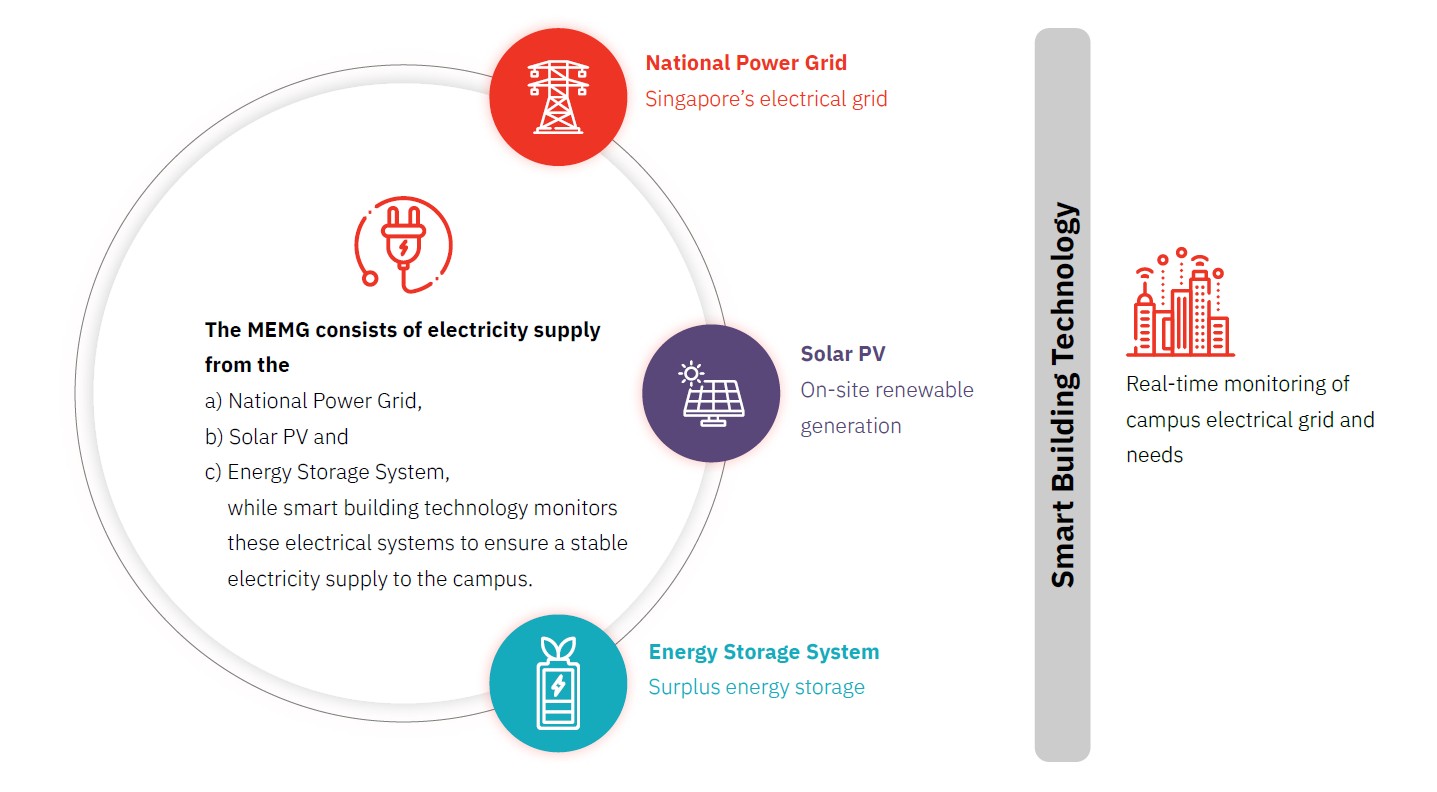
SIT has more than 20,000 Internet of Things (IoT) sensors that collect real-time data across environmental conditions, resource usage and occupancy patterns, feeding into an Integrated Building Management System (IBMS). The data provides valuable insights to set informed goals, as well as drive smarter operations and continuous improvements in resource and operational efficiency.
Our Multi-Purpose Halls use Passive Displacement Ventilation, an innovative cooling system developed by SIT faculty. This innovative cooling system was developed by Engineering faculty Associate Professors Steve Kardinal Jusuf, Aung Myat, An Hui and Victor Wang.
Read more about this green air-conditioning innovation here.
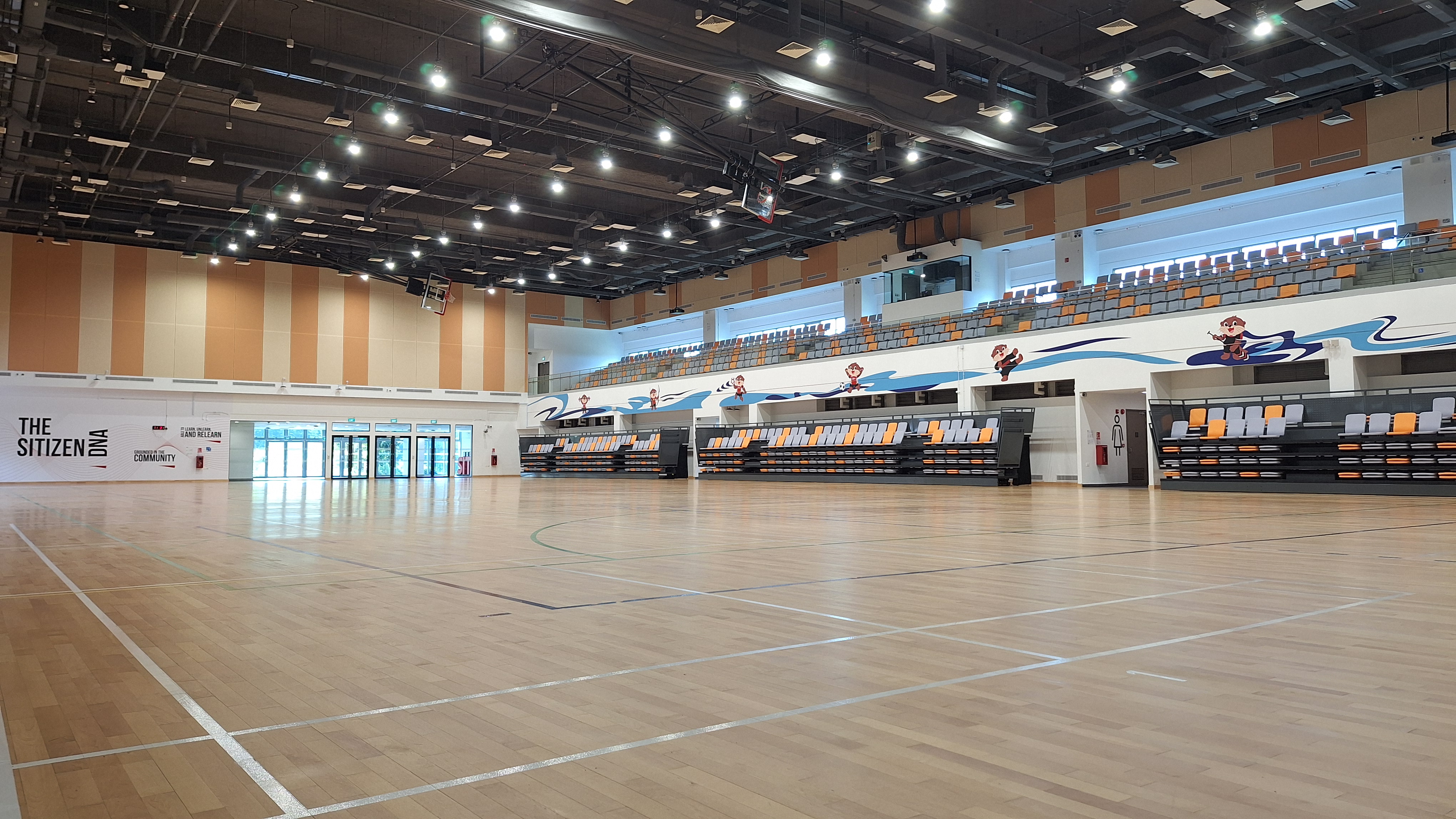
SIT’s Multi-Purpose Hall
Cooling is one of the largest contributors to building energy consumption in Singapore. To improve efficiency, Punggol Campus is connected to a District Cooling System (DCS), which supplies chilled water from a centralised cooling plant.
Beyond operations, SIT partners ENGIE to use the DCS as a living laboratory for education and research. Through our Living Lab initiative, our students and researchers gain access to real-world system data for learning and applied projects.
The partnership is a testimony to what Punggol Campus was designed to enable – where infrastructure itself becomes part of the learning.
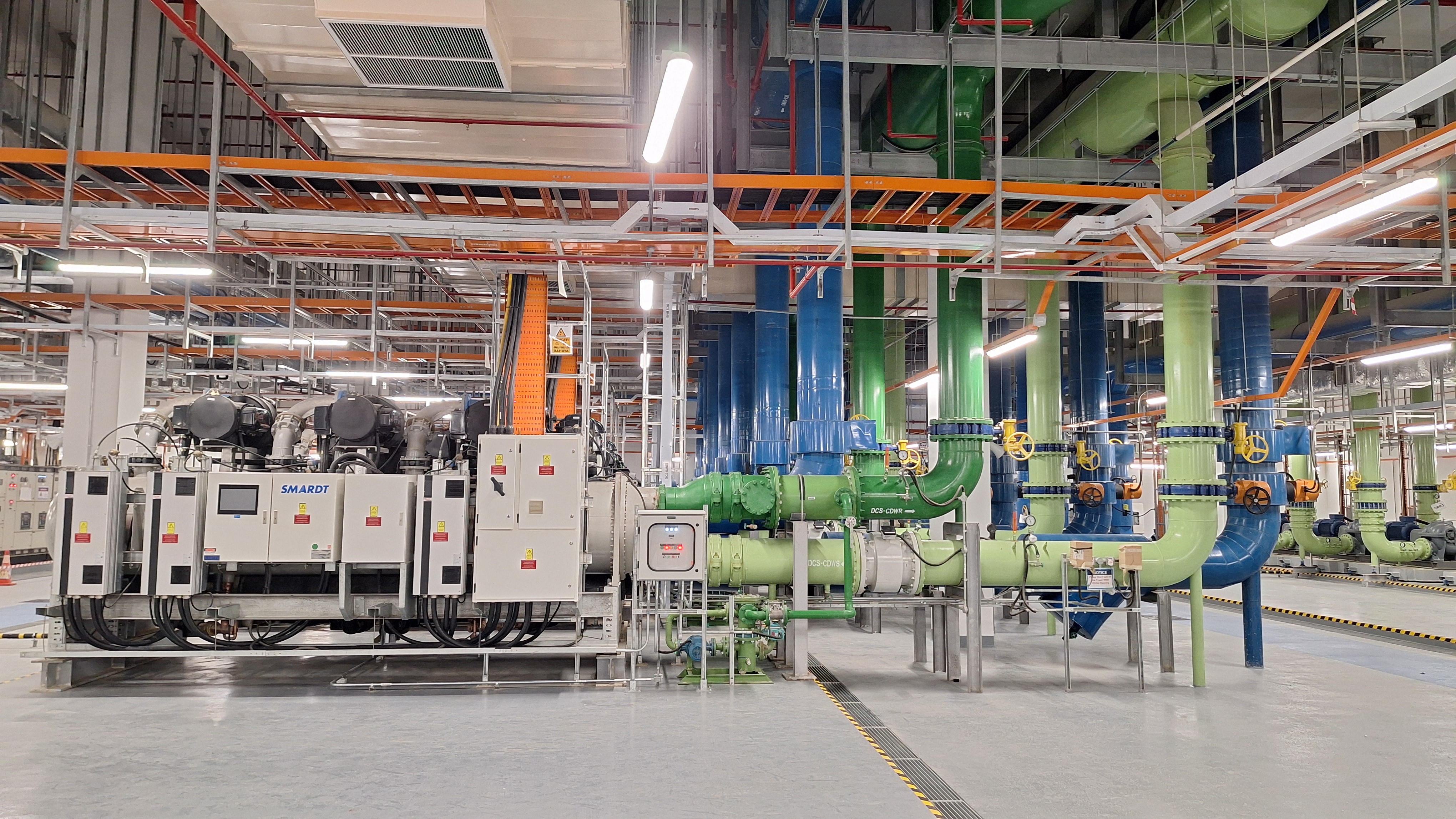
SIT’s underground District Cooling System
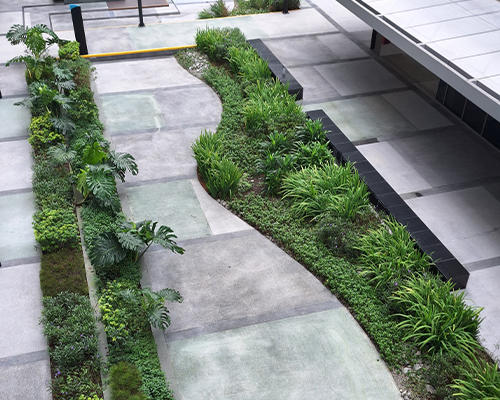
Bioswales
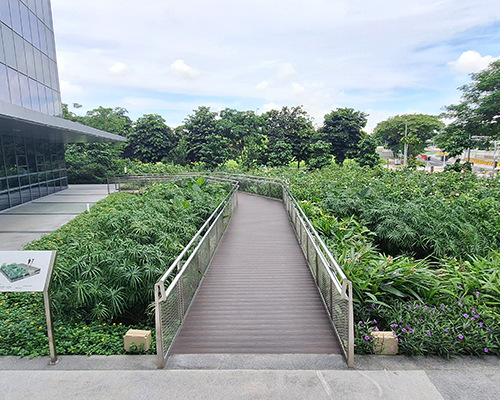
Rain Garden
Greening Our Laboratories
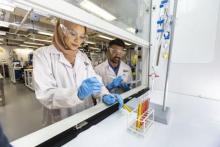
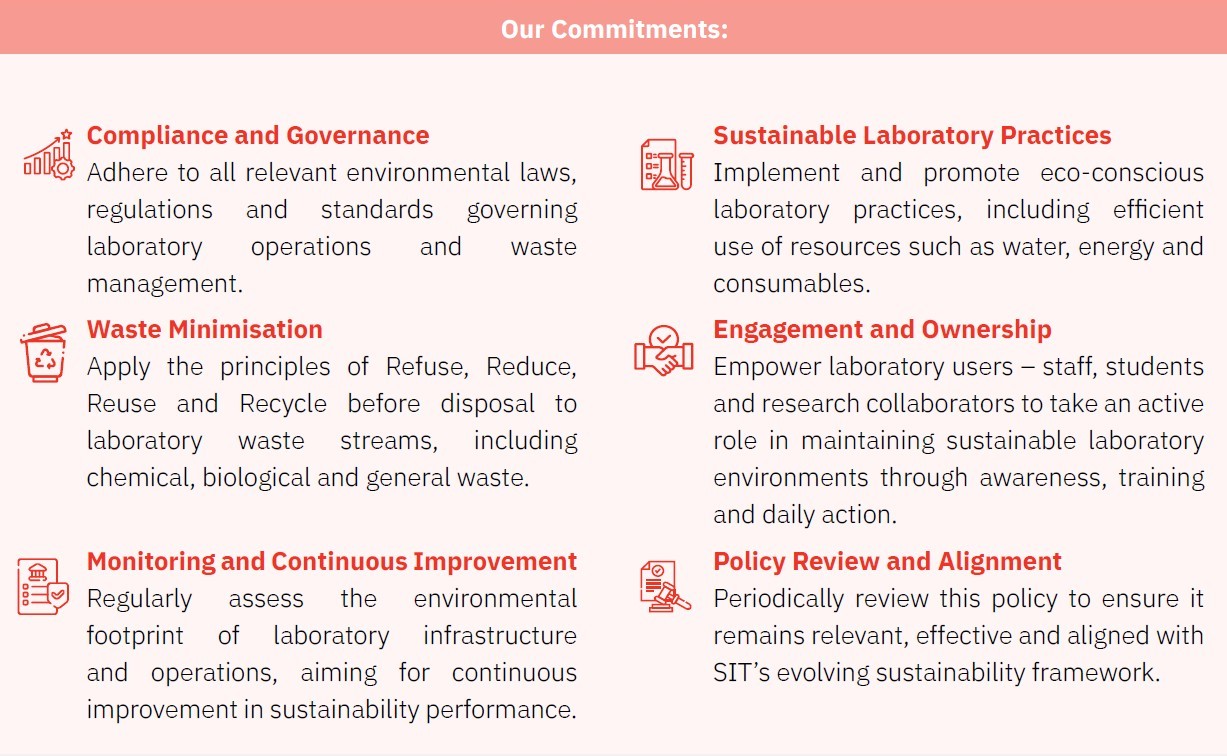
Laboratories are among the most resource-intensive facilities on campus, with high energy, water, chemical and waste footprints. As part of our ongoing effort to reduce our environmental impact, SIT is progressively embedding sustainable practices into laboratory operations.
- First university in Singapore to achieve My Green Lab certification
- 4 laboratories with My Green Lab - Green certification (highest certification level)
Working towards zero waste
At SIT, we actively reduce waste generated through waste minimisation and resource recovery initiatives.
Disposable takeaway containers and utensils are not provided at our food courts. Instead, patrons are encouraged to bring their own containers or use reusable alternatives available on campus. In addition, SIT introduced a policy requiring that catered buffets not use disposable tableware. Instead, we encourage bring-your-own (BYO) or reusable tableware.
Food waste from campus food courts is segregated and processed on-site with some of the output used for campus landscaping.
Together, these initiatives support our efforts to reduce waste generation and promote more responsible consumption behaviours on campus.
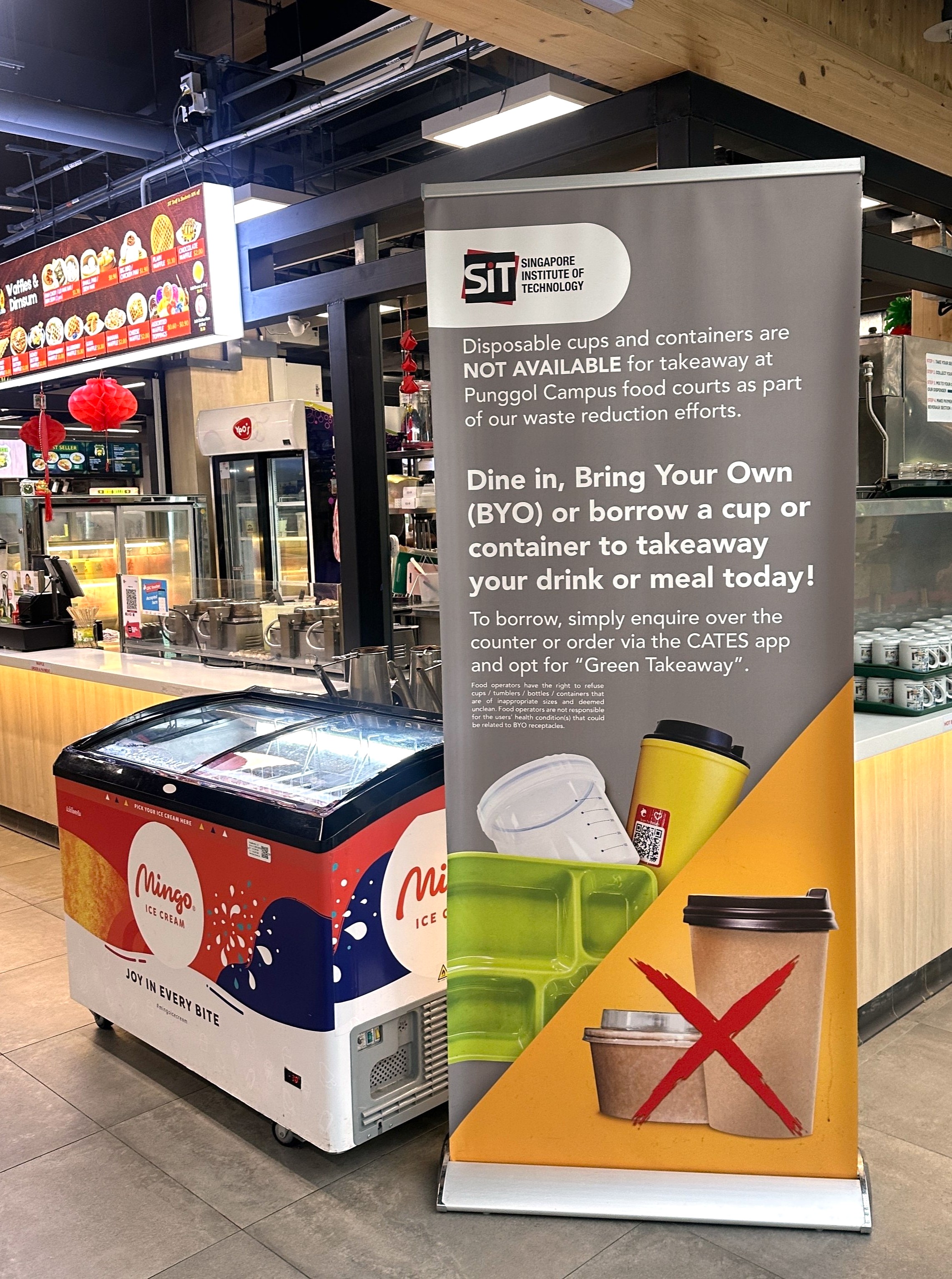
BYO banner in campus food court
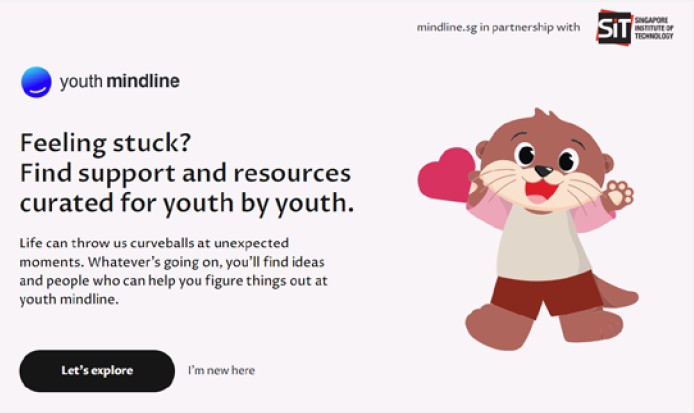
SIT Mindline – a free digital platform available that support stress management for students
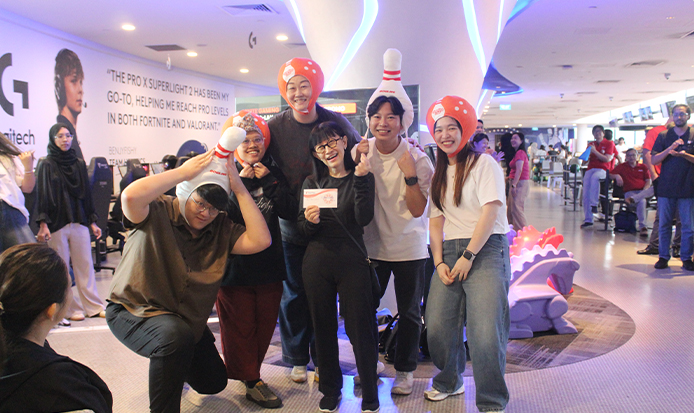
Regular social gatherings are organised for staff to promote team bonding and well-being
Fostering a Conducive Workplace Culture
SIT's workplace culture is anchored by its core values of Agility, Integrity, Sustainability, Respect, Purpose and Excellence (ASPIRE). These values guide how we work, learn and engage with one another, fostering a supportive and inclusive community.
To strengthen a shared culture, the Culture Induction Programme introduces staff to SIT's core values and their practical application in daily work, aimed to build a positive and conducive work culture. Various learning opportunities and engagement activities further reinforce SIT's core values.
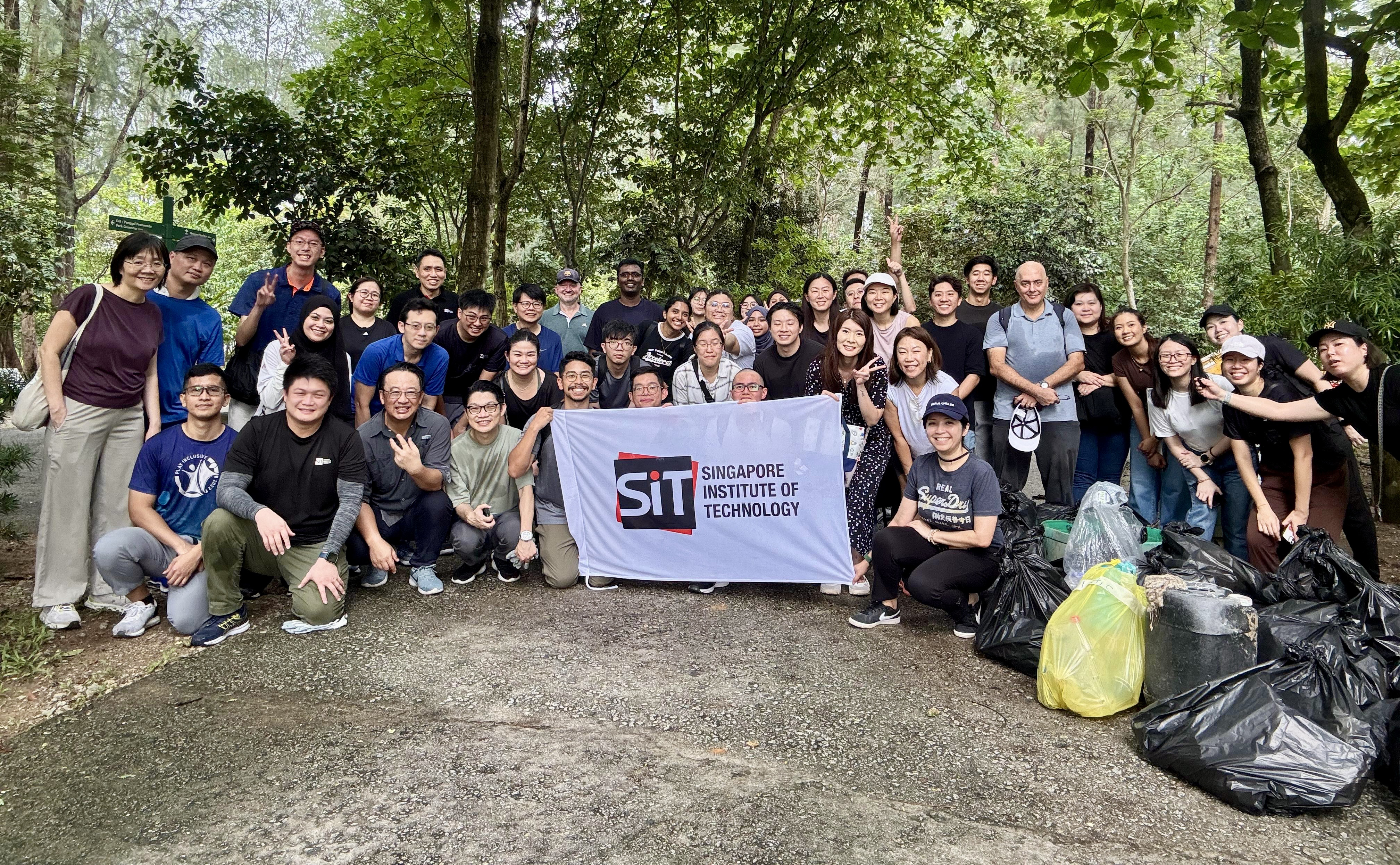
Responsible Governance
As part of our commitment to responsible operations, we are integrating sustainable procurement into SIT’s operations. SIT’s Commitment to Sustainable Procurement serves as a guide for staff and students, encouraging the adoption of the “4 Rs” principles – Reduce, Reuse, Responsible Sourcing and Responsible Disposal. By embedding these practices into our purchasing decisions, we aim to minimise environmental impact and promote ethical supply chains.