











CTIL Lunch-Time Seminar on Structural Wind Engineering: From Aerodynamics and Structural Dynamics to Resilient Design
On 9 October 2026, the Construction Technology Innovation Laboratory (CTIL) at the Singapore Institute of Technology (SIT) hosted the lunch-time seminar, “Structural Wind Engineering: From Aerodynamics and Structural Dynamics to Resilient Design”, at Lectorial 7, SIT Punggol Campus.
Organised in partnership with Chongqing University, China, Meinhardt (Singapore) Pte Ltd, EXDYNA PTE LTD and Southeast University, China, the seminar brought together academic and industry experts to share research insights, technological developments and practical approaches in structural wind engineering.
The event attracted more than 200 participants, including 151 Professional Engineers (PEs), reflecting strong interest from the engineering community in the application of wind engineering principles to resilient building and infrastructure design.
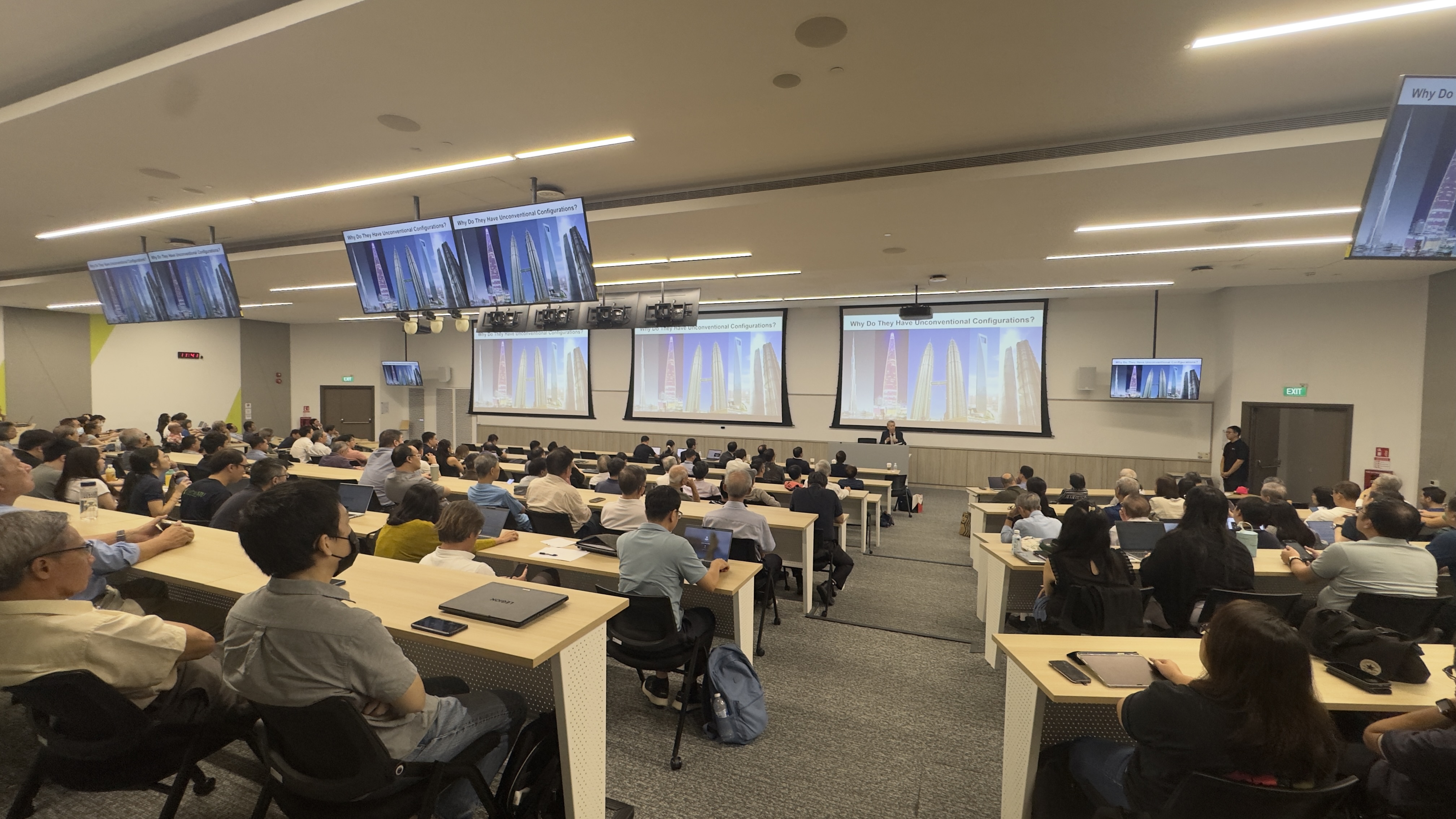
A full house at the CTIL Lunch-Time Seminar on Structural Wind Engineering. (Photo: CTIL)
The programme began with a welcome and overview by Er. Prof. Chiew Sing Ping, Head of CTIL, SIT. A keynote presentation and four technical presentations followed, addressing building aerodynamics, wind-induced dynamic response, wind tunnel testing, computational wind simulation and structural vibration mitigation. Collectively, the presentations demonstrated how theoretical principles, advanced analytical tools and engineering experience can be integrated to address increasingly complex wind-related design challenges.
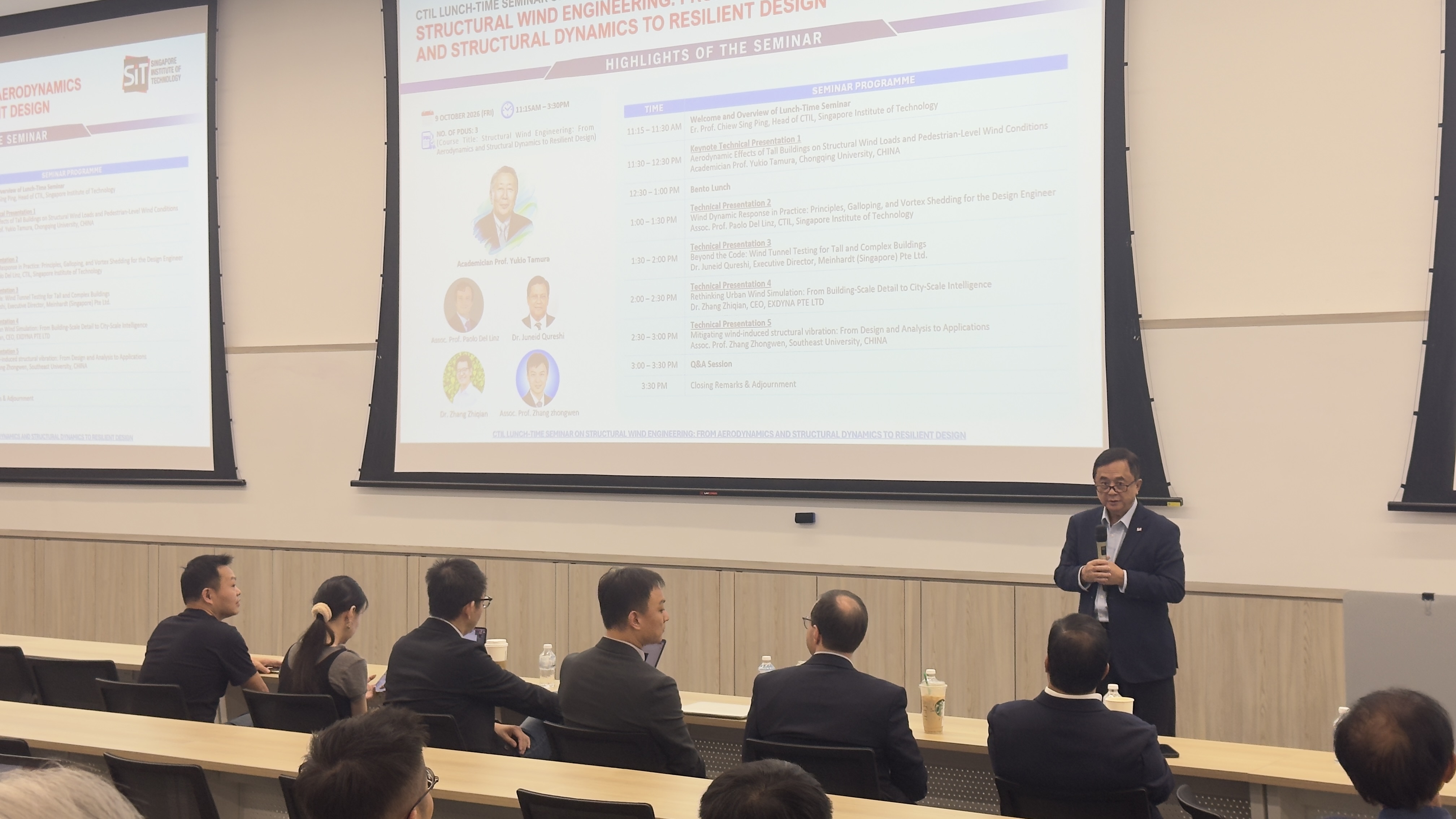
Welcome address by Er. Prof. Chiew Sing Ping, Head of CTIL, SIT. (Photo: CTIL)
Optimising Tall-Building Form for Wind Performance
Prof. Yukio Tamura, a Foreign Academician of the Chinese Academy of Engineering (CAE) and a professor at Chongqing University, China, delivered the keynote presentation, “Shape Effects on Aerodynamic Characteristics and Pedestrian-Level Wind Environments of Super-Tall Buildings”.
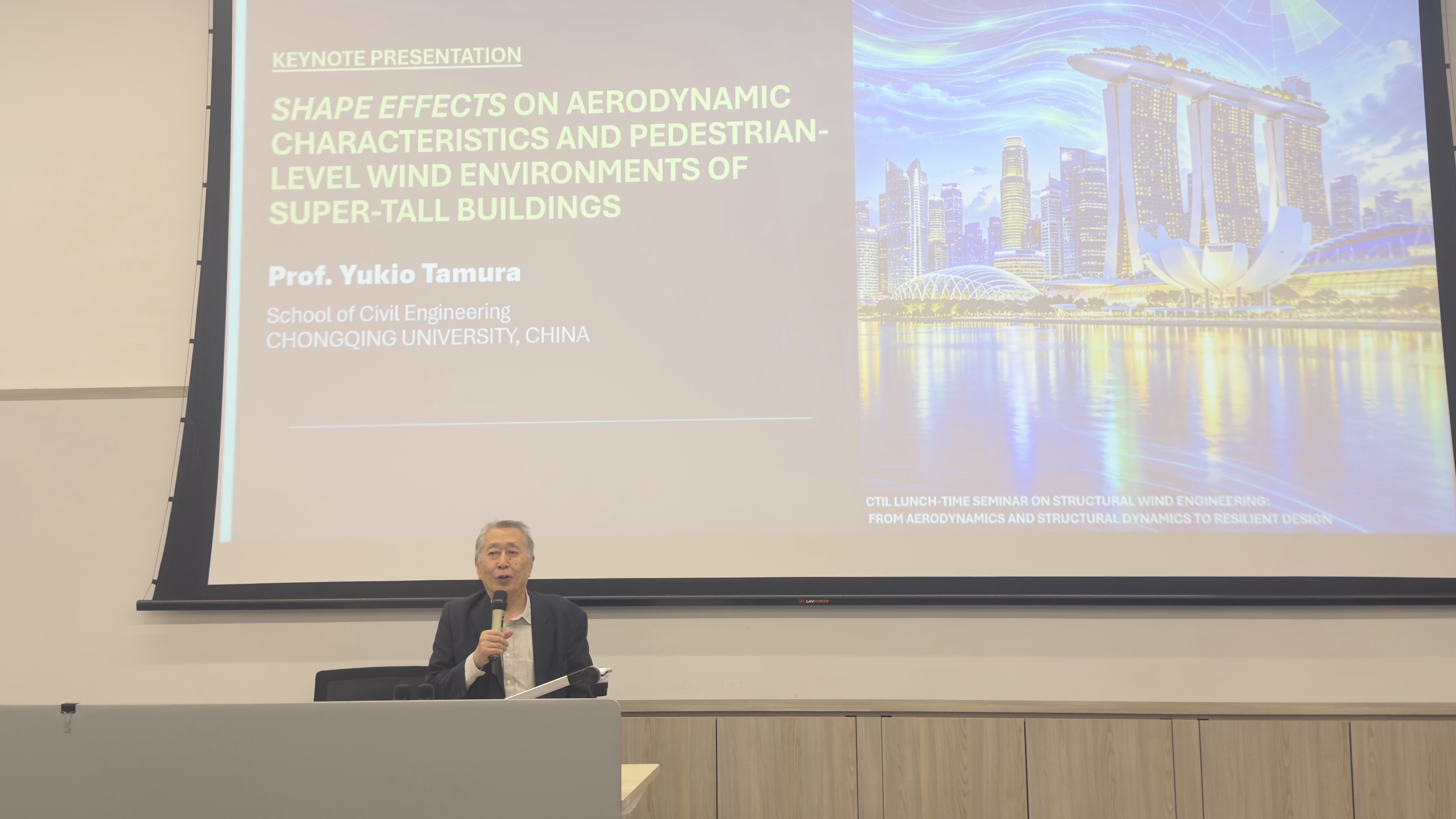
Keynote presentation by Prof. Yukio Tamura, Foreign Academician of the Chinese Academy of Engineering (CAE) and Professor at Chongqing University, China. (Photo: CTIL)
Prof. Tamura examined how building shape influences wind loads, structural response and pedestrian-level wind conditions. He compared configurations such as corner modifications, tapering, setbacks and twisting, highlighting the role of shape optimisation in reducing crosswind forces and responses. He also discussed how building dimensions, downwash and the Venturi effect influence ground-level wind speeds, and how corner modifications can reduce areas affected by wind speed-up.
Applying Wind Dynamics in Structural Design
Associate Prof. Paolo Del Linz from SIT presented “Wind Dynamic Response in Practice: Principles, Galloping, and Vortex Shedding for the Design Engineer”.
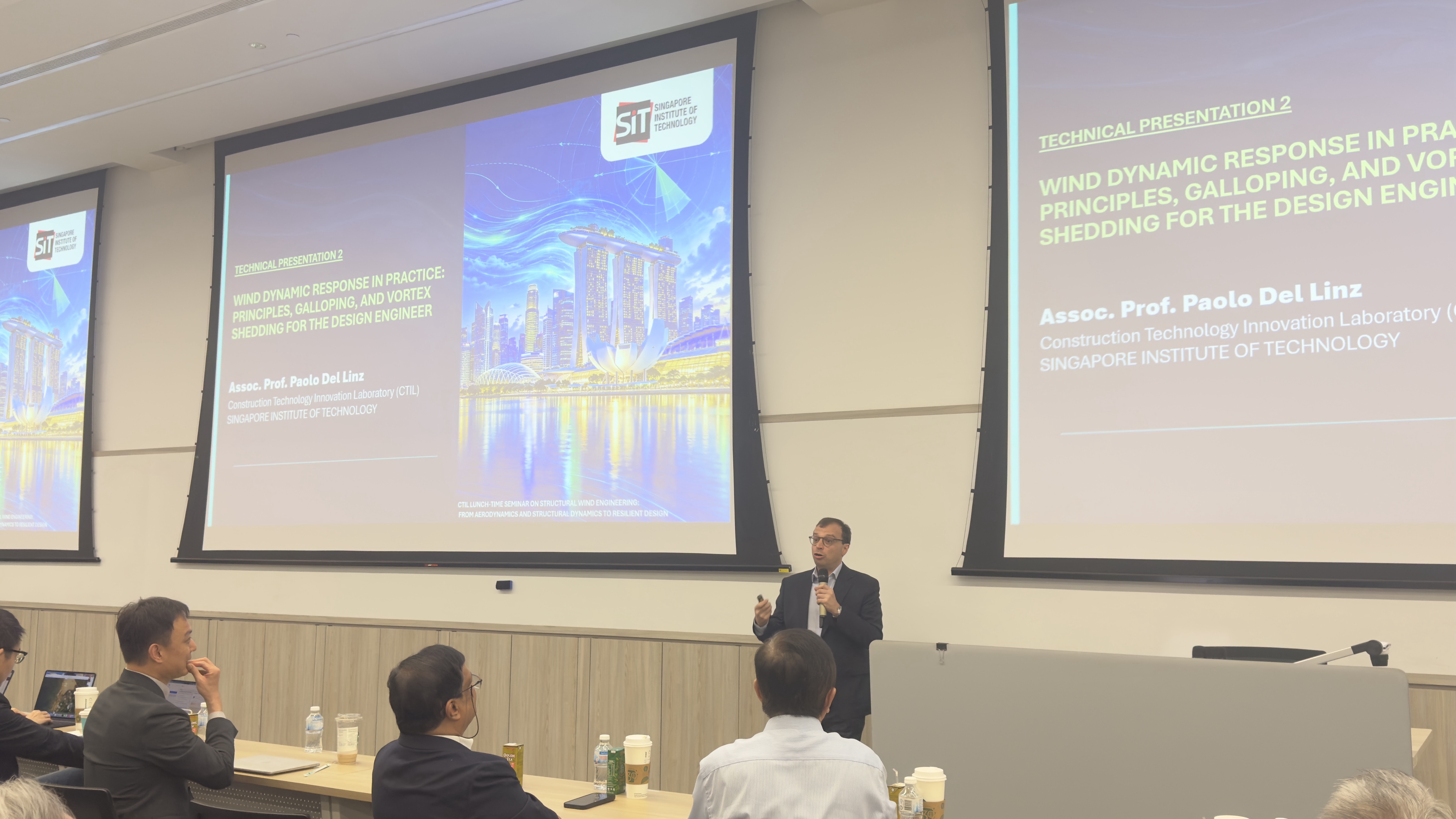
Technical presentation by Associate Professor Paolo Del Linz from the Singapore Institute of Technology (SIT). (Photo: CTIL)
He explained why static analysis alone cannot capture the wind-induced dynamic response of slender and flexible structures. Focusing on galloping and vortex shedding, he outlined the underlying principles and relevant design code provisions, providing engineers with practical guidance on recognising and addressing these effects.
Wind Tunnel Testing Beyond Code Compliance
Dr Juneid Qureshi, Executive Director of Meinhardt (Singapore) Pte Ltd, presented “Beyond the Code: Wind Tunnel Testing for Tall and Complex Buildings”.
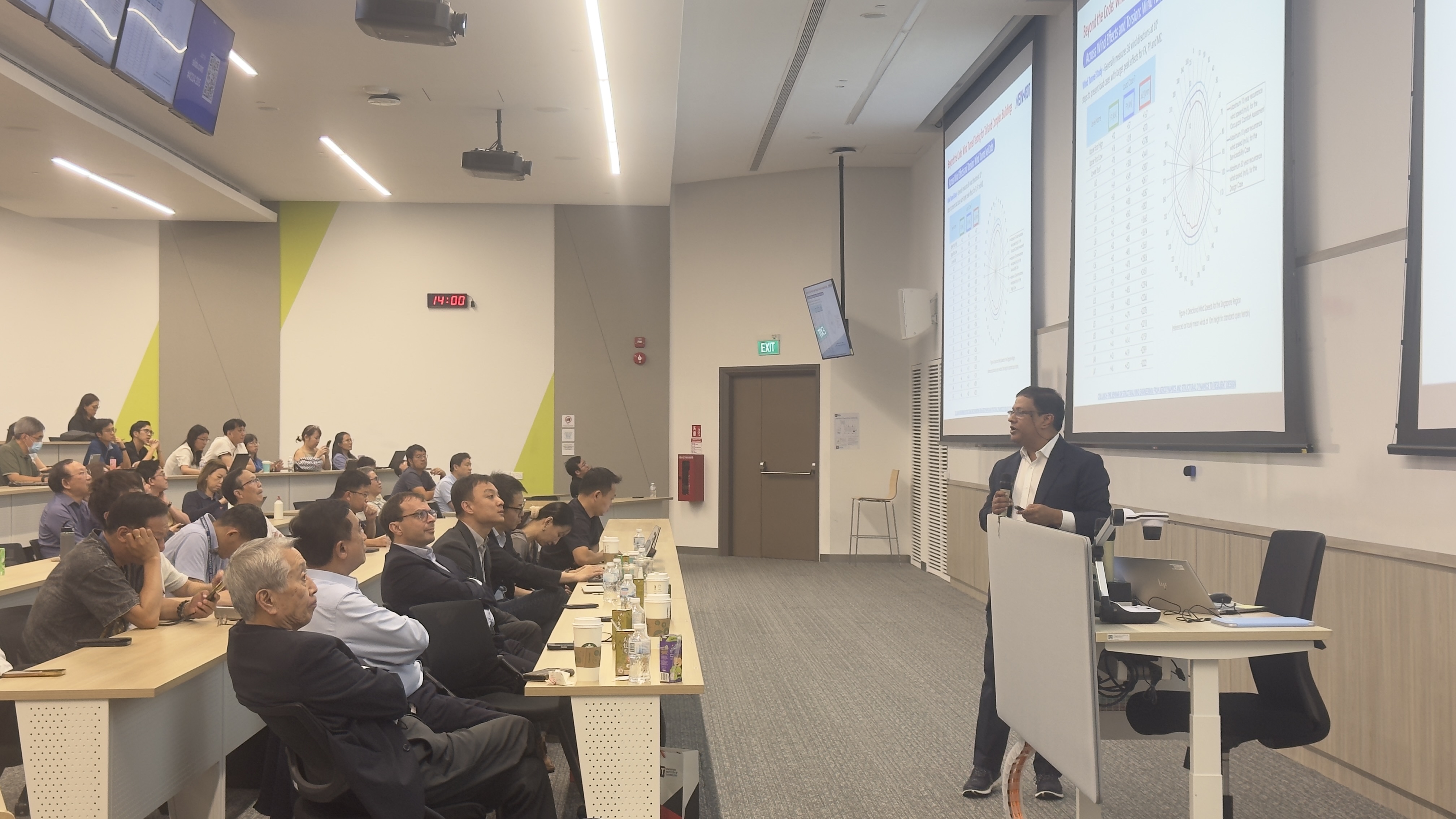
Technical presentation by Dr Juneid Qureshi, Executive Director of Meinhardt (Singapore) Pte Ltd. (Photo: CTIL)
Drawing on project experience, Dr Qureshi discussed the limitations of code-based wind load procedures for tall, slender and geometrically complex buildings. He illustrated how project-specific wind tunnel testing can complement code-based assessments and inform structural design decisions, clarifying when and why it adds value beyond code compliance.
Connecting Building- and City-Scale Wind Simulation
Dr Zhang Zhiqian, Founder and CEO of EXDYNA PTE LTD, presented “Rethinking Urban Wind Simulation: From Building-Scale Detail to City-Scale Intelligence”.
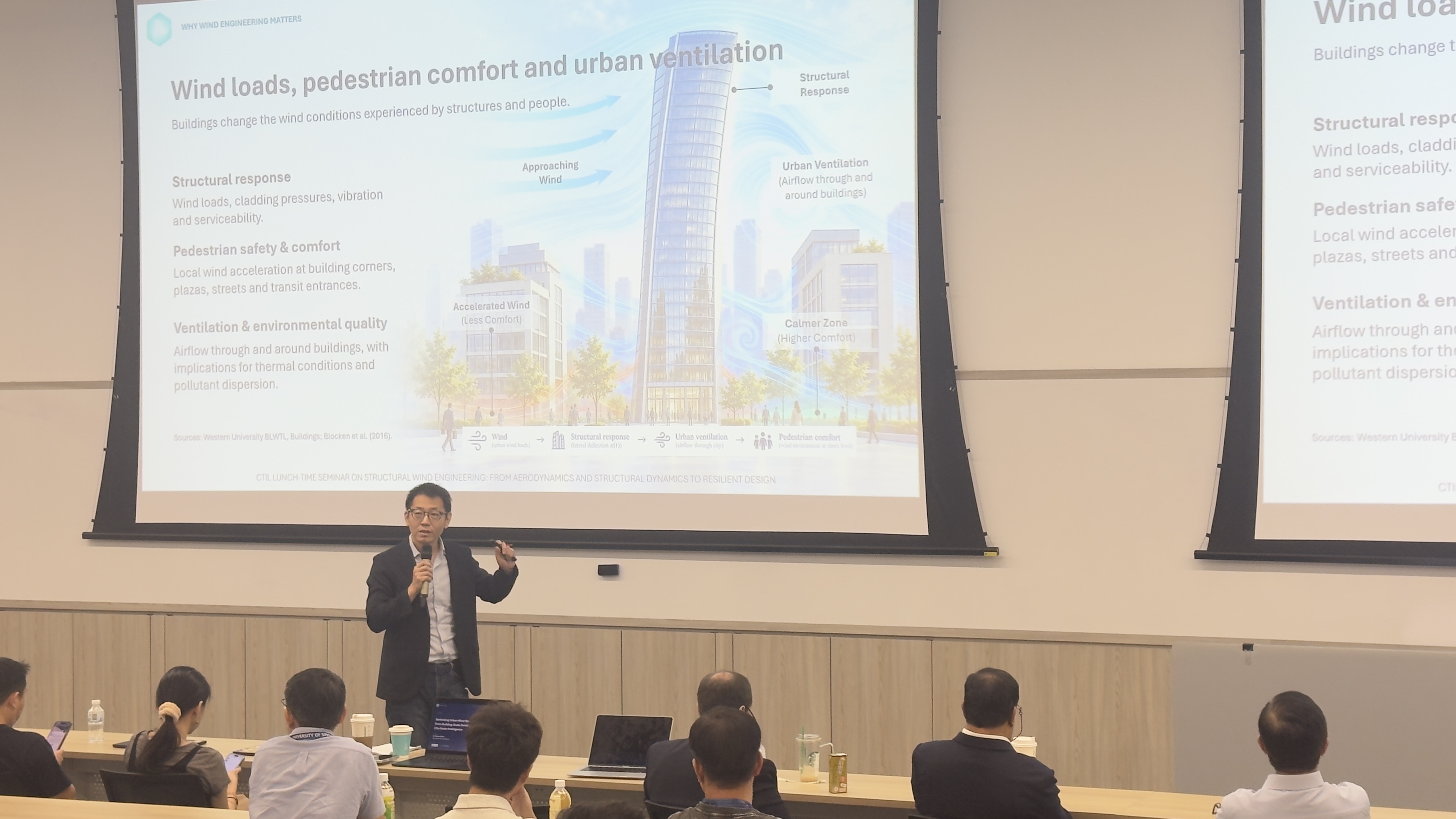
Technical presentation by Dr Zhang Zhiqian, Founder and CEO of EXDYNA PTE LTD. (Photo: CTIL)
Dr Zhang introduced EXDYNA’s GPU-native approach to wind simulation, spanning individual buildings, districts and cities. Simulations approaching one billion mesh cells on a single graphics processing unit (GPU) illustrated the potential to connect detailed building aerodynamics with larger-scale wind environments. Applications included structural design, pedestrian wind assessment, urban ventilation and climate-responsive planning.
Mitigating Wind-Induced Structural Vibration
Associate Prof. Zhang Zhongwen from Southeast University, China, concluded the technical presentations with “Mitigating Wind-Induced Structural Vibration: From Design and Analysis to Applications”.
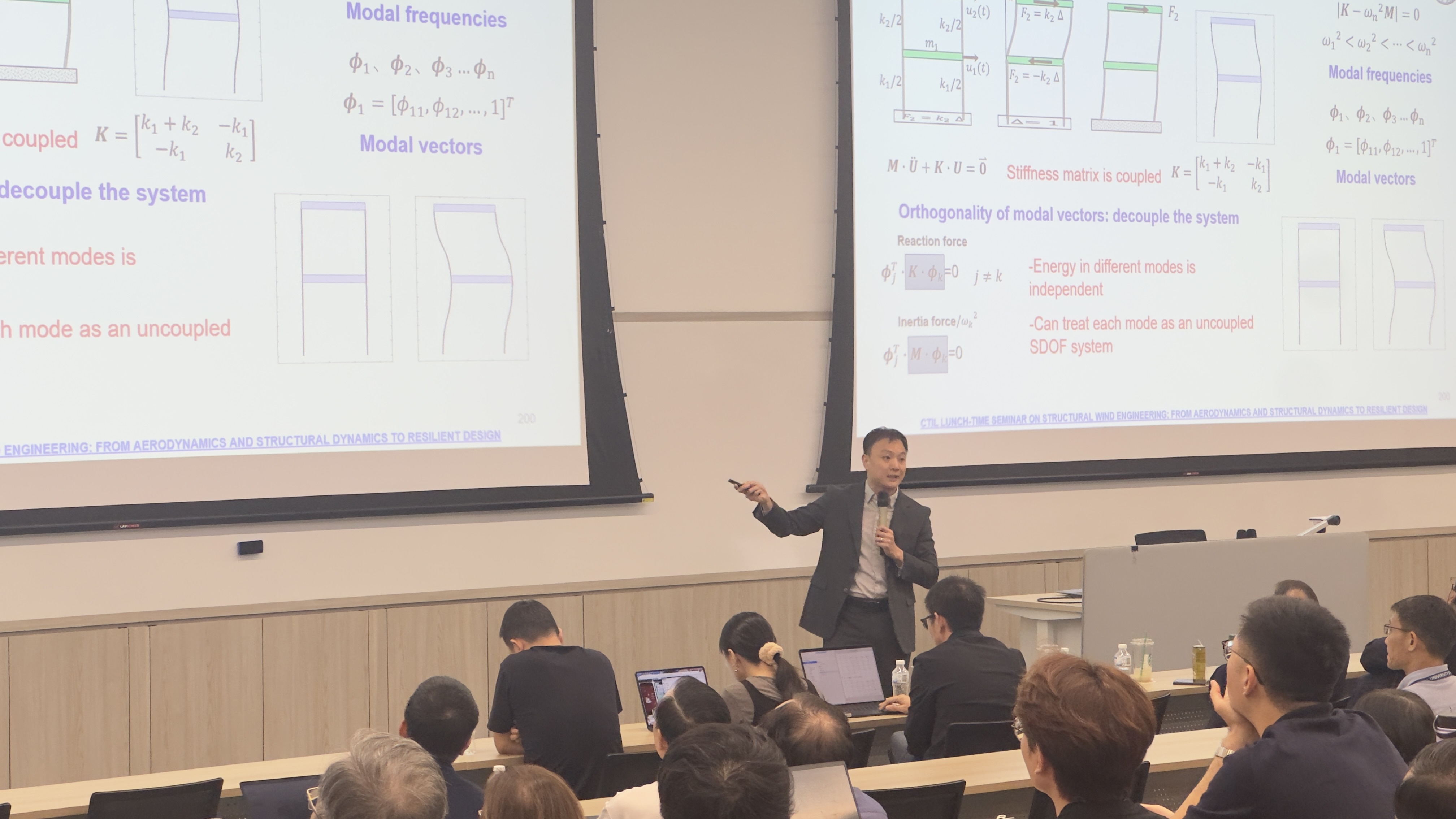
Technical presentation by Associate Professor Zhang Zhongwen from Southeast University, China. (Photo: CTIL)
He outlined analytical methods for assessing wind-induced dynamic responses and determining optimal tuned mass damper (TMD) parameters. Case studies involving a high-rise building and a bridge deck illustrated applications in mitigating buffeting and vortex-induced vibration, respectively. He also introduced emerging approaches, including adaptive and semi-active damping systems, as well as nonlinear systems.
Advancing Knowledge for Wind-Resilient Design
The technical presentations were followed by a question-and-answer session, providing participants with an opportunity to engage with the speakers and discuss the application of the concepts, technologies and design approaches presented.
By bringing together expertise in building aerodynamics, structural dynamics, wind tunnel testing, computational simulation and vibration control, the seminar provided a comprehensive perspective on structural wind engineering—from understanding wind effects and predicting structural response to developing practical mitigation strategies.
The event further demonstrated CTIL’s commitment to facilitating knowledge exchange between academia and industry and to translating research, advanced technologies and engineering expertise into practical solutions for a more resilient, sustainable and future-ready built environment.