











![[FA] SIT One SITizen Alumni Initiative_Web banner_1244px x 688px.jpg](/sites/default/files/2024-12/%5BFA%5D%20%20SIT%20One%20SITizen%20Alumni%20Initiative_Web%20banner_1244px%20x%20688px.jpg)
CTIL Focused Workshop on the Application of High-Strength Structural Steel and Live Demonstration of Robotic Welding, Quenching & Tempering, and Non-Destructive Testing
On 11 June 2026, the Construction Technology Innovation Laboratory (CTIL) at SIT, with support from the Building and Construction Authority (BCA) and the Land Transport Authority (LTA), hosted a focused workshop on the application of high-strength structural steel and advanced fabrication technologies.
The workshop brought together researchers, engineers, fabricators, regulators, and industry practitioners to explore the latest advancements in high-strength structural steel and emerging construction technologies for the built environment sector. The programme featured technical presentations, industry case studies, and live demonstrations covering robotic welding, quenching and tempering (QT) processes, non-destructive testing (NDT), and material characterisation of ultra-thick steel sections in S460M, S550M, and S690Q grades.
Drawing more than 260 participants, including 123 Professional Engineers (PEs), the event showed strong professional interest in advanced steel construction technologies.
The workshop began with a welcome address and overview by Er. Prof. Chiew Sing Ping, Head of CTIL and Cluster Director (Engineering), SIT. He outlined CTIL’s continued commitment to advancing applied research and strengthening industry collaboration to accelerate the translation of advanced construction technologies into real-world applications. This was followed by the opening address by Guest-of-Honour, Er. Thanabal Kaliannan, Commissioner of Building Control, BCA, who emphasised the importance of high-strength steel adoption, robust quality assurance frameworks, and innovation-led transformation in supporting Singapore’s evolving built environment needs.
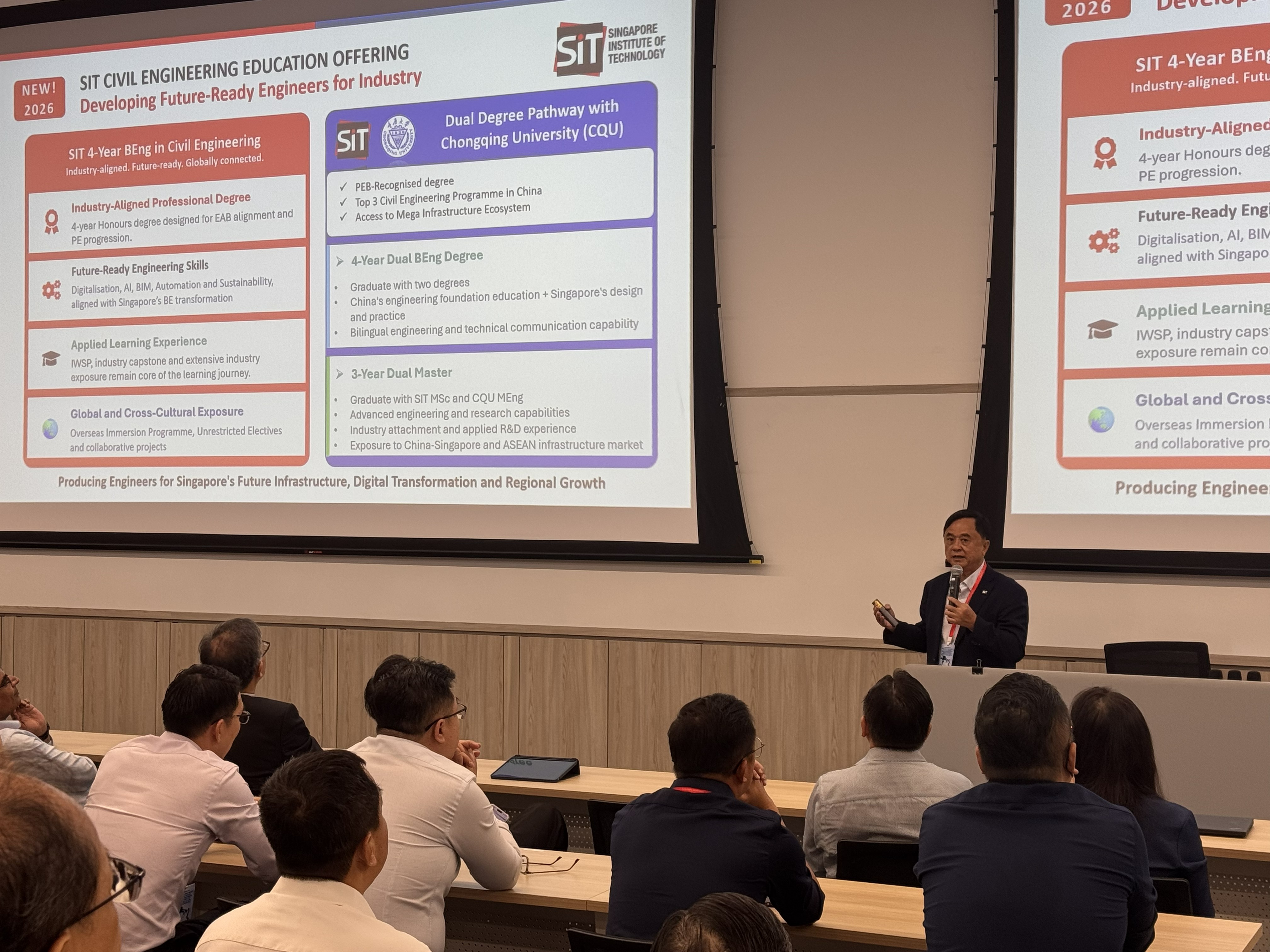
Welcome address by Er. Prof. Chiew Sing Ping, Head of CTIL, SIT. (Photo: CTIL)
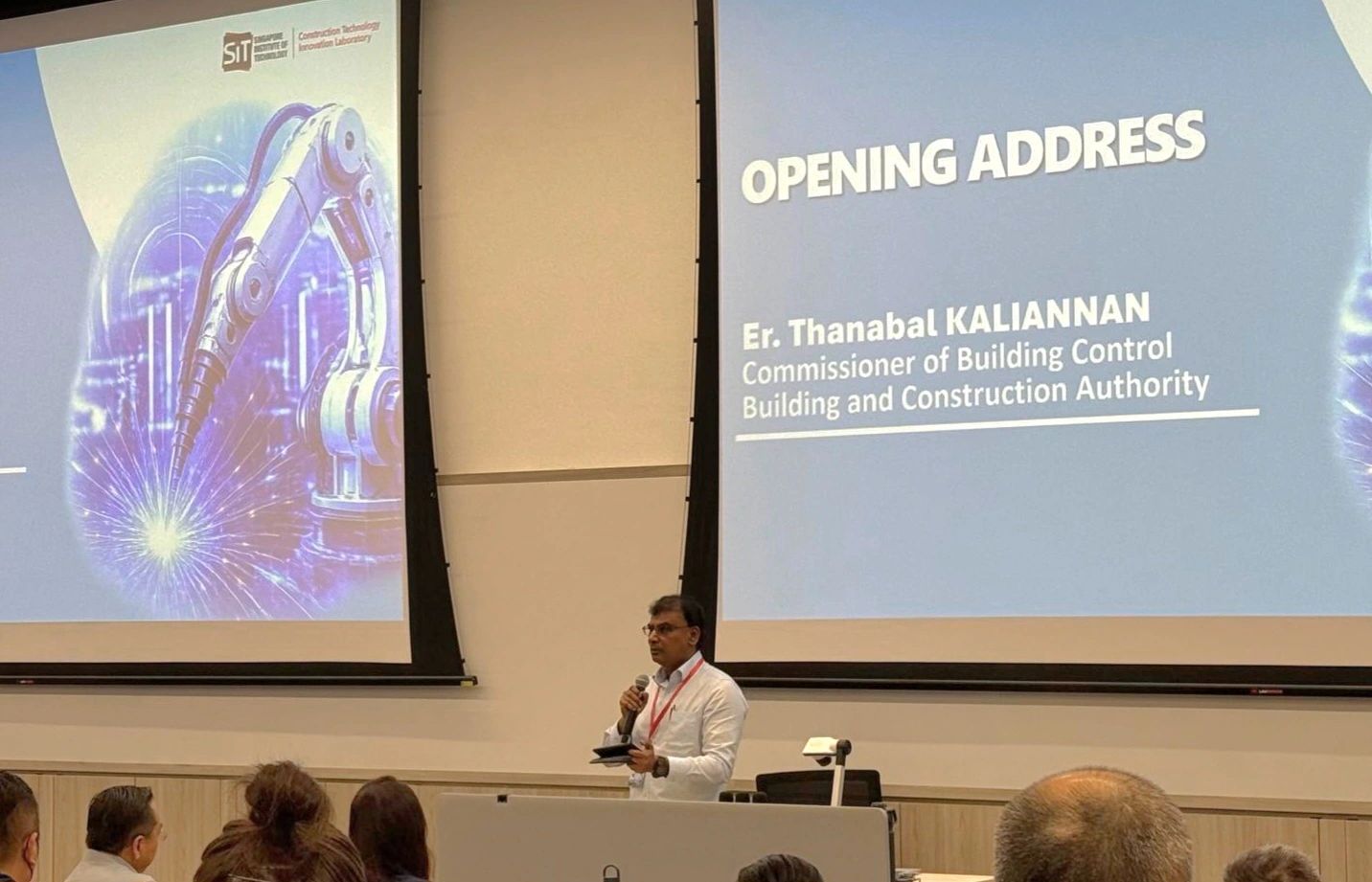
Opening address by Er. Thanabal Kaliannan, Commissioner of Building Control, Building and Construction Authority. (Photo: BCA)
Ir. Prof. Chung Kwok Fai, Founding Director of the Chinese National Engineering Research Centre for Steel Construction (Hong Kong Branch), at The Hong Kong Polytechnic University, delivered the keynote address. It focused on the effective use of S690 to S960 high-strength steel in construction, covering recent research developments, design methodologies, and innovative applications in large-span and high-performance structural systems.
The technical programme continued with a series of industry and research presentations. Er. Willie Chai from BCA shared insights from the CTIL study trip to Shenzhen and Chongqing, highlighting international developments in smart steel construction and advanced fabrication practices. Er. Colin YIP from Woh Hup then presented an overview of the Clifford Centre Re-Development (CCRD) project, focusing on key engineering challenges in large-scale redevelopment works involving high-strength steel systems.
Er. Mak Swee Chiang from ARUP Singapore discussed structural design considerations for the use of high-strength steel in the CCRD project, while Dr. Ng Yiaw Heong from TTJ Design & Engineering presented on the fabrication of S690 mega-trusses and kingposts, highlighting constructability considerations and fabrication strategies for complex steel structures.
Er. Ho Kai Ming from H-Tech Consultants presented on the fabrication and welding of ultra-thick S690 steel plates, up to 100 mm thick, for the Alexandra Integrated General Hospital (AIGH) project, addressing key challenges in welding performance, material behaviour, and structural reliability. Associate Professor Zhao Ming Shan from CTIL shared approaches for overcoming welding challenges in high-strength steel applications, focusing on weld integrity, metallurgical considerations, and quality assurance strategies. Assistant Professor Zhang Lulu from CTIL concluded the technical presentations with insights into innovations in robotic welding, highlighting the increasing role of automation in improving fabrication efficiency, precision, and safety.
Live Demonstrations at the CTIL Construction Laboratory
A central highlight of the workshop was the live demonstrations conducted at the CTIL Construction Laboratory. The demonstrations provided participants with hands-on exposure to the full workflow of high-strength steel processing, fabrication, inspection, and quality assurance technologies, representing the core experiential component of the workshop.
The programme began with heat treatment and material behaviour demonstrations, where participants observed the relationship between steel microstructure and mechanical properties through processes such as annealing, quenching, and quenching and self-tempering. Vickers hardness testing and microstructural observation further illustrated how controlled thermal processes are used to engineer strength and performance in modern structural steels.
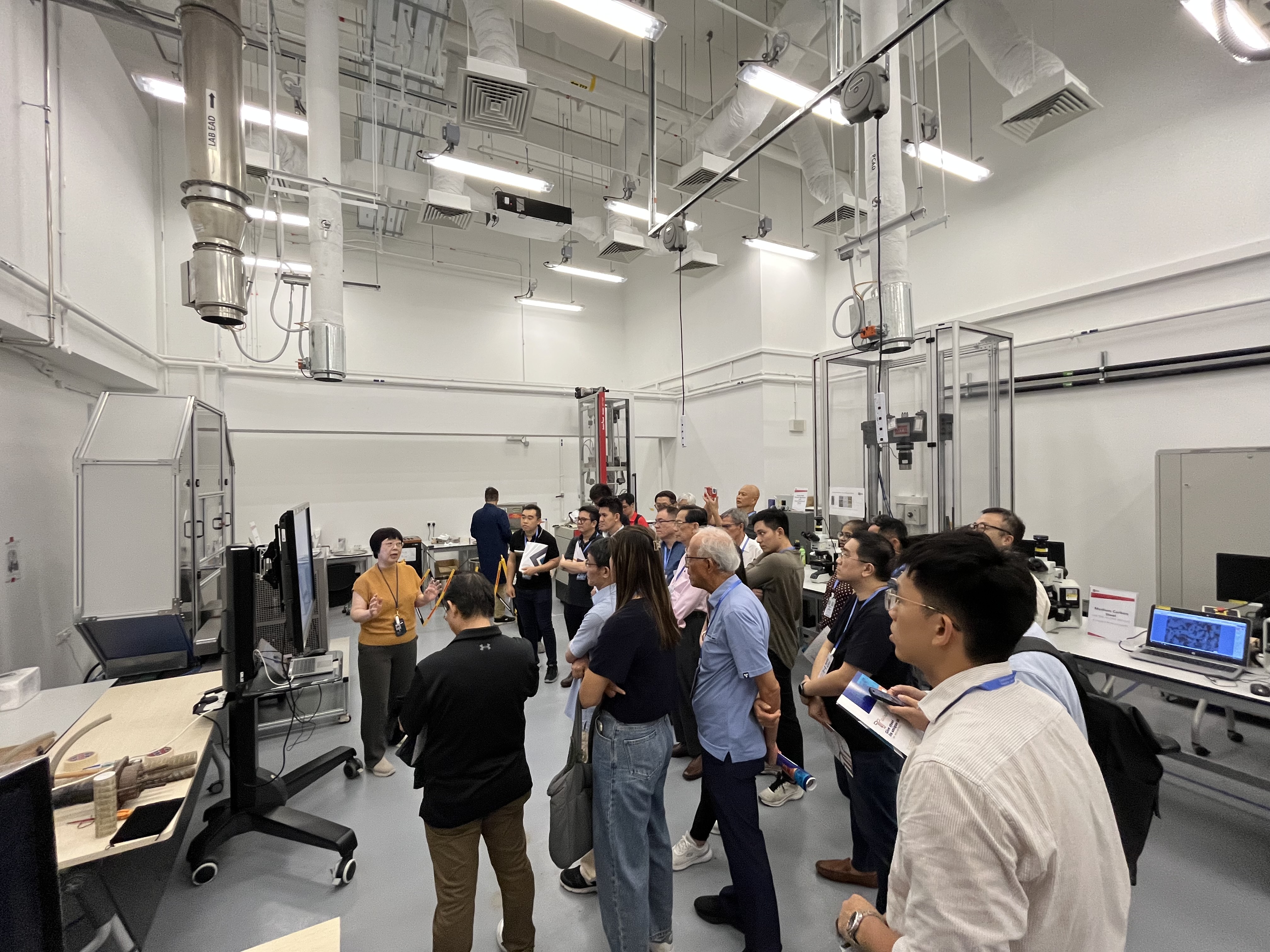
Heat treatment and material behaviour demonstrations (Photo: CTIL)
Participants were then introduced to NDT principles and applications. Under expert guidance, they explored ultrasonic testing (UT) and eddy current testing (ECT), and examined typical weld and fabrication defects. This segment reinforced the importance of robust inspection methodologies in ensuring structural integrity and construction quality.
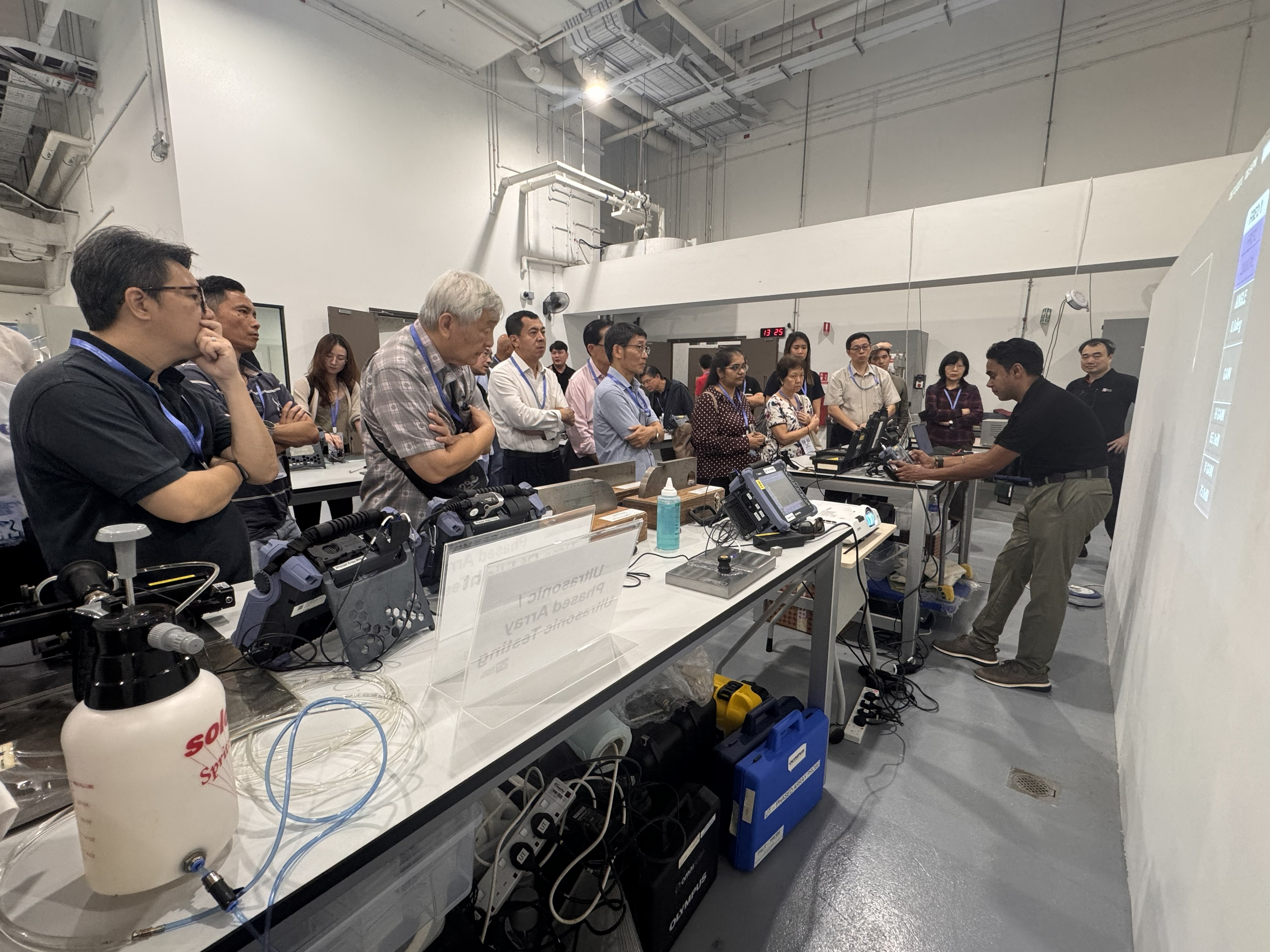
Demonstrations on quality assurance through modern NDT techniques (Photo: CTIL)
The programme continued with robotic welding demonstrations, showcasing automated welding of S690 butt joints and 3G (vertical) welding positions. Integrated NDT scanning for weld quality and weld leg length detection highlighted the convergence of fabrication and inspection technologies, underscoring the growing role of automation in steel construction workflows. This segment was supported by Chuan Leong Metalimpex Co.
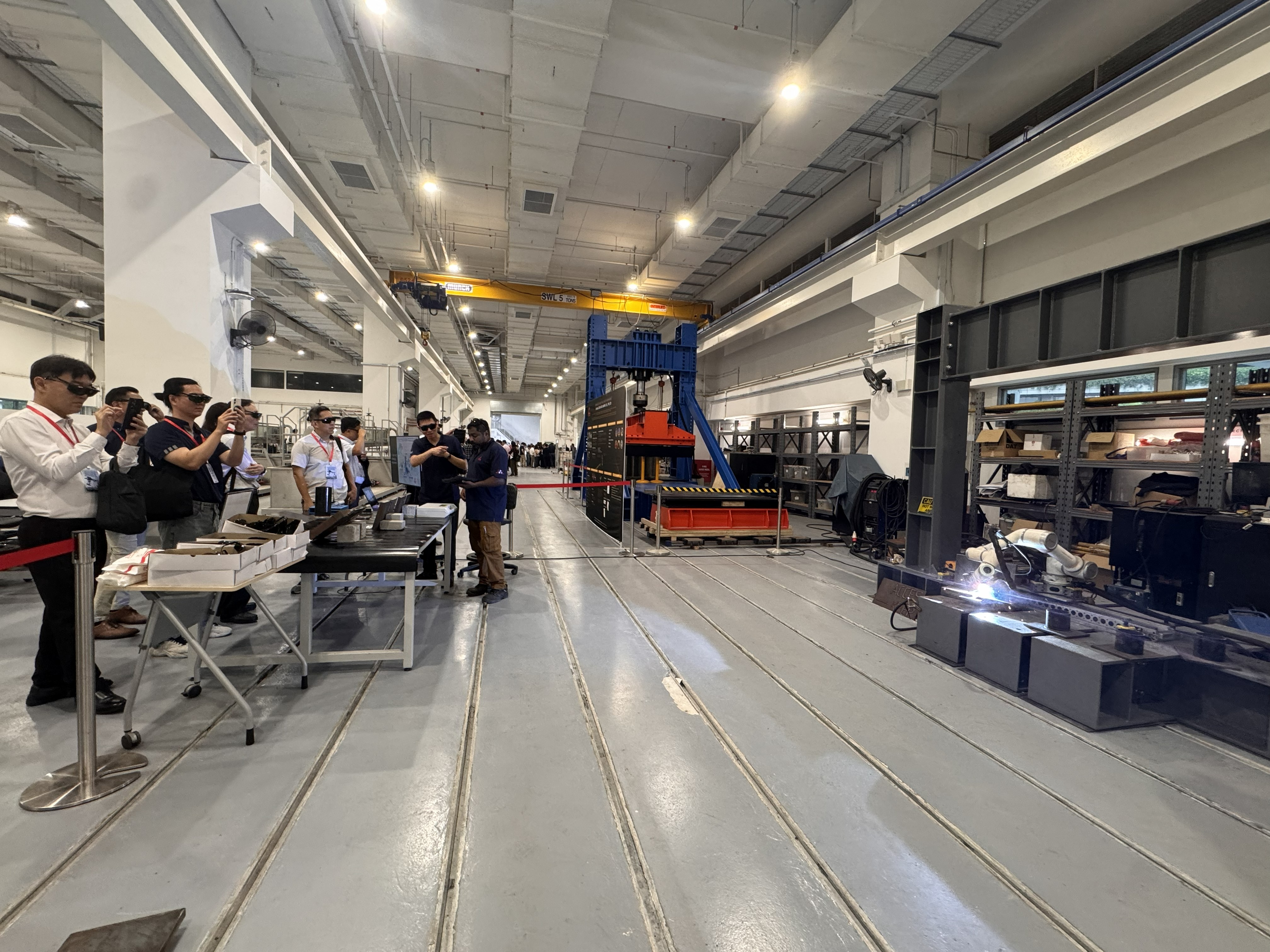
Robotic welding demonstrations by Chuan Leong Metalimpex Co., Pte Ltd (Photo: CTIL)
Another highlight was the demonstration of material verification and digital traceability systems using through-thickness hardness testing of S460 and S550 jumbo steel sections. Participants observed how hardness measurements were converted into estimated yield and tensile strength values, supported by digital traceability using GoTagID. The demonstration, supported by Mlion Corporation, showcased advancements in data-driven quality assurance.
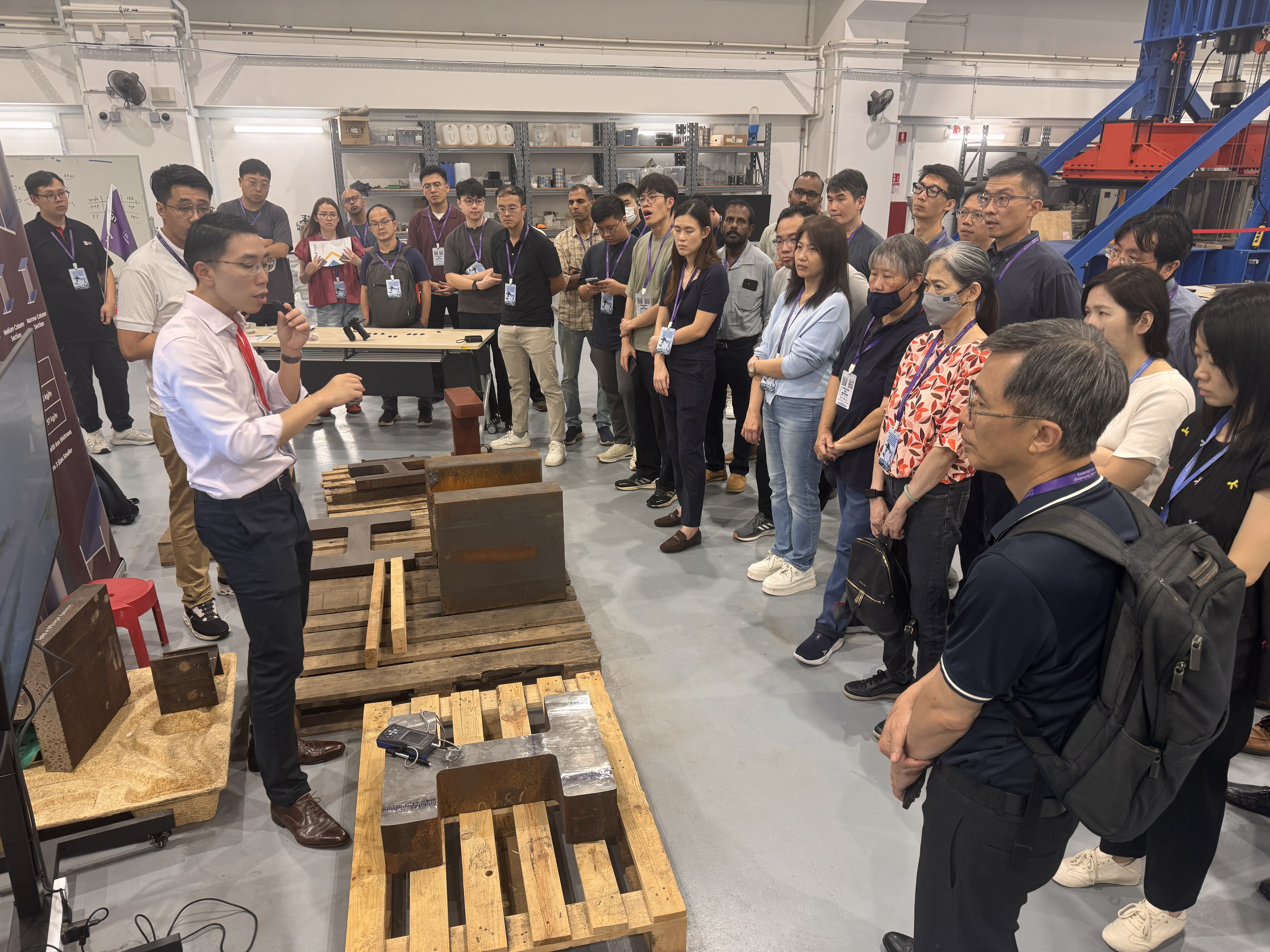
Jumbo steel section showcase by Mlion Corporation Pte. Ltd. (Photo: CTIL)
Advanced NDT applications were demonstrated using an S690 jumbo kingpost section from the AIGH project. Participants observed inspection techniques for thick high-strength steel components, illustrating practical quality assurance and quality control (QA/QC) approaches for critical structural elements used in infrastructure projects, with demonstrations conducted by Hirose (Singapore).
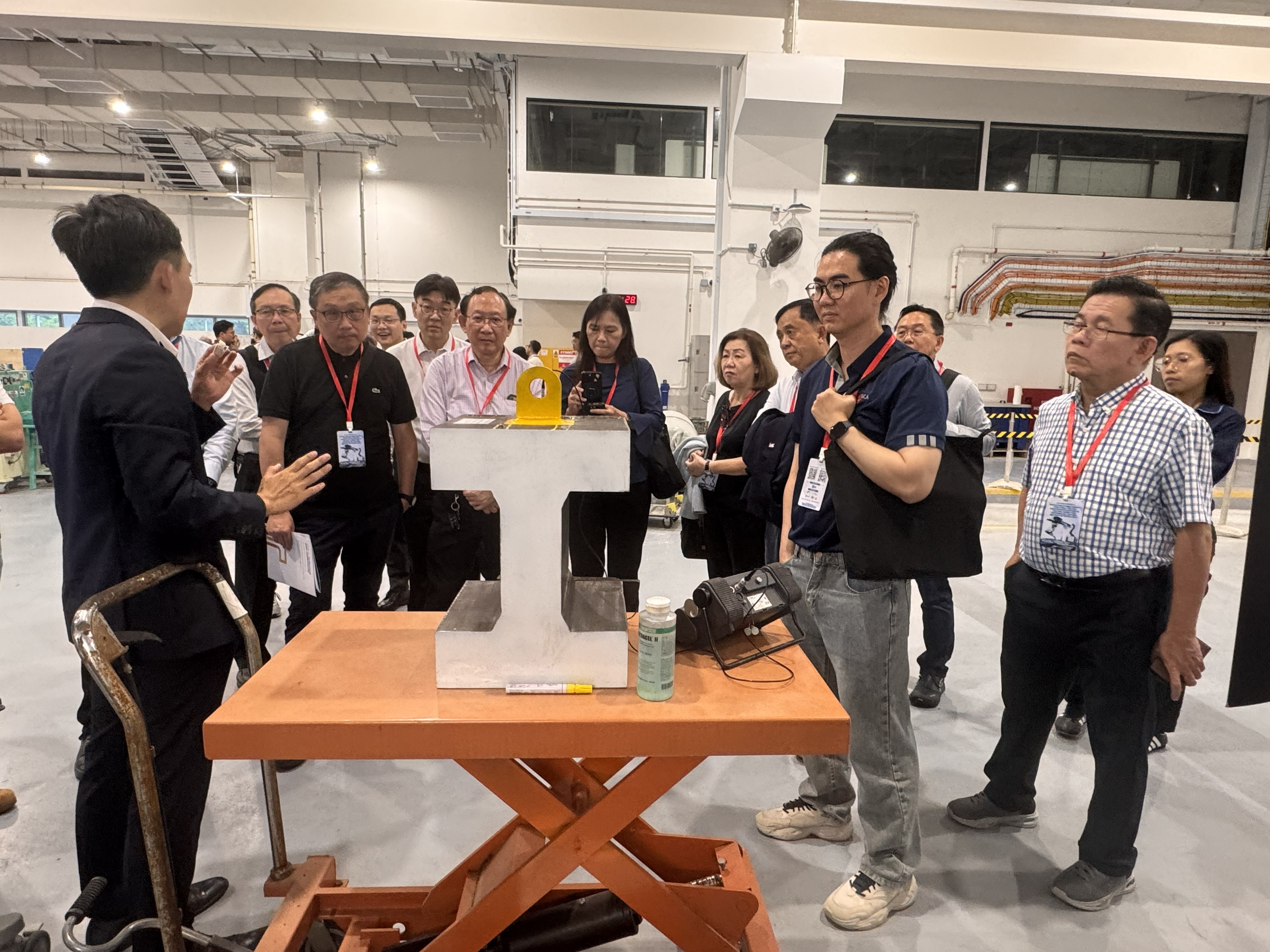
NDT of S690 king post demonstrations by Hirose (Singapore) Pte Ltd (Photo: CTIL)
The final segment of the live demonstrations focused on site-oriented welding automation technologies. China Construction Steel Structure Corporation showcased smart construction systems and flexible robotic welding solutions designed for complex construction environments. Live demonstrations of 2G position welding highlighted how robotics can enhance productivity, safety, and manpower efficiency in real-world site conditions.
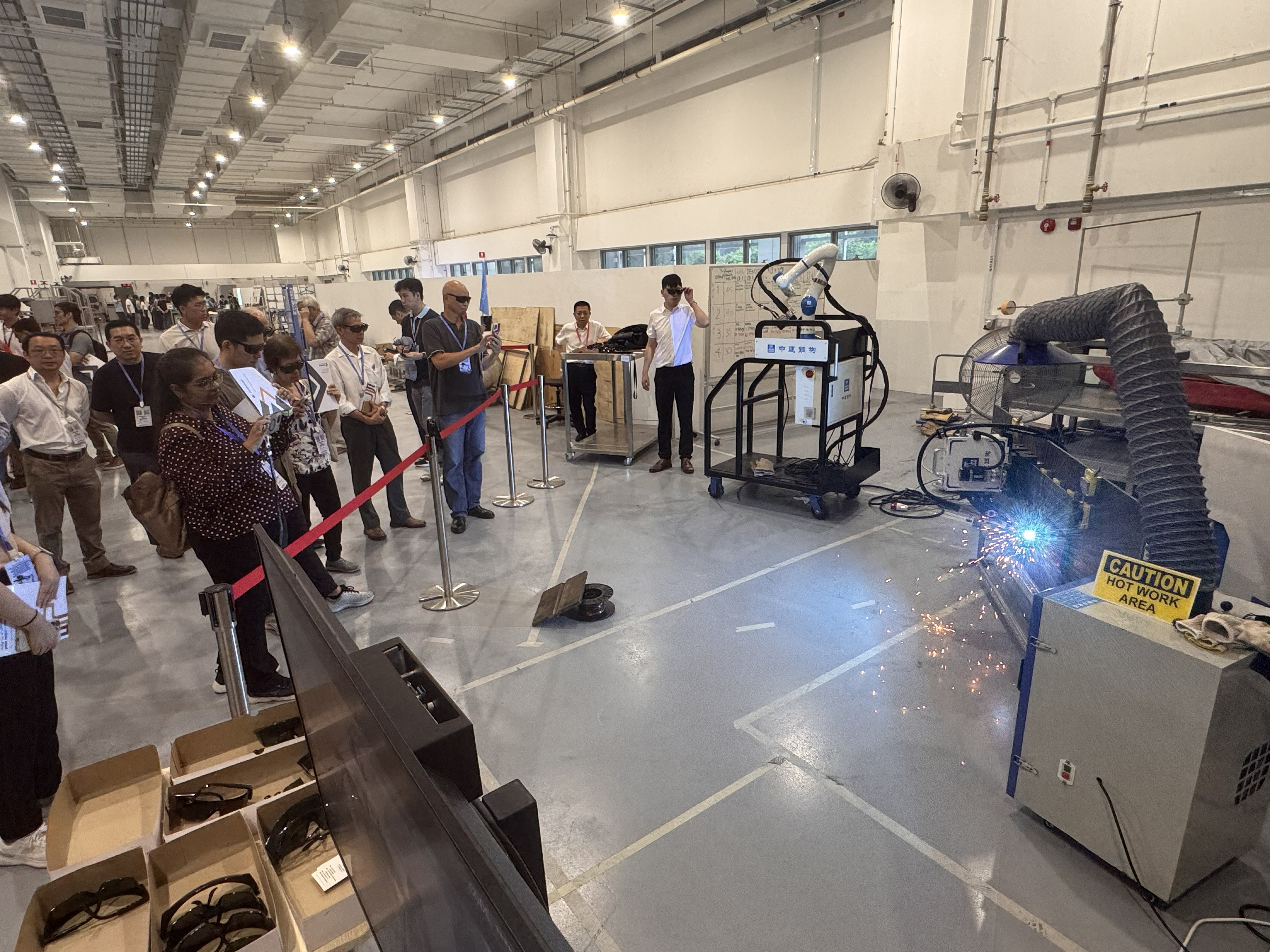
Demonstrations of site-oriented welding automation technologies by China Construction Steel Structure Corporation. (Photo: CTIL)
Collectively, the live demonstrations provided participants with an integrated end-to-end view of the high-strength steel lifecycle—from material processing and heat treatment, to fabrication, inspection, digital traceability, and automated welding. The session reinforced the critical role of advanced technologies in enabling the safe, efficient, and scalable adoption of high-strength steel in modern construction.
The workshop concluded with active discussions and exchanges among participants from industry, academia, and regulatory agencies. Key themes included the scalability of high-strength steel applications, the integration of digital QA/QC systems, and the growing importance of robotics and automation in enhancing construction productivity and structural reliability.
Through this focused workshop and immersive live demonstration platform, CTIL continues to strengthen its role as a bridge between research and industry practice, accelerating the translation of advanced construction technologies into impactful real-world applications that support a more productive, resilient, and sustainable built environment.