











![[FA] SIT One SITizen Alumni Initiative_Web banner_1244px x 688px.jpg](/sites/default/files/2024-12/%5BFA%5D%20%20SIT%20One%20SITizen%20Alumni%20Initiative_Web%20banner_1244px%20x%20688px.jpg)
Industry leaders, academics, and students came together to highlight the importance of individual responsibility and action in nurturing a more sustainable world.
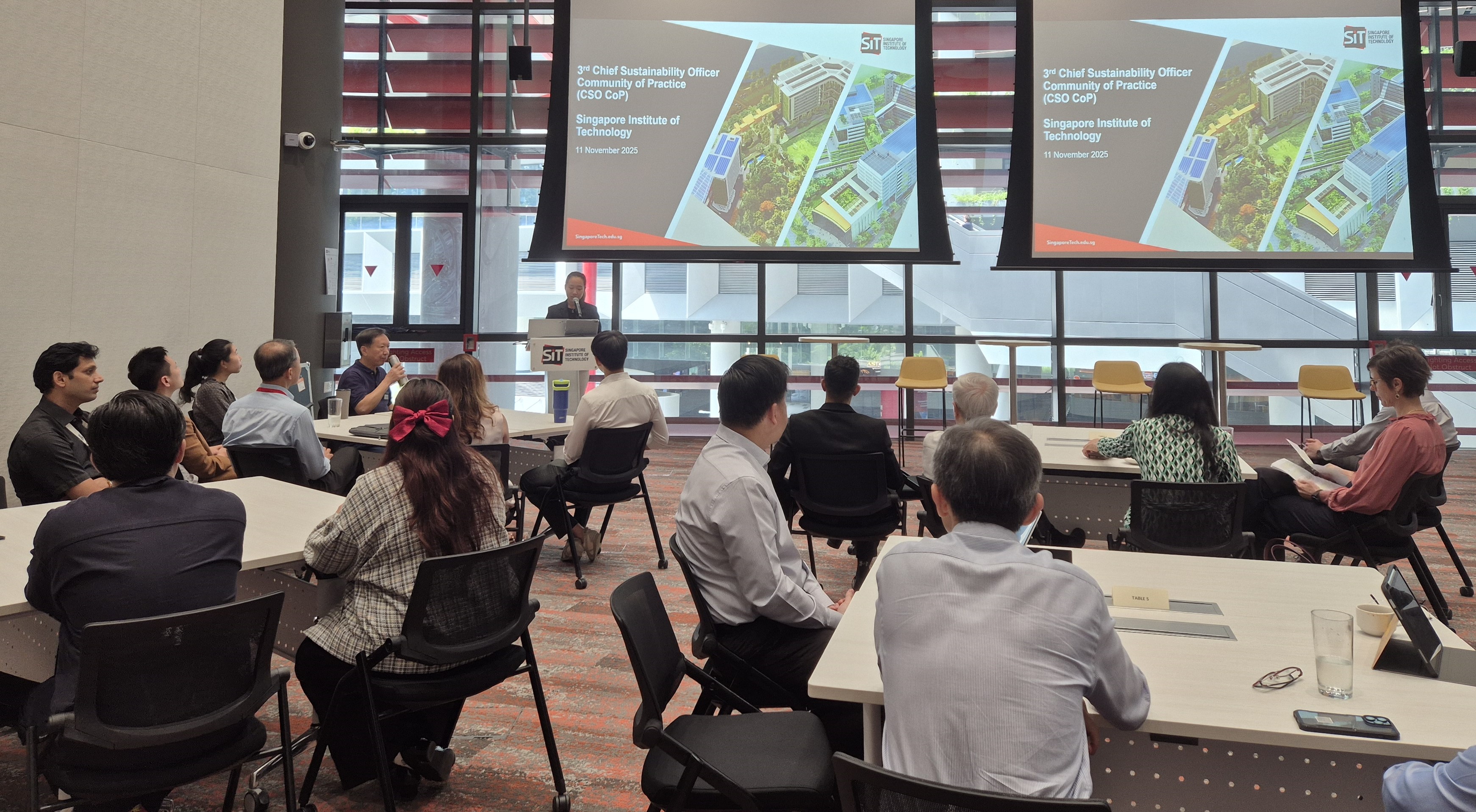
SIT’s third Chief Sustainability Office Community of Practice was held on 11 November 2025, at the SIT Punggol Campus. (Photo: SIT)
Say “carbon emissions”, and many will probably picture fume-belching cars and factories. However, did you know that email usage also leaves a sizable carbon footprint? Each time you hit “send”, 0.4g of carbon dioxide is emitted. This amount may seem minute, but if 3,000 employees at an organisation send 100 emails to multiple recipients over six months, a staggering 1,000 tonnes of greenhouse gas are produced. Considering that the entire email process requires electricity, most of which is generated by fossil fuels, that is a significant impact.
This was one of several examples shared at the third Chief Sustainability Officer (CSO) Community of Practice (CoP) held on 11 November 2025 at the Singapore Institute of Technology (SIT), demonstrating how everyday habits and behaviours often have a larger impact on the environment than people realise. The event brought together sustainability leaders across energy, real estate and research sectors, all united around this session’s theme: “Sustainability Strategies Across Industries – From Vision to Impact”.
Keynote speaker Professor Yeoh Lean Weng, Chief Sustainability Officer at the Agency for Science, Technology and Research (A*STAR), offered another little-known fact: producing a T-shirt requires about 2,500 litres of water. The key, he said, is to be more intentional with one’s actions and consumption patterns.
“Sustainability is everyone’s responsibility, and we need to embrace a culture of sustainability,” said Prof Yeoh.
When Technology Heats Up
Emerging technologies, such as artificial intelligence (AI), also have a greater carbon footprint than most may be aware of. For instance, a ChatGPT query consumes five to 10 times more energy than a Google search, said another keynote speaker, Mr Vinamra Srivastava, Chief Sustainability and Sustainable Investments Officer at CapitaLand Investment.
With AI pervading everyday life and driving economic growth, he recognised that it is impractical to curtail its usage. Instead, training and education efforts on AI’s environmental impact need to be amplified.
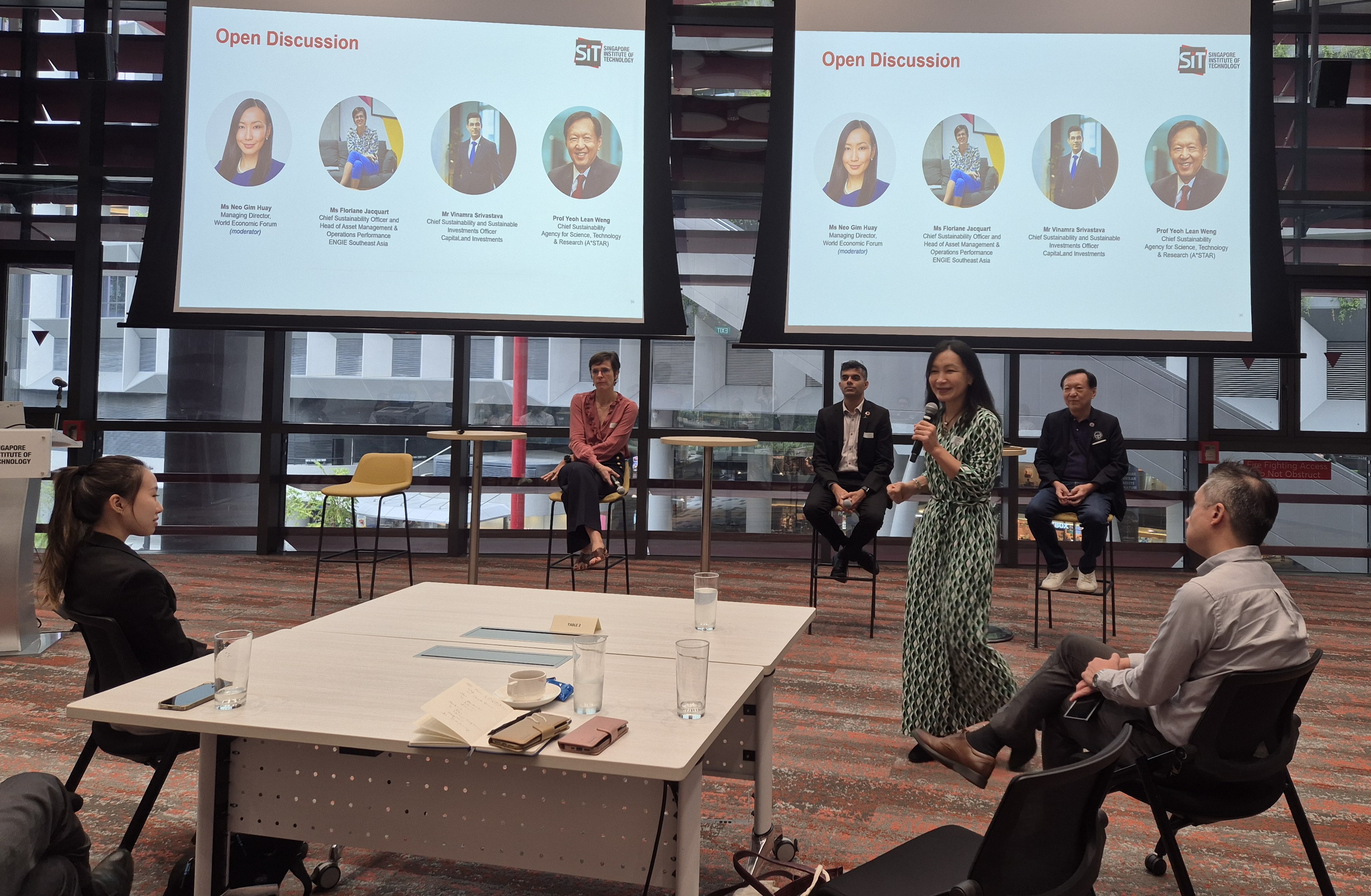
An open discussion among the CSOs was moderated by Ms Neo Gim Huay, Managing Director at the World Economic Forum and member of SIT’s Board of Trustees (right, standing). (Photo: SIT)
Fellow keynote speaker, Ms Floriane Jacquart, Chief Sustainability Officer and Head of Asset Management & Operations Performance at ENGIE Southeast Asia, agreed, “I could be using ChatGPT in my day-to-day and not realise its impact. With the rise of digitalisation and AI, we have started education and communication about AI and its impact,” adding that sustainability education must keep pace with technological advancements.
The speakers also emphasised the importance of climate change mitigation and adaptation. While mitigation aims to reduce the amount of greenhouse gases released into the atmosphere, adaptation involves learning to adjust to the effects of climate change. Both are necessary and interdependent in slowing the pace and severity of climate impact.
“Two years ago, very few companies spoke about adaptation, but now we realise that even if we do everything we can, it is very likely that we’ll have an overshoot of emissions for the next three to four decades,” said Ms Patricia Ho, Assistant Director of Strategic Partnerships at SIT. “So even as we cut emissions, invest in technology and nature-based solutions, and try to scale them, we also need to think seriously about adapting to the changing climatic conditions.”
Creating Your Own Sustainability Path
While the experts discussed macro problems across the sustainability movement, the CSO student dialogue, which made its debut at this CSO CoP, was more focused on personal development and impact. One question from the SIT undergraduates at the session was how they could build careers in the sustainability sector.
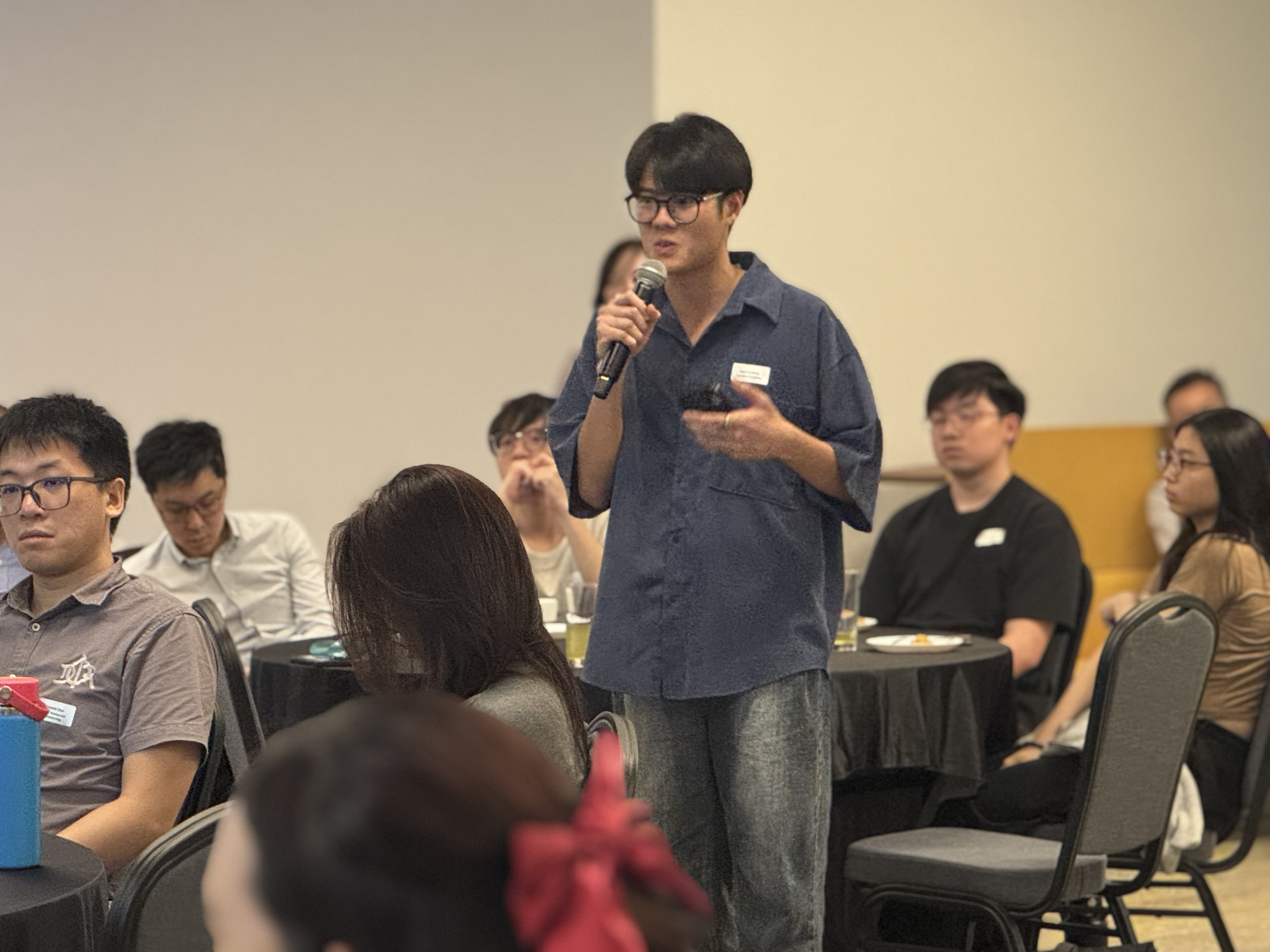
A student asking questions at the inaugural Student Dialogue with CSOs. (Photo: SIT)
Mr Srivastava’s advice was to first figure out which aspect one wants to pursue. “Sustainability is a wide topic. There are technologies, finance, operations, and more. You may get the opportunity to work in a function that is not titled ‘sustainability’, but the underlying work might be similar,” he said, noting that such experiences are also fruitful. Don’t chase the title of sustainability because you will narrow your field. Focus on the nature of your work.”
The students were also eager to learn how they could achieve meaningful change in the field. Prof Yeoh cited his experience of adopting both a top-down and bottom-up approach at A*STAR.
First, he convinced the top brass that sustainability was integral to the agency. Then, he gathered a committee of eco representatives from research institutes at A*STAR that meet regularly to share their best sustainability practices. Representatives are rewarded when they develop energy-saving solutions. That sparked friendly rivalry among representatives and has been beneficial in creating more energy-saving initiatives, such as lowering freezer temperatures and reducing the rate of air exchange in labs.
For Mr Srivastava, demonstrating the value of sustainability to stakeholders is critical. “You need to put yourself in the other person’s shoes and see what value means to them. This is what they’re driven by and their key performance indicators,” he shared.
The speakers also urged patience, as change cannot be rushed. “Instead, you should relish in and enjoy the value you’re creating during the process. As long as you know it’s on the right track, results will follow,” said Mr Srivastava.