












![[FA] SIT One SITizen Alumni Initiative_Web banner_1244px x 688px.jpg](/sites/default/files/2024-12/%5BFA%5D%20%20SIT%20One%20SITizen%20Alumni%20Initiative_Web%20banner_1244px%20x%20688px.jpg)
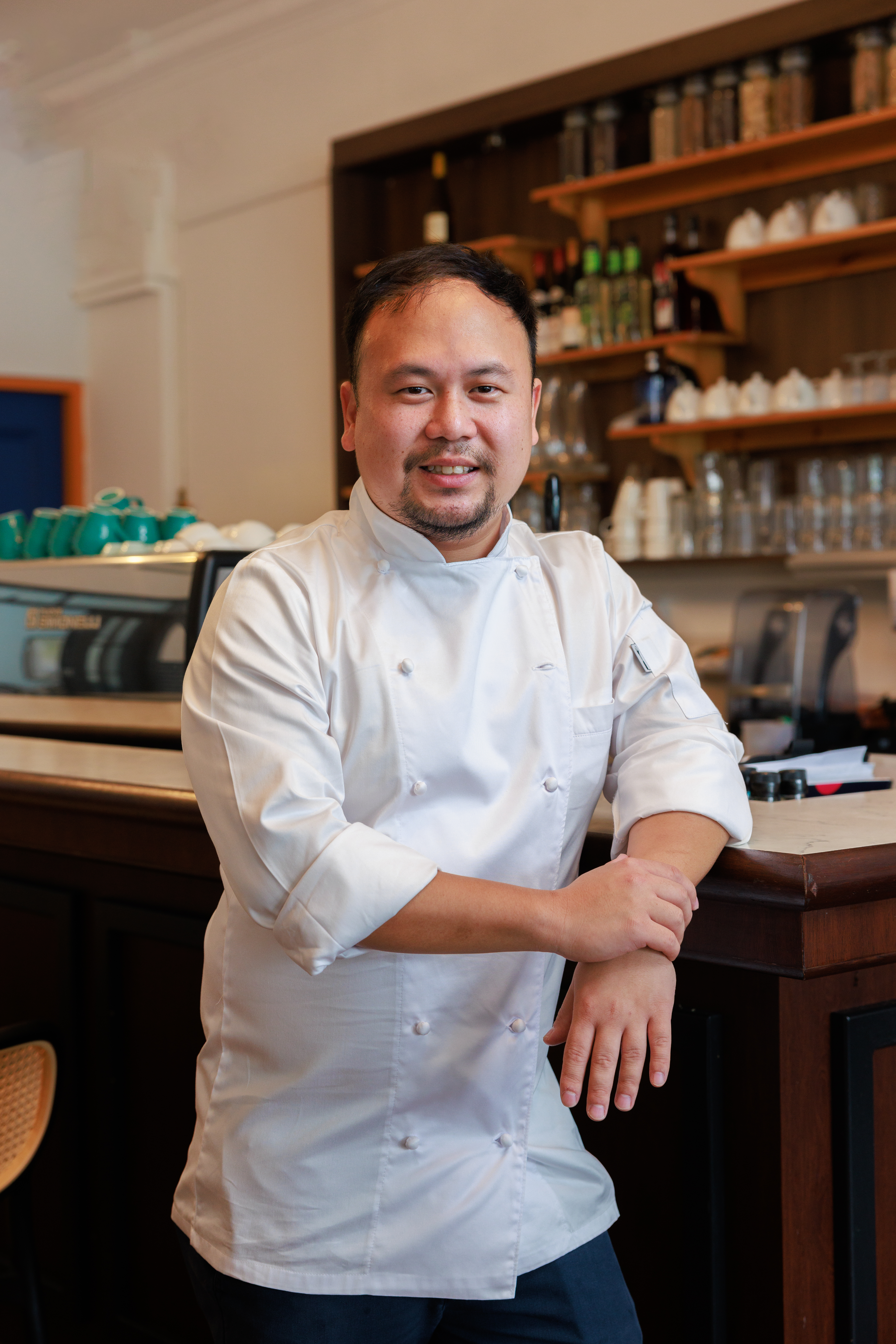
From being an award-winning chef to running three restaurants, Terence Chuah’s journey has taken more than a few twists and turns…and to three different countries. Those experiences have shaped how he runs his business and helped him fulfil a dream of inspiring future culinarians.
When Terence Chuah graduated from the Culinary Institute of America, Singapore (CIA Singapore), he carried with him not just a degree but a dream. A dream to one day open his own restaurant and make a mark in Singapore’s vibrant culinary scene.
Today, that dream has become a reality — three times over. Terence is now the proud owner of three restaurants – South Union Park, Eleven Strands and his latest venture, a Peranakan-themed restaurant located in Kaki Bukit Community Club called ‘Tombok Tombok’. Each outpost reflects his global experiences and personal philosophy toward food.
From San Sebastián to San Francisco: A Global Culinary Journey
After graduation, Terence cut his teeth in some of the world’s most celebrated and demanding kitchens. His first stop was at Mugaritz in San Sebastián. A two Michelin-starred restaurant known for its avant-garde, experiential approach to dining. It was here, Terence recalls, that he first learnt what creativity and innovation could look like on a plate.
From there, he moved to Tokyo to hone his craft at Narisawa, Asia’s top-ranked restaurant, where he embraced the discipline of precision and the art of seasonality. His journey continued to San Francisco, where he deepened his culinary horizons at another three-Michelin-starred Italian restaurant.
Each destination added new flavours, techniques, and philosophies to Terence’s repertoire. “Every experience helped me refine my skills and deepen my understanding of different culinary cultures,” he says.
Coming Home and Building Dreams
Armed with world-class experience, Terence returned to Singapore with a clear goal: to create something of his own. In 2016, he opened his first restaurant, South Union Park (SUP), a casual dining bistro in the east. “It was a proud moment — bringing everything I learnt abroad back home,” he says with a smile. In the process, he developed the maturity and leadership needed to understand the realities of running a restaurant.
Working overseas sharpened his fundamentals, but it was opening his own restaurant that pushed Terence to grow as a leader. (Photo: Terence Chuah)
“Cooking and running a business are two very different things, and I had to grow quickly in areas that had nothing to do with being behind the stove. Managing people, dealing with finances, and making tough calls for the business. Those were all things I had to learn the hard way,” Terence shares candidly.
Rooted in Excellence: The SIT-CIA Foundation
For Terence, it all began at CIA Singapore, the renowned culinary institution that counts many notable alumni, such as Anthony Bourdain, Cat Cora and Roy Choi. The degree programme provided him not only with technical skills but also with the mindset to thrive in the demanding world of fine dining.
“When I found out that SIT was partnering with CIA to bring its programme to Singapore, I was genuinely excited. By studying locally, I could invest more of my resources into gaining international experience and working overseas with world-class chefs,” enthuses Terence.
Terence admits that one of the biggest challenges during his course of study was balancing the intensity of the curriculum with the long hours spent in the kitchen, especially when practical exams and academic deadlines collided.
Yet those demands were precisely what shaped his discipline and resilience, qualities that he would carry into his kitchens and business ventures.
“Graduating as valedictorian in 2015 and receiving the Best Chef Award was a turning point,” he reflects. “It gave me the confidence and foundation to grow from a prep cook into an executive chef.”
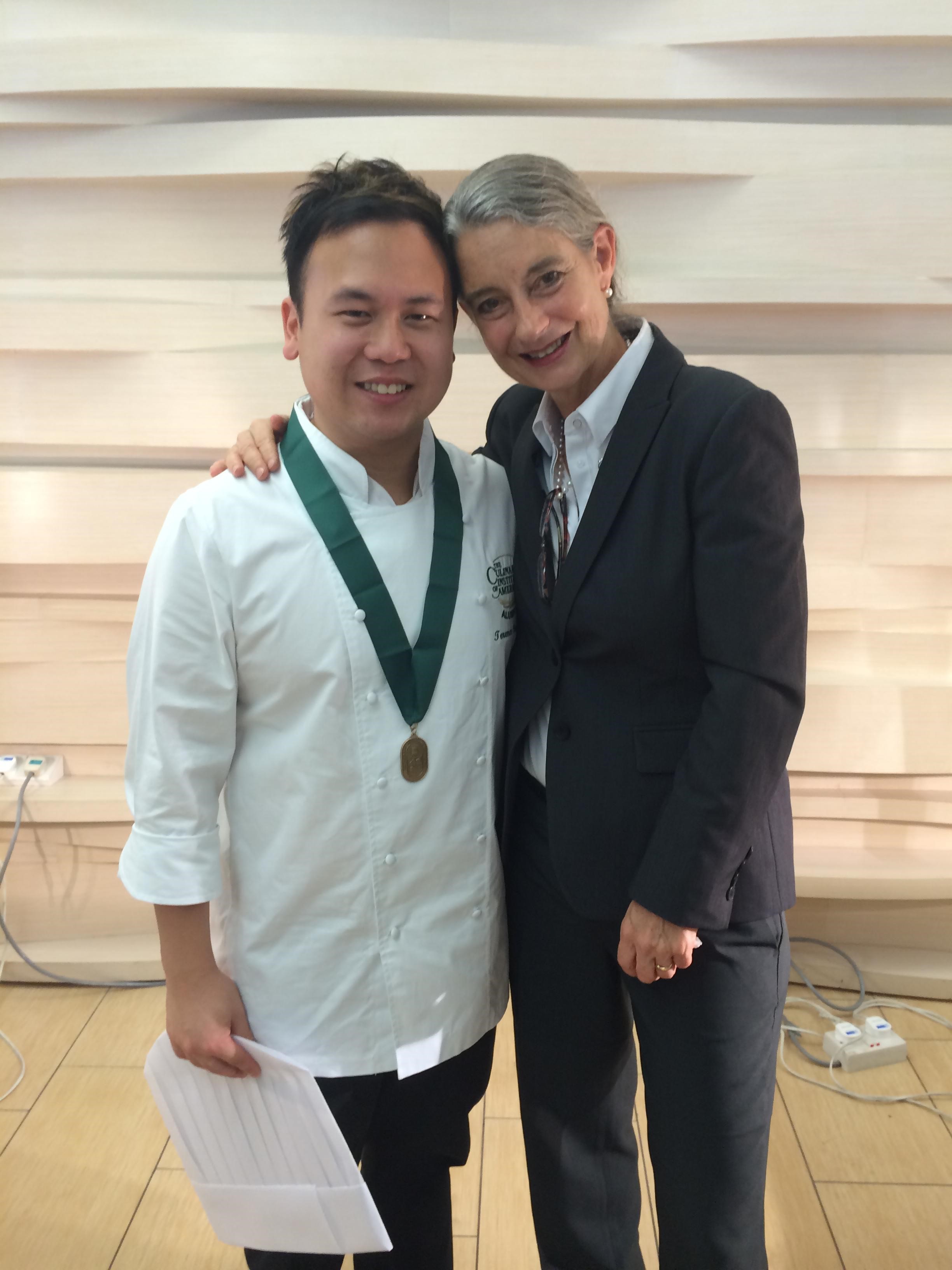
Terence (left) often measures his actions against the standards set by Chef Eve (right), whose leadership shaped his approach to the craft. (Photo: Terence Chuah)
Among the many influences during his time at CIA, one mentor stands out. He credits Chef Eve Felder, Managing Director at CIA Singapore, as a guiding force throughout his career. “Chef Eve is a constant source of inspiration and strength,” he shares. “She set the tone for what it means to be a CIA-trained chef – professionalism, discipline and a deep respect for the craft.”
To this day, Terence continues to benefit from Chef Eve’s wisdom. “One of the biggest things she imparted was the importance of intent – in how you cook, how you lead, and how you build a business.”
Seeing His Younger Self in Aspiring Chefs
Terence relishes the opportunity to give back when he can, speaking with SIT juniors at events or mentoring those who reach out to him for guidance. For him, sharing the lessons he’s gleaned from being a chef-restaurateur is his way of paying forward the support that shaped him.
“Even if it’s just a conversation, a demo, or giving feedback, I try to contribute in whatever way I can. It’s my way of staying connected to the community that helped shape my journey.”