













![[FA] SIT One SITizen Alumni Initiative_Web banner_1244px x 688px.jpg](/sites/default/files/2024-12/%5BFA%5D%20%20SIT%20One%20SITizen%20Alumni%20Initiative_Web%20banner_1244px%20x%20688px.jpg)
Developed by SIT in collaboration with DesignSingapore Council and award-winning design consultancy Chemistry, Glitch – a student-centred digital companion learning app – was launched at the fourth edition of Design Education Summit in November.
Courage. Curiosity. Tenacity. Empathy. Optimism. These universal, time-tested values are prized by educators striving to inculcate them in students, so that at the end of their academic journey, they are ready and equipped to face an uncertain, constantly shifting future.
While values form the bedrock of learning, they are notoriously difficult to teach. Mindsets such as resilience or openness cannot be graded like an exam, nor are they easily observed during a routine classroom interaction.
For decades, educators and school leaders have grappled with the question: How to nurture these values in students and cultivate a growth mindset that they actually apply?
Making the Invisible Visible
That was the challenge that the team behind Glitch set themselves to tackle. Glitch is a personal digital companion designed for learners to foster design dispositions by cultivating a growth mindset through small, positive habits of the mind.
What sets Glitch apart is its ability to transform abstract dispositions into visible patterns over time, providing learners and educators with a clearer understanding of how mindsets evolve in real-world contexts.
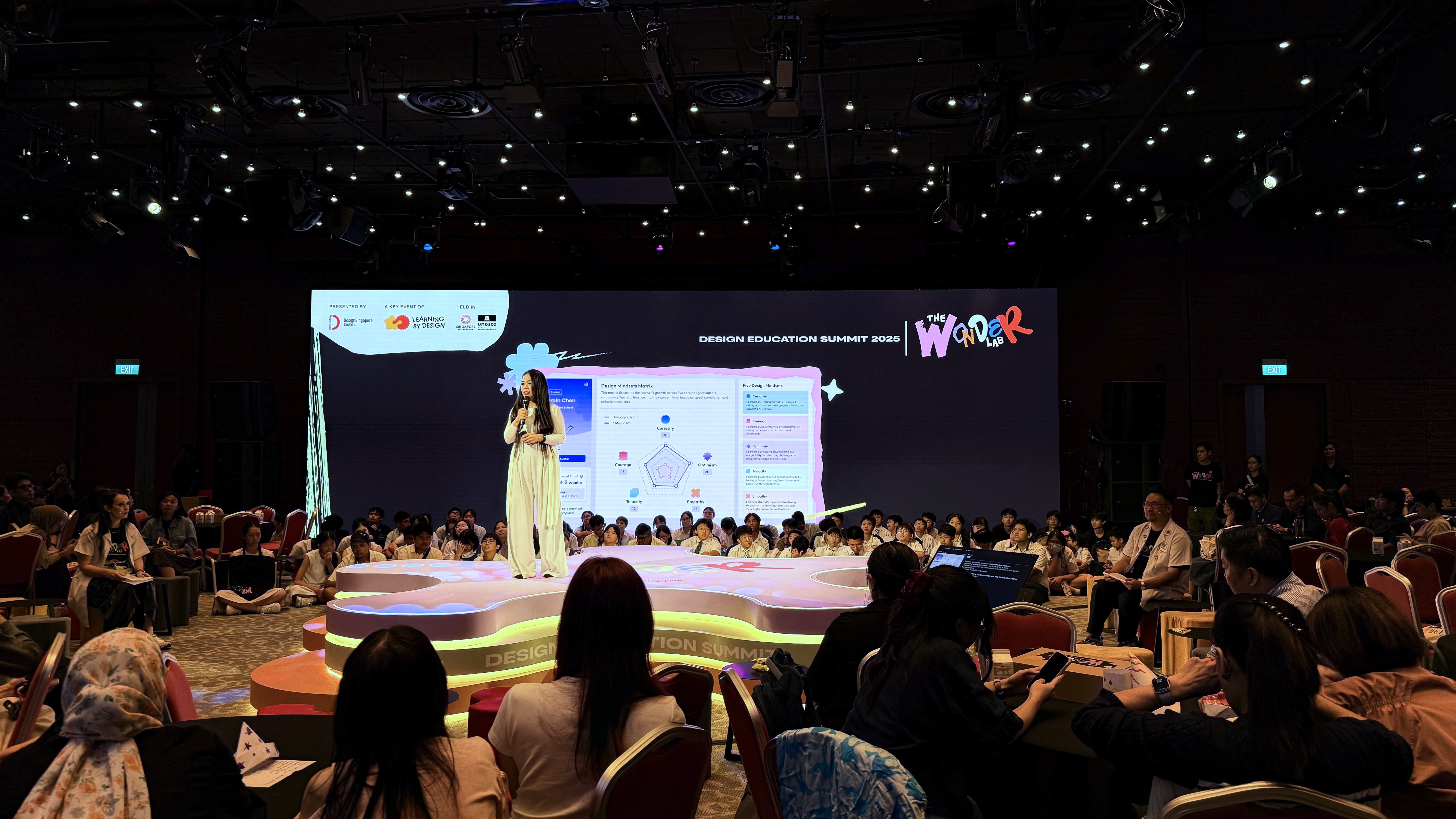
Asst. Prof Nadya sharing about ‘Glitch’ with local and international delegates at the Design Education Summit 2025. (Photo: SIT)
As SIT Assistant Professor in the Business, Communication and Design cluster and Principal Investigator for Glitch, Dr Nadya Shaznay Patel, puts it, “Glitch is designed for students to practise these dispositions. By making them visible, learners – and educators – can see the progress they have made over time.”
The brainchild of the DesignSingapore Council (Dsg), SIT and international design consultancy Chemistry, the team collaborated with the Ministry of Education, National Institute of Education and selected schools over a two-year period.
Why Glitch? “In design, the moment something glitches, that’s when discovery happens,” explains Asst. Prof Nadya. “So Glitch – as the name suggests – is a welcome disruption to the traditional tell-and-test approach to learning.”
Designing Glitch
Glitch started life as an initiative by Dsg, which was looking for programme partners to bring design thinking into schools’ curriculum at an early age.
SIT, known for its strong applied research and learning focus, and Asst. Prof Nadya who had already been working with a few local schools on research projects integrating critical and design thinking into school-wide Applied Learning Programmes, were a natural fit.
With Design Factory@SIT driving educational research and prototype testing with schools, and Chemistry contributing the user-experience and service design expertise, the team designed the app to function as a reflection tool, where students embark on “quests” that guide them with meaningful prompts. For example, the quest could be to skip your usual media routine and try one completely new source of information for one day.
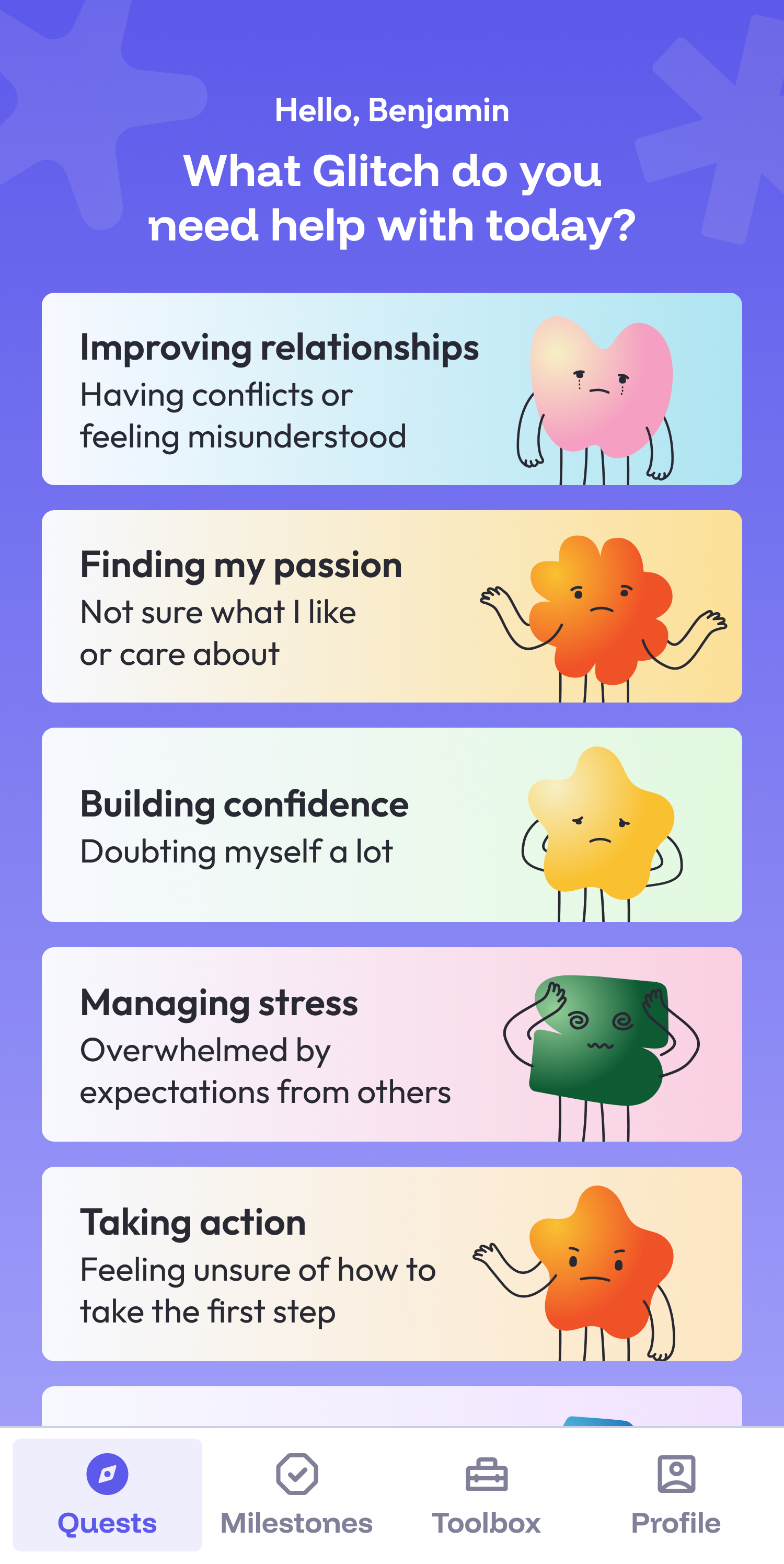
Glitch allows users to explore a series of quests that encourage everyday learning. (Photo: SIT)
To deepen engagement, these challenges are drawn from students’ own lived experiences, so that each learner goes on a customised personal journey of growth.
“By connecting it to their daily lives, learners can see themselves in the situations, ask their own questions, and practise those dispositions that help them improve over time,” says Asst. Prof Nadya.
“Over time, we hope students will internalise these dispositions. In other words, we’re nurturing character through design.”
Infusing Design Mindsets into Curriculum
Curated by Dsg’s Learning by Design team and co-curated by Dr Jeffrey Koh, SIT Associate Professor and Head of the Design Factory@SIT, Glitch was unveiled at the Design Education Summit on 6 November 2025, before being rolled out to local schools.
School leaders and educators were invited to integrate the tool into their curriculum – whether as part of civics lessons for Character and Citizenship Education (CCE) or through Co-curricular Activities (CCAs), aligned with MOE’s drive to develop 21st Century Competencies in students.
A secondary four student who tried the app shared, “I want it to be incorporated into my CCE lessons. Instead of teachers passively explaining growth mindsets, this feels more interactive.”
For educators, Glitch offers something they have long desired: a structured, research-backed method to track mindset development over time. With the app visualising patterns over time, educators gain meaningful insights into students’ growth trajectory. And instead of guessing whether a student has become more resilient or collaborative, teachers and school leaders now have real data to inform their conversations, coaching, and intervention. After the launch on 6 November, the team hosted an onboarding session for 105 educators and department heads from MOE schools keen to integrate Glitch into their programmes. The team has since begun discussions with two schools on whole-school applied research projects slated for 2026.
“Glitch’s approach is more organised and not so contrived, as opposed to traditional teaching methods. It could take the place of PowerPoint slides used for civic lessons,” commented a junior college teacher who tested the tool.
At a systemic level, Glitch has the potential to shift education from purely grades-based metrics to a richer understanding of learner development.
However, the Glitch team makes it clear that the app is no traditional learning assessment tool. Says A/Prof Koh, “What we hope to achieve with Glitch is to design an environment that motivates students to learn beyond the textbooks, to go on their own journey of self-learning driven purely by their curiosity.”
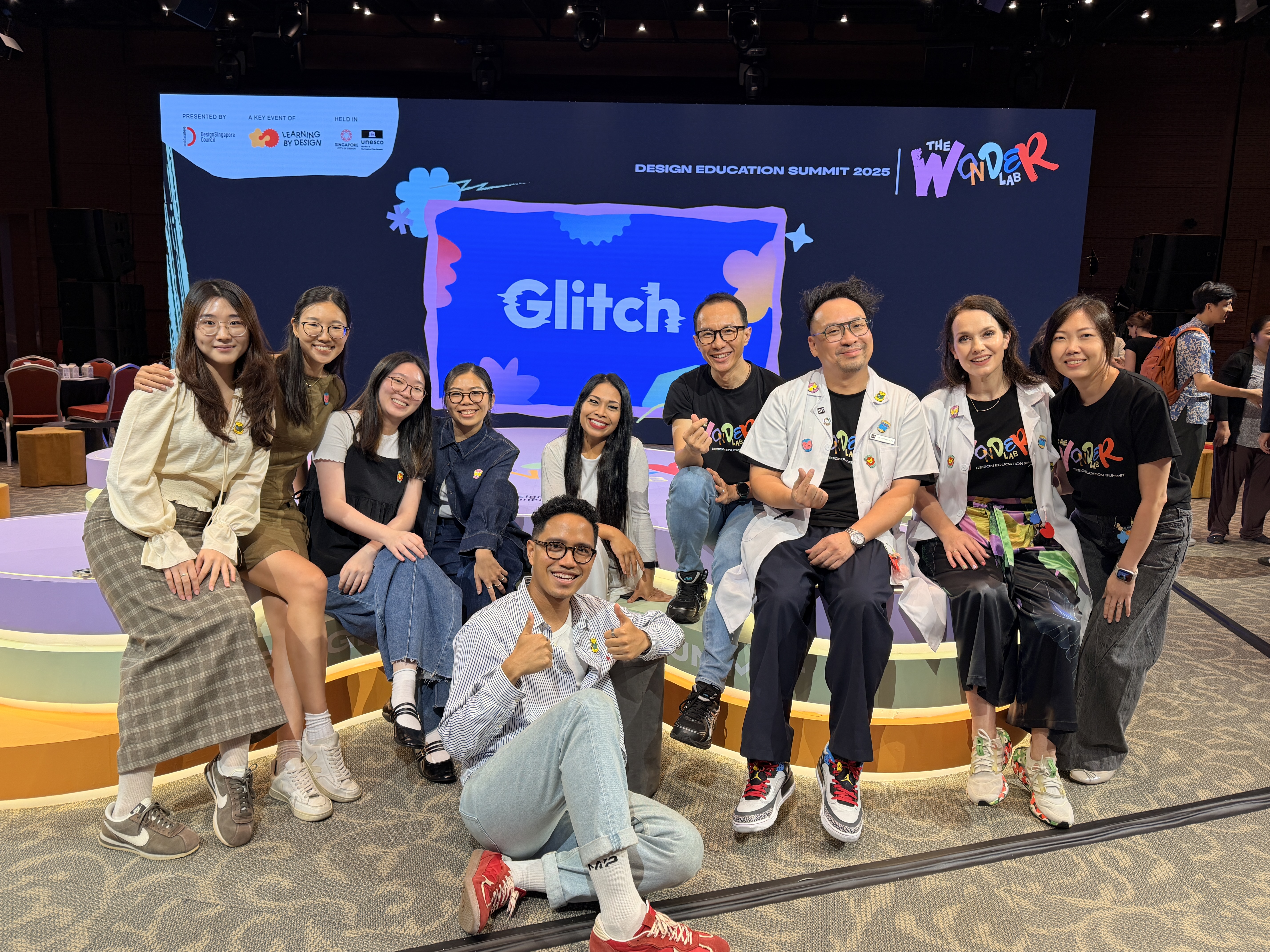
The faces behind Glitch include Ko Na Yeon (far left) from DF@SIT, Asst. Prof Nadya (seated, in white), and A/Prof Jeffrey Koh (third from right) from DF@SIT, together with the rest of the project team. (Photo: SIT)
Glitch – Capturing Mindsets in Action
“One day, we envision employers using Glitch profiles – not as another assessment, but as a meaningful barometer of the values, resilience, and mindset a graduate brings to the workplace,” says Asst. Prof Nadya.
With the potential for application by companies for their own organisational learning, its creators’ long-term vision is ambitious yet grounded in purpose.
“The best measure of success for Glitch will be its adoption by the larger ecosystem. Ultimately, the success of the tool will be a creative, empathetic, and resilient society, and we can only see that in the generations to come,” concluded A/Prof Koh.
Through Glitch, SIT has helped turn research and design thinking into a student-centred tool that goes beyond traditional learning.