





![[FA] SIT One SITizen Alumni Initiative_Web banner_1244px x 688px.jpg](/foodplant/openhouse/centre-professional-communication/directory/centre-professional-communication/openhouse/sites/default/files/2024-12/%5BFA%5D%20%20SIT%20One%20SITizen%20Alumni%20Initiative_Web%20banner_1244px%20x%20688px.jpg)
Podium finishes were the visible triumph. What preceded them were years of discipline, resilience and endurance. We speak to three of our SITizens who won medals in their respective sports at the recent 33rd SEA Games to find out what keeps them going on
By day, they are in classes, project meetings and academic consultations. By evening – and often before sunrise – they are in training, pushing their bodies through another training session when most of their course mates are asleep.
For these athletes representing Singapore, balancing a packed university schedule with intense training sessions are par for the course. In December 2025, the year closed more than just on a festive note when these sacrifices culminated in the medals they brought home from the 33rd SEA Games in Thailand.
We speak to them about their incredible achievements and find out what sustains them through the grind, and what it takes to pursue excellence in both sport and study.
The Work Before the Podium Finish
When asked for their secret sauce behind the medals, the athletes said it was a simple recipe of hard work, passion for the sport, and the tenacity to overcome personal hardships.
For first-year Electrical Power Engineering student Randall Lim Yi Jie, who clinched a Silver in Wushu, the medal in Thailand was the result of persistence, even when momentum stalled – a discipline deeply ingrained in him since he was a primary school athlete.
In 2022, he endured the loss of a dear friend, the disappointment of not getting selected for the 2023 SEA Games, and the start of his National Service stint, which temporarily halted his competitive journey.
He says, “Training through this period was really difficult, but I just kept putting one foot in front of the other and went through with it.”
It was after this setback that he noticed a significant change in himself. He was more mature as an athlete and more driven than before. Having completed his National Service, he was able to dedicate more time to training and commit to overseas training opportunities.
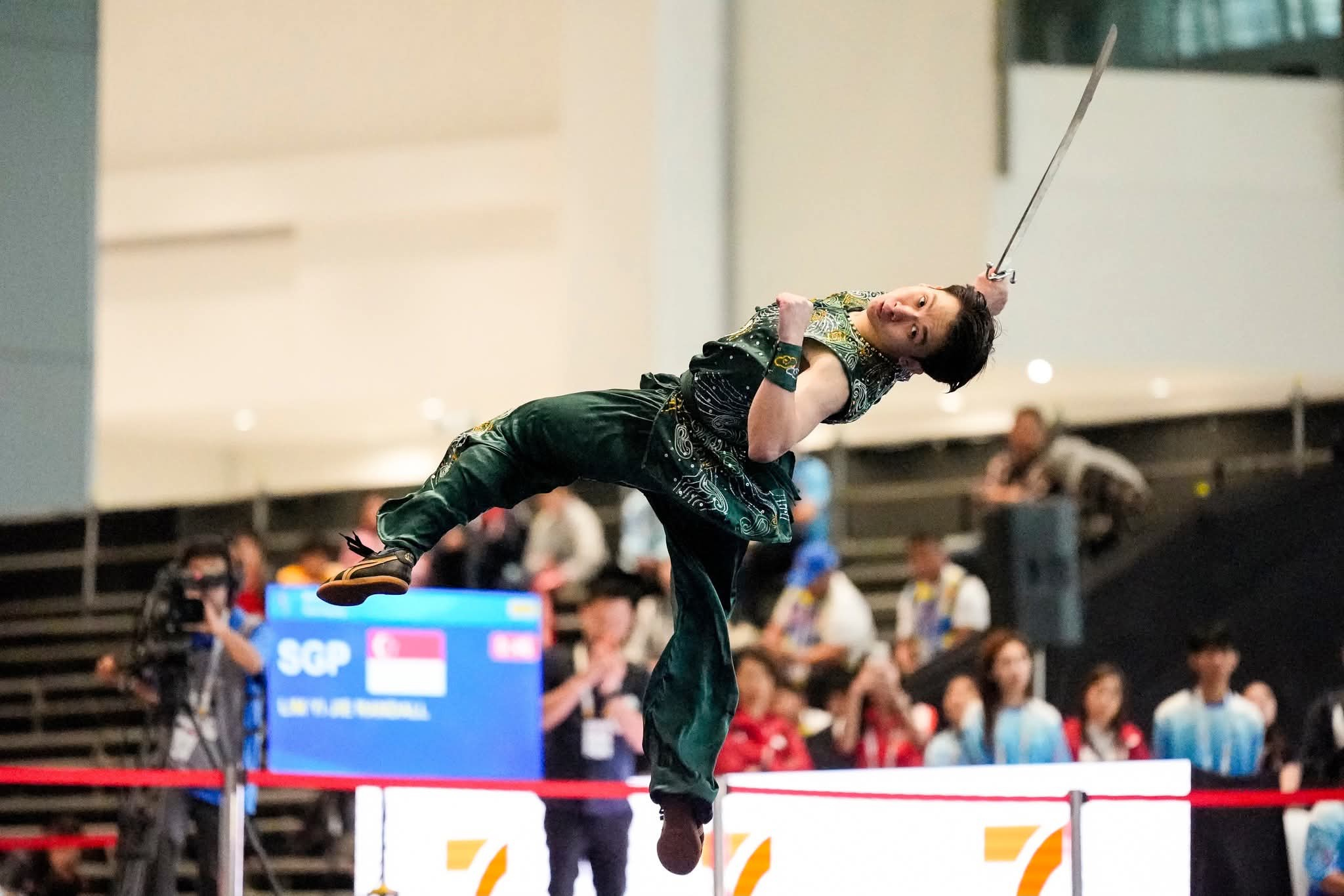
Randall in action, channelling years of disciplined training and hard-earned resilience into his silver-winning Wushu performance.
Second-year Physiotherapy student Ng Xuan Jie’s challenge was of a more personal nature.
As a young teen, the Silver medallist in Duathlon, a run–cycle–run event that tests both speed and endurance, battled anorexia to be well enough to train in the national triathlon team and represent Singapore. Her triumphant return to competitive sport required not just physical conditioning, but medical and psychological support.
“I used my love for running to motivate me to recover well. I’ve had a couple of relapses since I started training again, so I am not fully recovered today… But I am definitely in a better place and still working closely with my team of doctors, dietitian, sports psychologist, and coaches to keep my health and well-being on track.”
More recently, she faced another setback in the form of a hamstring tear, an injury that forced her to slow down at a time when momentum mattered most. Navigating recovery while maintaining her training proved to be a new challenge, requiring patience and careful balance. Drawing on her physiotherapy studies, she was able to better understand the diagnosis, plan appropriate rehabilitation exercises, explore other therapeutic approaches such as electrophysical agents to support healing, and adapt her training as she steadily worked towards recovery.
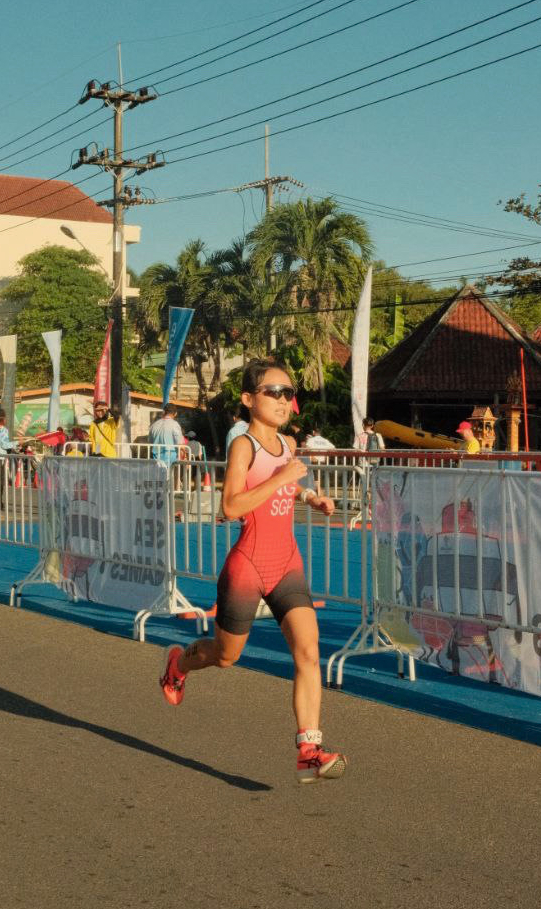
Xuan Jie runs not just for the finish line, but as a testament to resilience, recovery, and the unwavering love for her sport.
The Grind No One Sees
Training more than once a day, almost every day of the week, is business as usual.
Xuan Jie laughingly describes herself as a “drowning kid with lots of endurance and optimism,” juggling twice-daily training sessions before and after her school day in SIT.
She even sets up a makeshift bed on campus so she can take a nap before her late-night training sessions – and she's not alone on this.
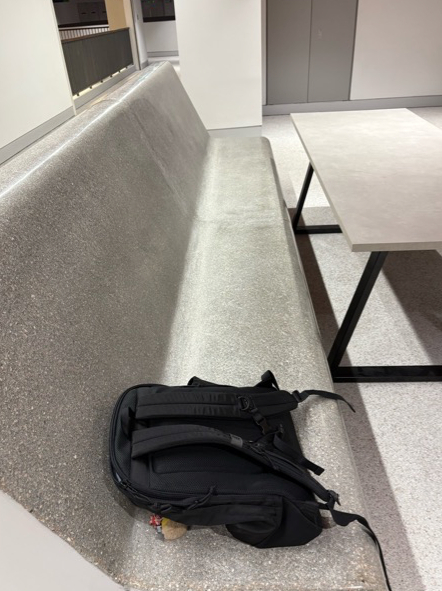
Between lectures and late-night track sessions, benches like these become a makeshift bed for Xuan Jie.
Shaunn Blasius Lok, a first-year Physiotherapy student who bagged a Gold in Water Polo, does the same too, making sure to take frequent short naps throughout the day all around school, favouring the library for its air-conditioned comfort.
“Many people probably think that being a national athlete is all glory and honour, but what they don't see is that for 90% of the time, you have to drag yourself to training even when you really don't feel like it,” Shaunn says.
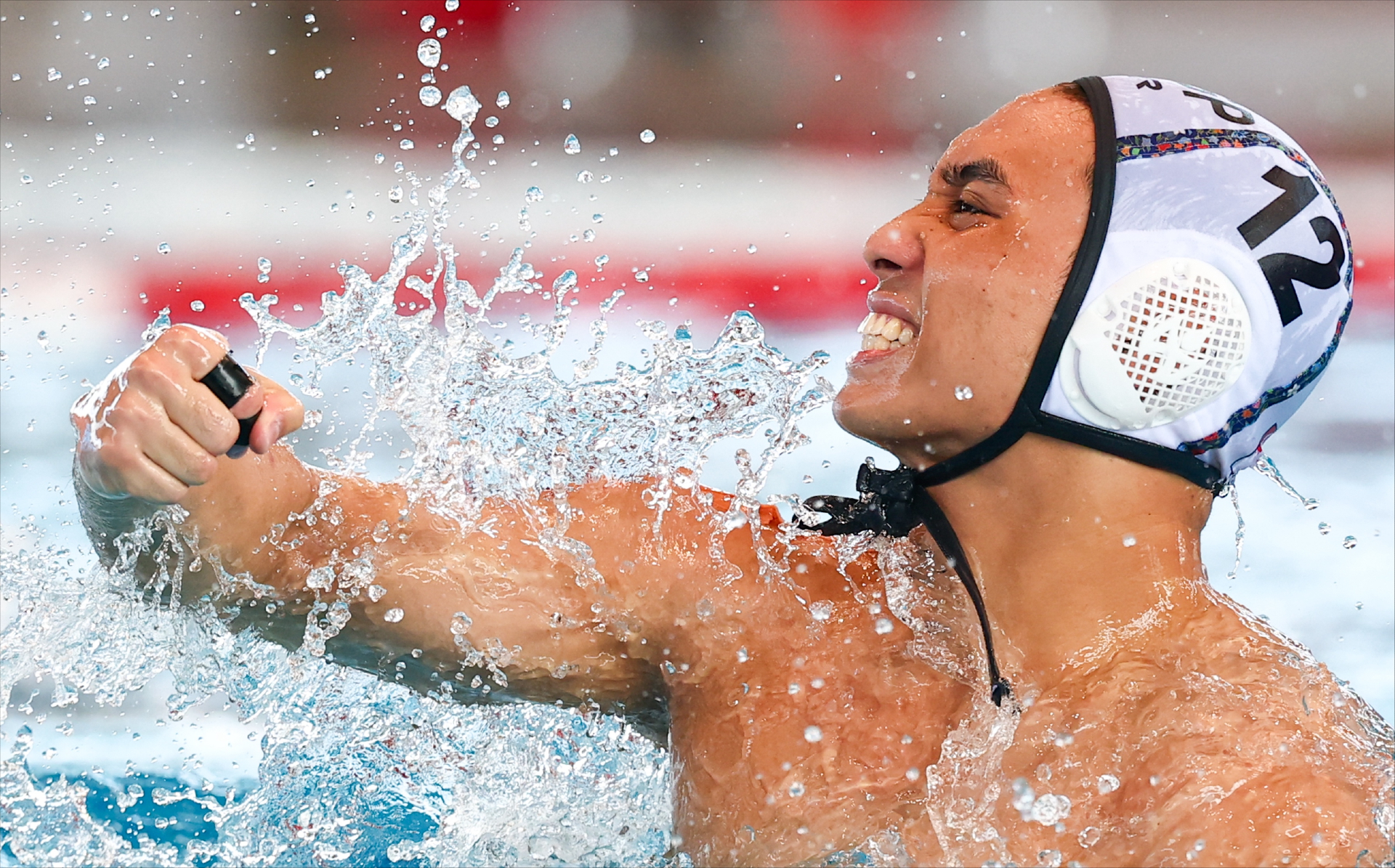
Shaunn powers through the pool with the discipline of a full-time athlete, balancing 30-hour training weeks and his studies with sheer determination.
“Being a full-time athlete where training is 30 hours a week with twice-daily training three times a week, you barely have any time for sleep, leisure or a social life. If I am not training, I am studying.”
“I do miss out on some things, like bonding with friends during the holidays or going out after class,” he admits. “But I make up for it by treasuring the little moments we share in between classes and during lessons. I try to make everyone around me laugh as much as I can.”
Support from SIT
Elite sport demands structure, as does university life. Making both worlds work together requires coordination and communication.
For Shaunn, who was already nervous about making his SEA Games debut as a national athlete, the adjustment was twofold, as were the pressures. He was navigating the demands of university for the first time while stepping onto an international stage.
Beyond the pressure to perform, there were practical university-life questions to manage — how to keep up with coursework and prepare for assessments without falling behind.
“The university’s administration made it possible for me to attend all my training trips and competitions. My professors have been especially generous in offering me additional help when I get back to school.”
Coursemates provide much-needed support, too, chimes Xuan Jie.
“They’ve been the ones who helped me the most when I’m away, taking notes for me, constantly updating me with how school is progressing, and accommodating my training and competition schedules for project work. I’m extremely grateful to have them supporting me, and I couldn’t ask for better course-mates!”
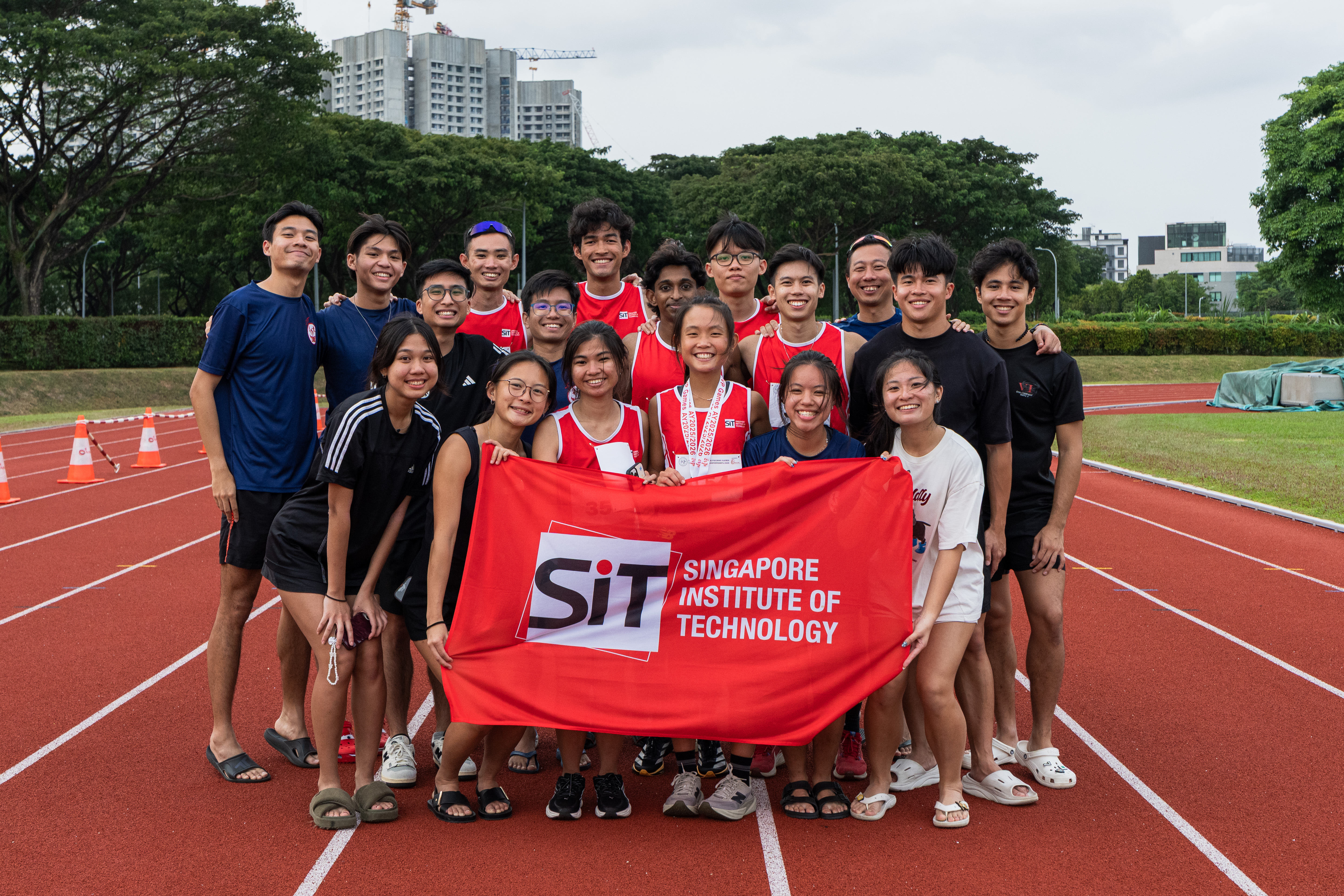
Xuan Jie (first row, centre), with her running team. Alongside her course-mates, they form a strong support system whose encouragement on and off the track keeps her moving forward in both sport and school.
Eyes ahead, just do it
Pursuing both sports and school is not everyone’s cup of tea, but for those who think they want to try it, Randall has this advice to offer:
“Honestly, SIT is a great place to attempt this, juggling both high-level sports and studies. The key thing is to communicate your intentions clearly at the start with the administration and staff, so that they can reach out to offer their help, which you will definitely need.”
“So just do it, and give it your best shot,” Randall says.
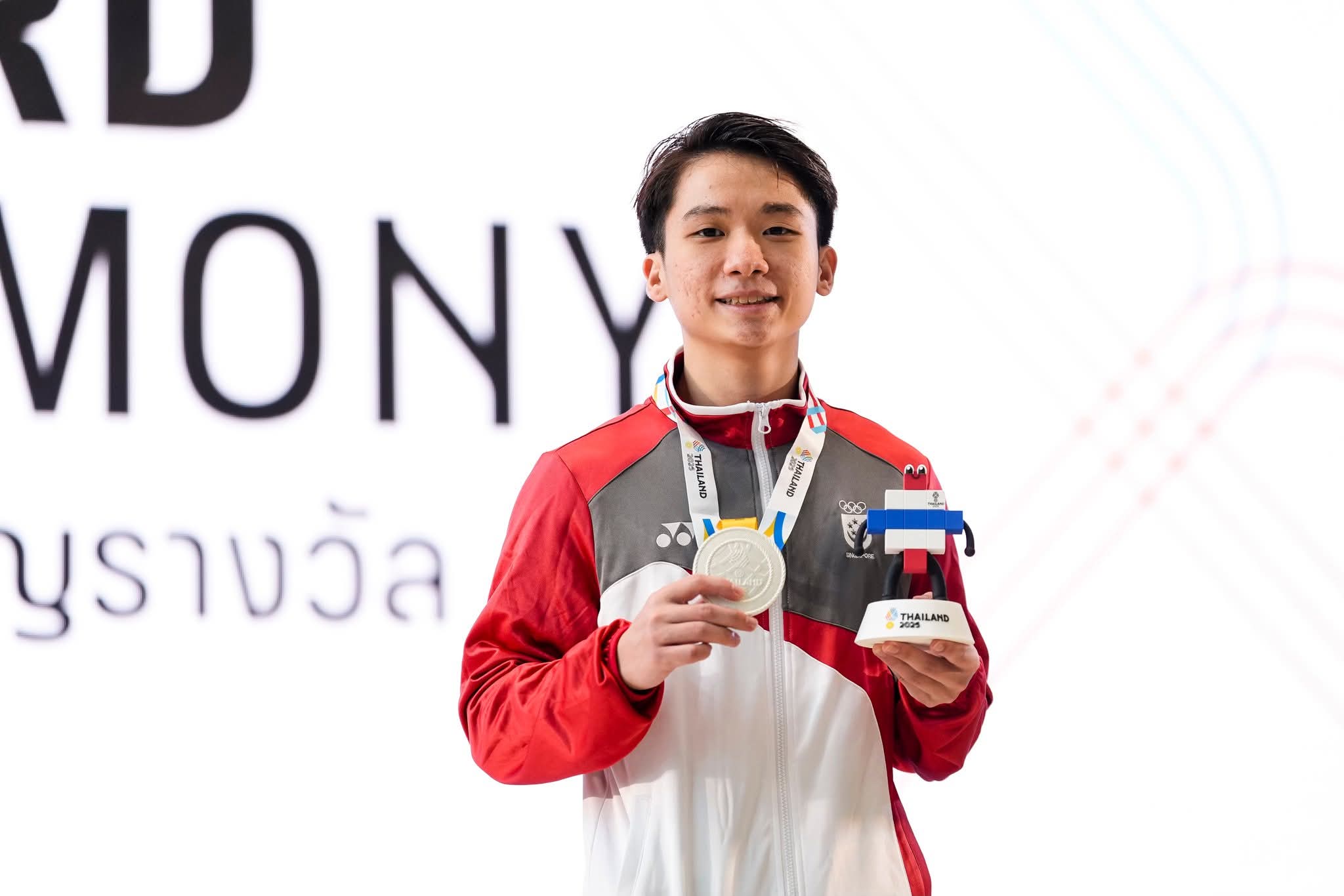
Medal in hand and ambition in heart, Randall proves that with clear communication, courage, and commitment, you can excel in both sports and studies
Shaunn shares similar sentiments, saying, “The thought of giving up has crossed my mind. But I remember the younger Shaunn who always wanted to represent his country in the national team. So I keep going, to honour him and how far he’s come.”
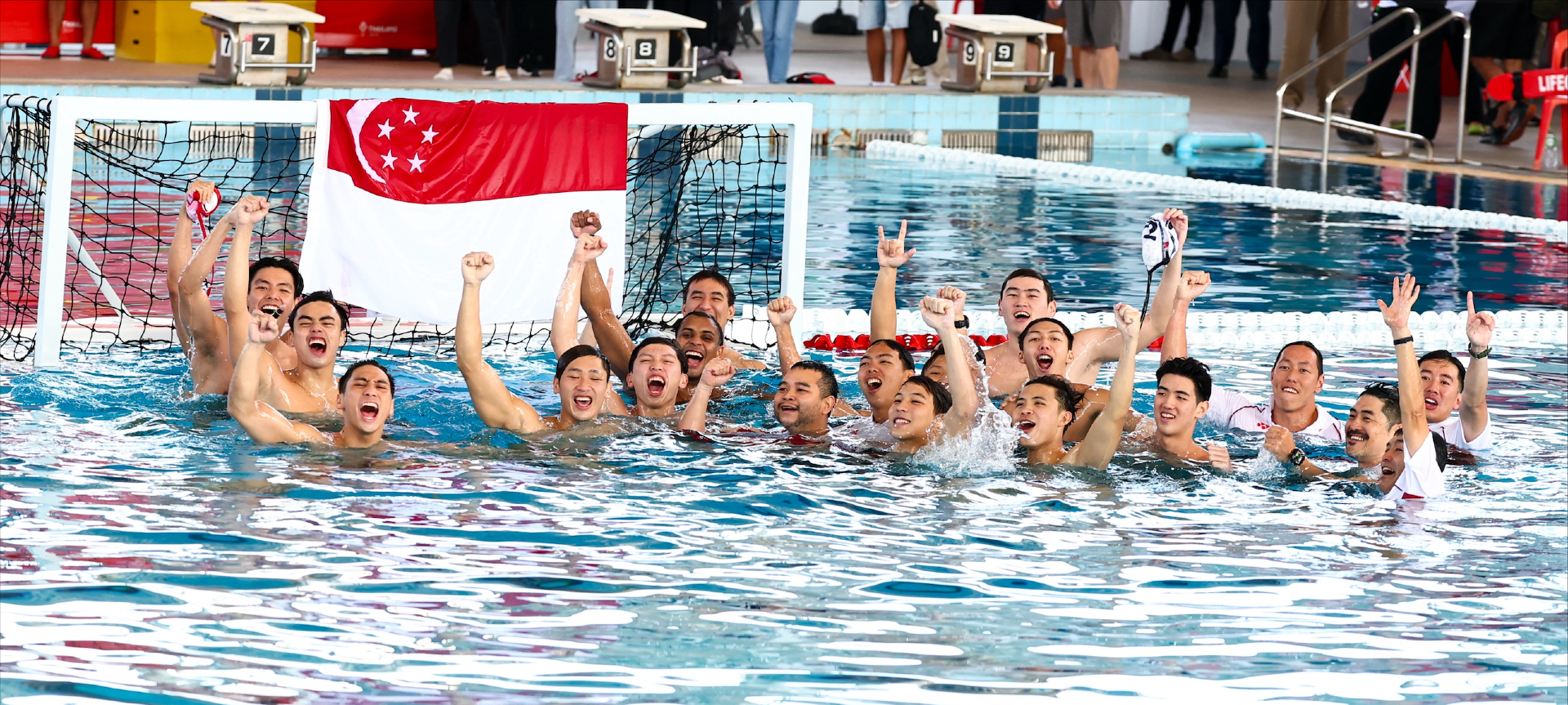
Shaunn celebrates with Singapore’s men’s water polo team after clinching their historic 29th gold medal in 30 SEA Games appearances, a proud moment at the 2025 SEA Games.