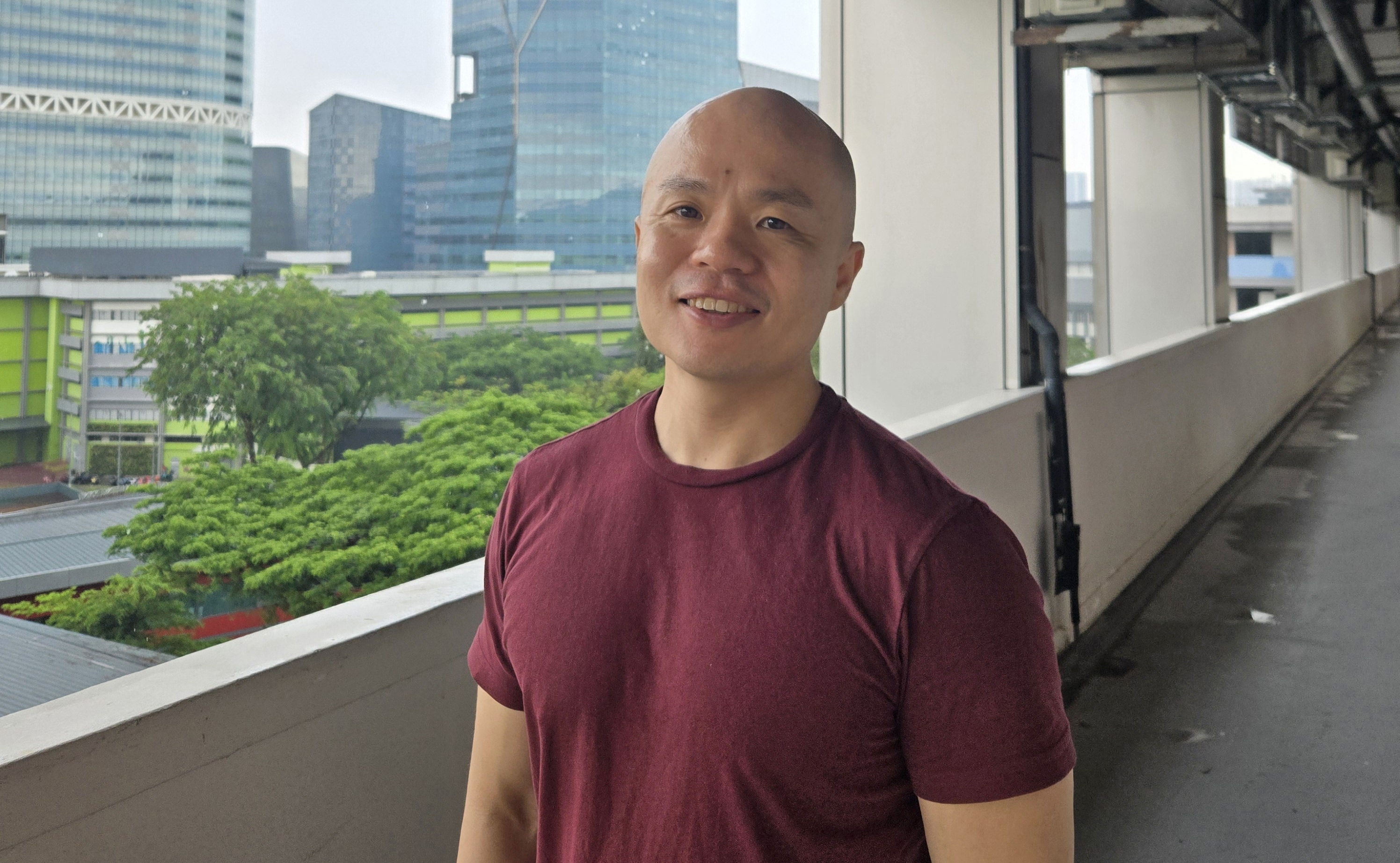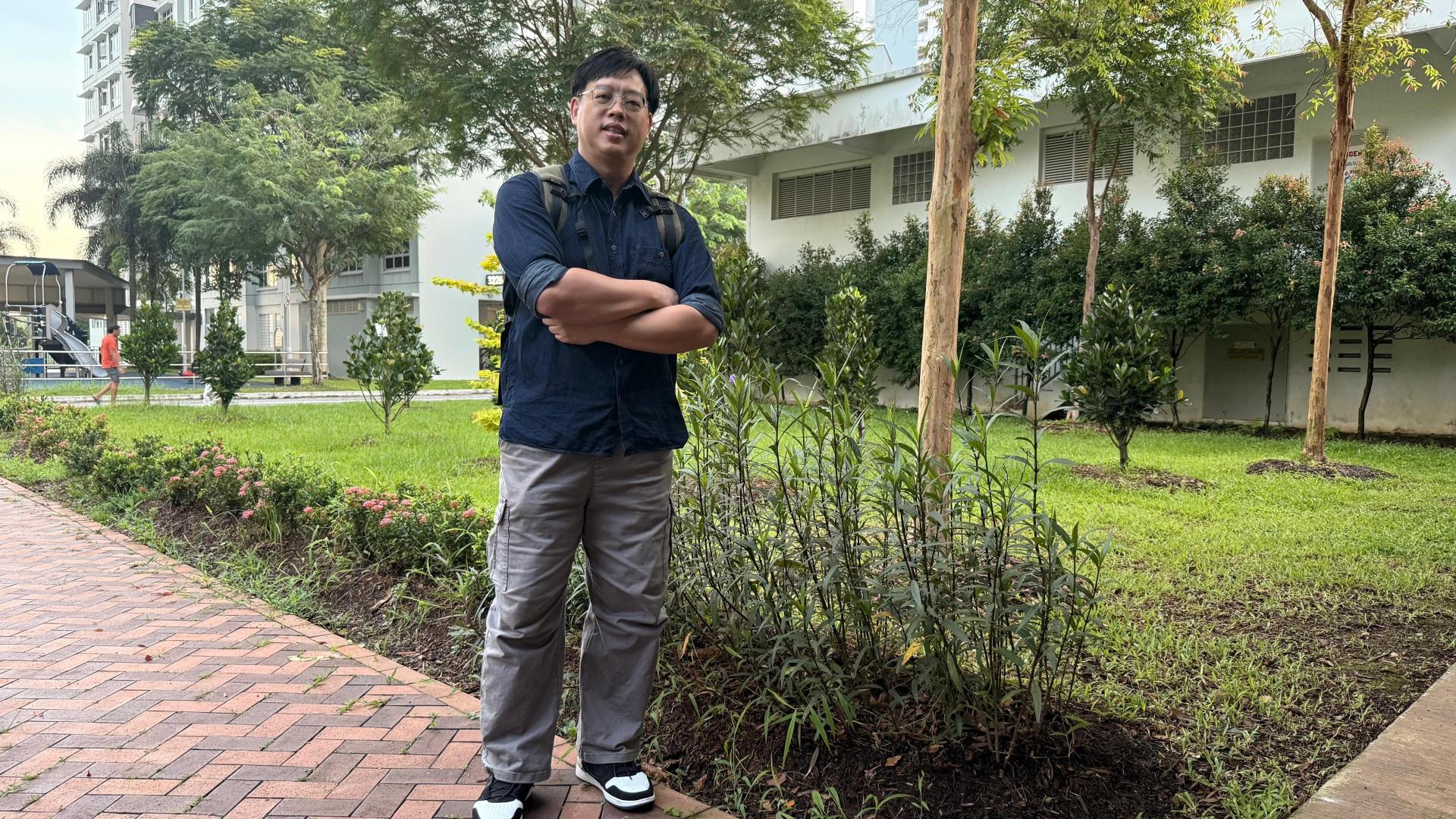
(Photo: Michael Leow)
For many professionals in their mid-40s, returning to formal study can feel like a chapter that has already closed. Michael Leow, 47, decided to reopen it.
With more than a decade of experience across IT and engineering roles — including 12 years at NCS and a subsequent role as a Senior Systems Technical Engineer — Michael had built a strong technical foundation. Yet one aspiration remained unfulfilled: to contribute meaningfully to software development, data engineering, and machine learning.
“I've always wanted to do software-related work and data engineering," he reflects. "But I didn't have the chance to do that in the first half of my career.”
Rather than allowing his earlier career trajectory to define his future, Michael made a conscious decision to reinvent himself for the next chapter, aligned with the demands of a skills-first and digital economy.
Starting with Intent, Not a Degree
Michael’s pivot did not begin with enrolment in a full qualification programme. It began with a question: Could I actually do this? In 2024, he began exploring tertiary programmes in data science, artificial intelligence, and data management — not merely to acquire new technical knowledge, but to critically assess his readiness for a deeper transition into the digital domain. Through this process, he realised that standalone courses, while valuable, would not be sufficient to support a meaningful pivot into roles such as systems or solutions architecture.
What he needed was a structured and credentialled learning pathway — one rigorous enough to build industry-relevant competencies, yet flexible enough to accommodate the realities of full-time work and life with a young family.
That led Michael to SIT's Competency-based Stackable Micro-credential (CSM) Pathway in Applied Computing: a model purposefully designed for working professionals seeking to reinvent themselves without stepping away from their careers to study.
Building a Learning Pathway, One Micro-Credential at a Time
What sets Michael’s approach apart is how deliberately he constructed it. He had his sights set on obtaining a full degree from the outset, but chose to begin with individual Applied Computing micro-credentials — using each module to validate both his interest and his capability before committing further.
Between January 2025 and early 2026, he completed four micro-credentials: Machine Learning, Cloud Architecture and Security, Advanced Generative Text AI, and Enterprise Cloud Data Architecture. Each was not a standalone course taken on impulse, but a thoughtful step in a longer progression into the tech and AI space.
The learning journey was intentionally designed around stackable, skills-based competencies that could be applied immediately at work. Beyond academic knowledge, each module emphasised hands-on application, enabling learners to build demonstrable capabilities in areas such as cloud systems, problem-solving and digital solutioning — competencies increasingly valued in today’s technology landscape.
The learning proved immediately applicable. Through his Cloud Computing module, Michael developed a deeper understanding of how server infrastructure can be migrated to the cloud. He applied this directly in his role as a Project Manager, designing and pitching a cloud-based solution as an alternative to a client's traditional on-site setup. While the client ultimately chose to proceed with local infrastructure, the process gave him firsthand experience in architecting, costing and presenting cloud solutions — the kind of applied competence that classroom theory cannot replicate.
"The programme aligns closely with evolving technology trends and practical problem-solving," he notes, "which complements both my engineering background and my interest in developing innovative digital solutions."
From Micro-Credentials to a Recognised Degree
Earlier this year, Michael took a decisive next step: converting his completed micro-credentials into a formal degree pathway. He is now on track to obtain a Bachelor of Science (Honours) in Applied Computing via the CSM Pathway.
Under this model, each micro-credential earns both a Specialist Certificate and 18 credits toward the full degree. The learning he had already invested did not become a folder of standalone qualifications — it became the foundation of an honours degree in progress.
This is precisely the design intention of the CSM Pathway: to allow learners to begin without a full upfront commitment, accumulate recognised credentials along the way, and convert to the degree route when they are ready. For mid-career professionals who carry real financial and family responsibilities, the ability to test the waters before diving in is not a minor convenience. It is often the difference between acting and not acting at all.
Making It Work Alongside Real Life
For Michael, learning does not happen in isolation — it is woven into the quiet hours after work and family responsibilities have been fulfilled. Most evenings, he studies only after his two young children have gone to sleep, carefully structuring his time around lectures, practice exercises, and assignments within an already demanding schedule.
Equally important was also the affordability of the pathway itself. As a Singapore Citizen above 40, he was eligible to use both his base SkillsFuture Credits and the additional $4,000 mid-career top-up to pay for his initial micro-credentials at SIT — significantly reducing the financial barrier to re-entry.
Beyond academic flexibility, Michael also values the assurance that support is available throughout his learning journey.
"I feel assured knowing that support from a Success Coach at SITwho supports learners through academic planning, goal setting and navigating the realities of balancing studies alongside work and life commitments — is available should I need it," he says — a reassurance that will resonate with many adult learners returning to formal education after a significant gap.
A Journey Still in Progress — and That Is the Point
Michael is candid about where he stands: the degree is not yet complete, and the career transition he is working toward is still unfolding.
Meaningful career reinventions are rarely sudden. They are built through sustained commitments that compound over time. The CSM Pathway was designed with this reality in mind: that working adults need a route that moves them meaningfully forward without requiring them to put their existing lives on hold.
At 47, Michael is not waiting for the right conditions to emerge. He is in the process of creating them.
Ready to explore a similar pathway?
Learn more about SIT's CSM Pathways, browse Applied Computing micro-credentials, or find out about the Bachelor of Science (Honours) in Applied Computing via the CSM Pathway.
About SITLEARN