Smart Cooling for a Smarter World
Ask an AI a question and it replies in seconds. But behind that instant answer is a massive network of servers working at full capacity and generating heat. As AI usage grows exponentially, the challenge isn’t just scaling computing power – it’s managing the heat it produces.
According to a 2023 report by the International Energy Agency (IEA), the global data centre sector consumes over 200 terawatt-hours of electricity annually, much of which goes towards cooling. As AI becomes more ubiquitous, this demand is only expected to rise.
So, how do we cool these data centres efficiently without worsening the environmental impact?
The answer, especially in cities like Singapore, is smart cooling solutions — and they’re rapidly changing the way we think about energy use in an increasingly digital world.
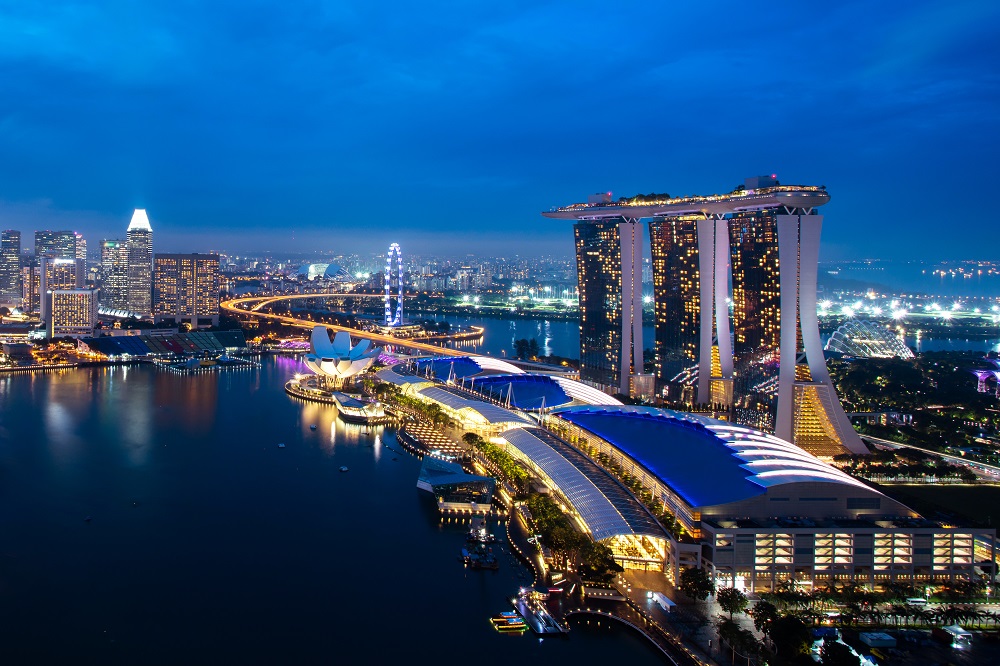
Singapore, known for its innovative approach to urban challenges, has led the way with water-cooling and district cooling systems.
These methods use chilled water to cool entire districts or building complexes, offering greater energy efficiency and reducing the environmental footprint of massive computing hubs. Studies show that district cooling can cut energy consumption by up to 40% compared to traditional air-conditioning systems. As AI continues to push technological limits, cities that embrace sustainable, high-tech cooling will be better equipped to handle the heat — both figuratively and literally.
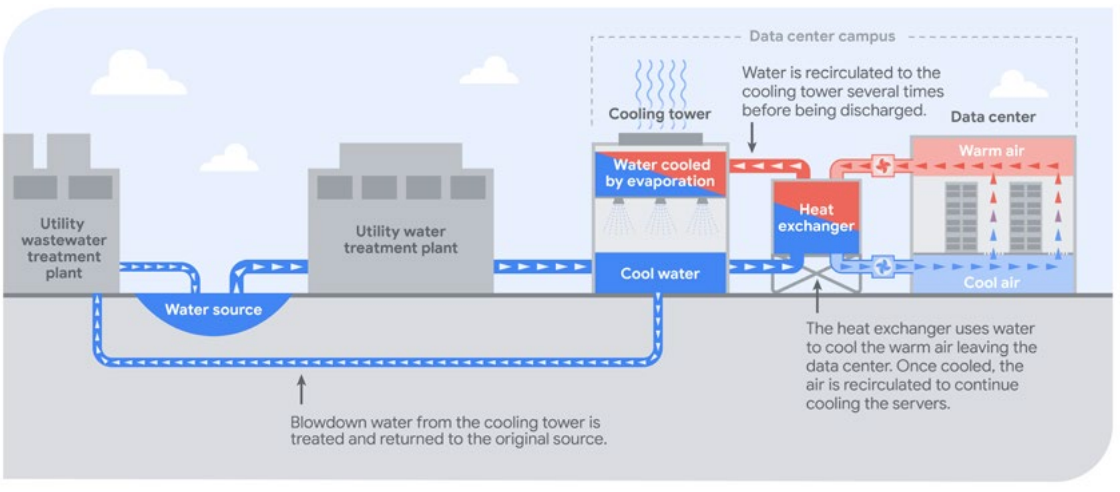
Source: Google’s Data Center Water Risk Framework, https://datacenters.google/operating-sustainably/
Cloud Cooling Made Simple
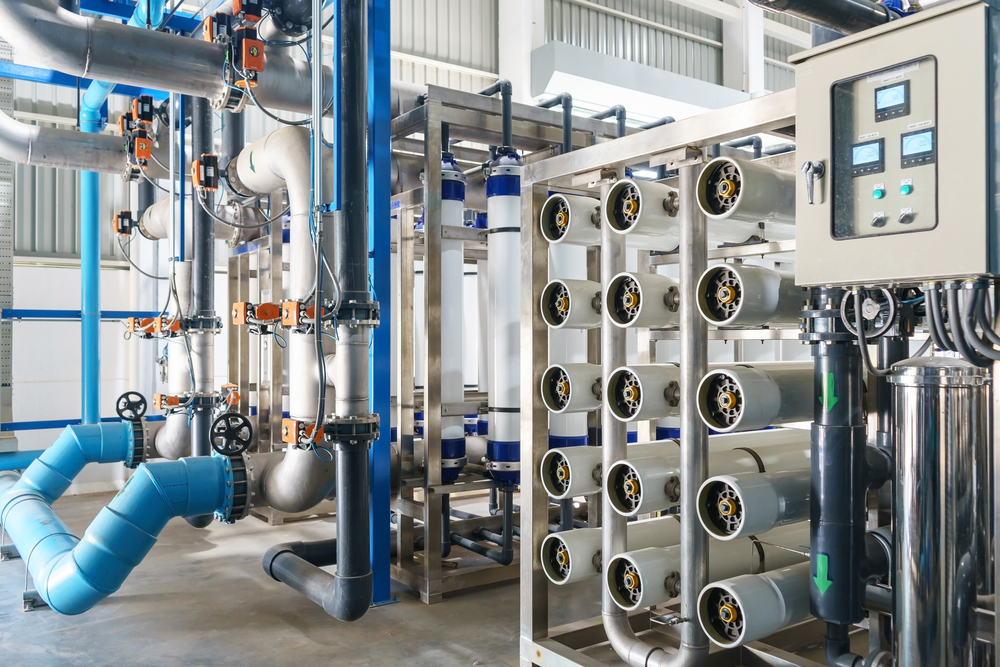
Data centres are increasingly adopting water-based systems that draw heat directly from the source. These systems use compact, sealed water circuits positioned near high-performance chips, allowing heat to transfer efficiently before the water is cooled and recirculated. Because the loop is closed, no water is wasted — offering a sustainable and effective solution. Major players such as OVHcloud, Google and Microsoft are already exploring this method in their global data centre designs.
Why does this matter?
By cooling only where heat is generated, less energy is wasted. Traditional methods often blast cold air across an entire room, which is inefficient. In contrast, targeted water-based cooling delivers cold exactly where it’s needed — at the heat source.
This innovation isn’t only about saving energy; it also reduces water consumption, a crucial factor as sustainable practices become more necessary. Many facilities using this approach now achieve Power Usage Effectiveness (PUE) ratios as low as 1.2, well below the industry average of around 1.5.
With cloud computing expected to grow at a compound annual rate of 17.9% over the next five years (Grand View Research), these cooling innovations will be critical in ensuring that digital infrastructure remains both energy-efficient and sustainable.
Cooling a Campus Like a City

Source: https://www.jtc.gov.sg/punggoldigitaldistrict/story-articles/what-to-know-about-engie-dcs-at-pdd
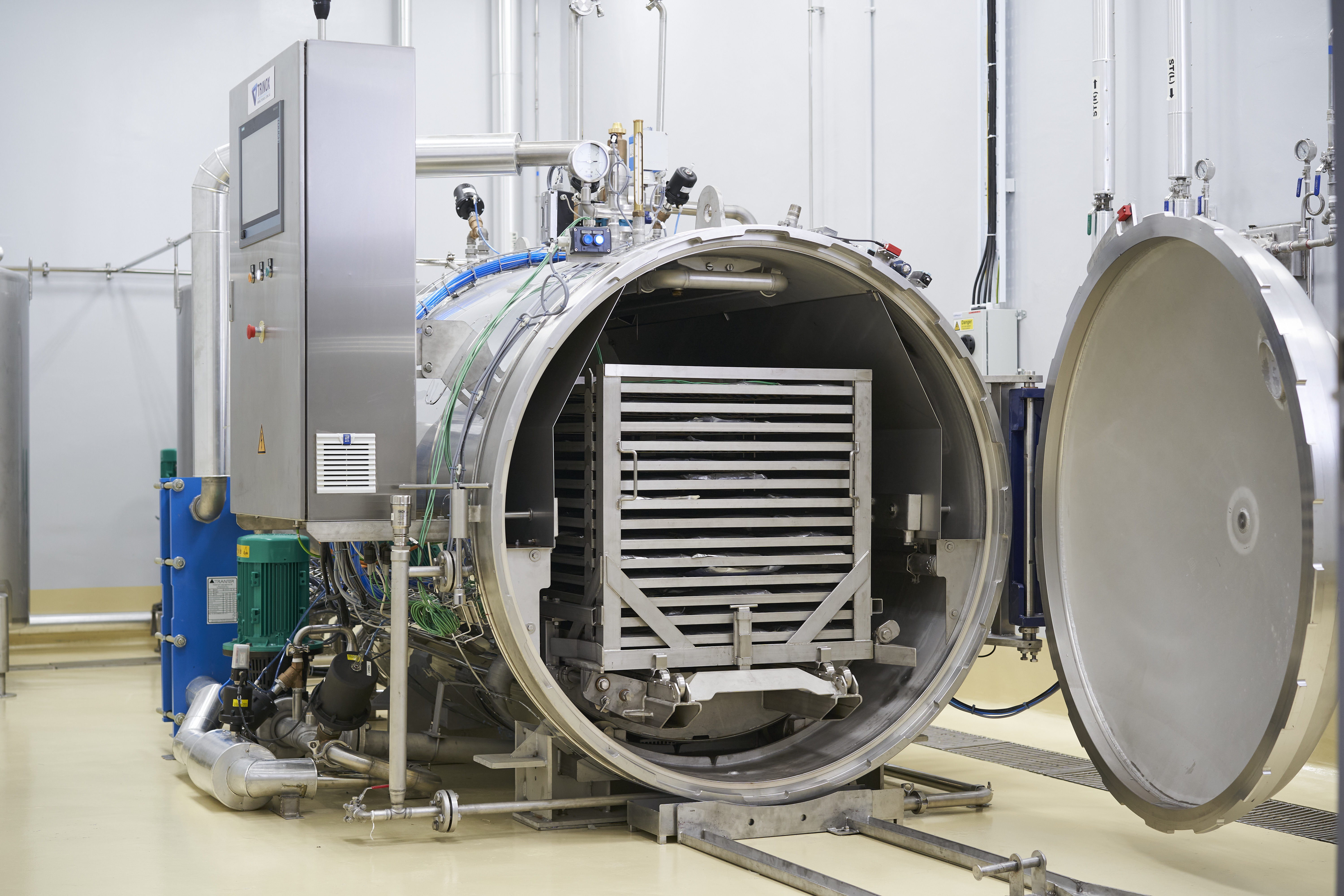
Instead of each building running its own air-conditioning system, a District Cooling System (DCS) centralises cooling by producing chilled water in a central plant and distributing it through underground pipes to buildings such as offices, malls, hospitals and campuses.
As this chilled water circulates, it passes through heat exchangers, absorbing indoor heat before returning to the plant to be re-cooled and reused. This closed loop minimises waste while maintaining efficiency across the network.
By centralising cooling, DCS technology improves energy efficiency, reduces carbon emissions and ensures consistent temperatures across large areas. Rather than each building consuming power for its own cooling needs, the shared system uses less energy overall and offers significant environmental benefits.
In high-density cities like Singapore — where real estate is limited and energy efficiency is essential — DCS is proving to be a game-changer. Already implemented in Marina Bay, Changi Business Park, Jurong Lake District and Punggol Digital District, this technology is helping reduce the overall carbon footprint while creating comfortable, sustainable environments.
The Singapore Institute of Technology’s (SIT) Punggol campus taps into this network, showing how DCS can scale to serve educational institutions alongside commercial and residential properties. As demand for efficient solutions rises, district cooling could become a key technology in cities worldwide, offering a model for sustainable urban living.
Why This Matters Day to Day
Smarter, server-side cooling enables the AI tools we use daily to operate efficiently, consuming less energy while maintaining performance. At the same time, district cooling keeps the places we live, work and play — from offices to malls to campuses — comfortable without overloading the power grid, especially during scorching afternoons.
Water plays a central role in both cooling methods, but it’s the intelligent integration of these systems that delivers real sustainability gains. By optimising and recycling water through closed-loop systems, these technologies save energy while reducing the environmental impact of digital infrastructure and urban spaces.
Why Is This Important?
We depend on efficient and sustainable solutions to power our digital lives without compromising comfort. From the AI that helps us work smarter to the systems that keep our cities liveable, cooling innovations are directly tied to how we manage resources. By using water more intelligently and improving cooling efficiency, these systems help create a more sustainable future — ensuring our growing reliance on technology doesn’t come at the planet’s expense.
SITLEARN’s programmes are built for working professionals such as engineers, facilities leads and M&E teams who keep Singapore running. Grounded in SIT’s Applied Learning pedagogy, these programmes connect theory to real-world applications. With the DCS plant nearby, learners can work with real-time data to study cooling performance, detect inefficiencies and explore ways to reduce energy use — turning the system into a living lab for future sustainable cities.
Keen to learn more? SITLEARN’s Executive Education programmes prepare today’s and tomorrow’s leaders to guide Singapore’s net-zero transition. You’ll build skills to drive energy efficiency, cut carbon emissions and strengthen climate resilience across real facilities and districts — turning knowledge into action for a cooler, cleaner and more resilient Singapore and beyond.
About SITLEARN