About Course
This course provides participants with in-depth knowledge, skills, and competency in the modelling, simulation, and design of power electronic conversion systems.
These skills and knowledge are essential for the effective, safe, and stable operation and usage of modern power conversion equipment with the growing penetration of renewables, distributed energy resources, and power conversion devices. Theory and practise using computer-aided engineering software such as PLECs will be taught. Simulation, design, and analysis techniques of power converters used in modern power supplies, power drives, and power compensation are emphasised.
Skills you’ll gain
Power and Clean Energy
Electrical Engineering
Who Should Attend
Engineers working in the power and energy sector
Railway electrical power supply and propulsion professionals
Electrical and electronic engineering professionals
Researchers and educators in electrical engineering and urban sustainability-related areas
Minimum Entry Requirements
- Bachelor degree in Engineering
- At least one-year of relevant working experience
Learning Outcomes
Upon successful completion of the course, learners will be able to:
- Apply Advanced Power Electronics Fundamentals - Demonstrate integrated understanding of power electronic devices, passive components, magnetic systems, and energy conversion principles across DC and AC domains
- Design and Optimise Magnetic and Passive Components - Analyse magnetic materials, core losses, thermal behaviour, and protection requirements to design inductors, transformers, and passive subsystems for power electronic applications
- Analyse and Design AC to DC Conversion Systems - Evaluate and design single-phase and three-phase rectifier systems, including controlled and uncontrolled topologies, with consideration of harmonics, ripple, and power quality
- Analyse and Design DC to DC Conversion Systems - Design and optimise DC to DC converters including buck, boost, buck-boost, and chopper topologies, accounting for conduction modes, synchronous rectification, and bidirectional power flow
- Analyse and Design DC to AC and AC to AC Conversion Systems - Assess multilevel converter topologies and high-voltage power electronic systems for transmission, grid integration, and large-scale energy applications
- Apply Power Electronics to Energy Supply and Demand Systems - Design and analyse power converters for renewable energy systems, flexible AC transmission, HVDC, power factor correction, active filtering, and bidirectional energy flow
- Apply Advanced Converter Techniques for Efficiency and Reliability - Evaluate soft-switching, resonant conversion, Z-source inverters, and protection strategies to improve efficiency, reduce losses, and enhance operational robustness
- Solve Complex Engineering Problems Using System-Level Thinking - Integrate device-level, circuit-level, and system-level considerations to address real-world power electronics challenges under technical and operational constraints
- Demonstrate Professional Engineering Practice and Lifelong Learning - Communicate technical solutions effectively, work in multidisciplinary teams, and engage with emerging developments in power electronics and energy conversion technologies

Teaching Team
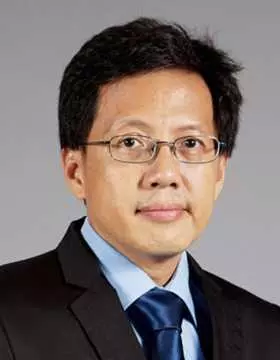
Sng Eng Kian
Associate Professor, Engineering, Singapore Institute of Technology
View profile
Course Details
| Course Run | Dates | Time |
|---|---|---|
| May – July 2026 Run | 6 May - 29 July 2026 (Every Wednesday*) | 7:00 pm - 10:00 pm |
Certificate and Assessment
A Certificate of Attainment will be issued to participants who
- Attend at least 75% of the module; and
- Undertake and pass credit-bearing assessment during the module; and
Participants who meet the attendance requirement but do not pass the assessment will receive a Certificate of Participation.
Fee Structure
The full fee for this course is S$3,606.88.
| Funding Category | Eligible Funding | Course Fees Payable After Funding |
|---|---|---|
| Singapore Citizen (Below 40) | 70% | S$1,082.06 |
| Singapore Citizen (Above 40) Funded under SkillsFuture Mid-Career Enhanced Subsidy (MCES) | 90% | S$420.25 |
| Singapore PR / LTVP+ Holder | 70% | S$1,082.06 |
| Non-Singapore Citizen | Not Eligible | S$3,606.88 |
Note:
- All fees above include GST. GST applies to individuals and Singapore-registered companies.
For Organisations
Interested in this course for your business or team?
Tailored to your organisation's specific training needs, we can help you design and develop custom courses to grow key talent and build specialist expertise to meet the future demands of work.
Course Runs
New Engineering Micro-credentials Launching Soon!
Exciting news! We are introducing new micro-credentials in Electrical and Electronic Engineering & Infrastructure and Systems Engineering. Be among the first to know by registering your interest today! Register now →