
About Course
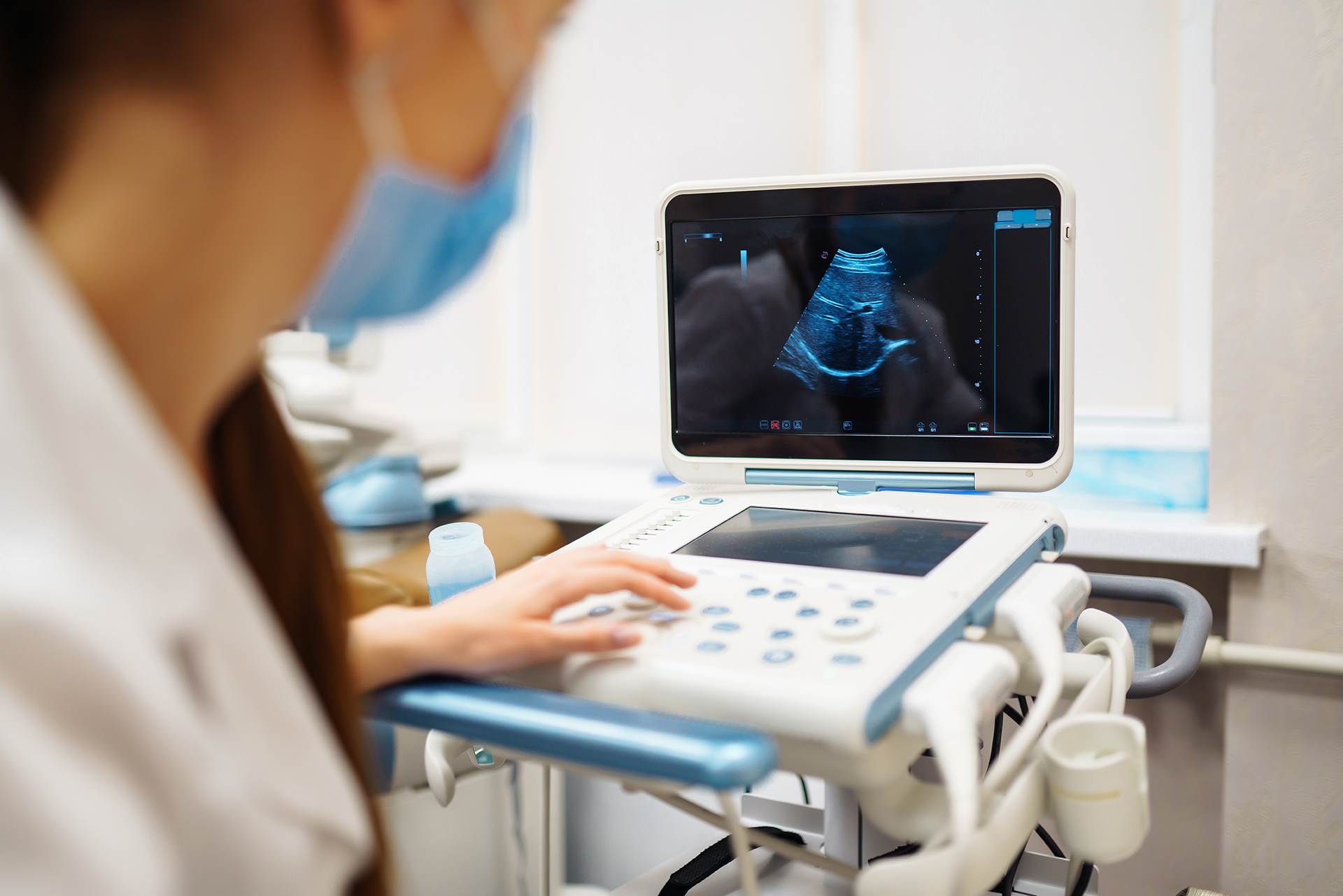
High-quality ultrasound imaging is fundamental to accurate diagnosis, effective clinical decision-making, and patient safety. Sonographers must not only operate ultrasound equipment proficiently but also understand the underlying physics, recognise image artefacts, optimise image quality, and ensure equipment performance through quality assurance practices.
In this module, learners will develop a comprehensive understanding of ultrasound physics, instrumentation, image formation, tissue characterisation, and quality assurance principles. They will learn how ultrasound images are generated, analyse factors that influence image quality, evaluate diagnostic image criteria, and apply strategies to optimise image acquisition and minimise artefacts. The module also equips learners with the knowledge and skills to identify equipment and transducer faults, perform routine quality assurance procedures, and apply safe ultrasound practices in accordance with the ALARA (As Low As Reasonably Achievable) principle.
Through a blend of online lectures, demonstrations, workshops, assignments, projects, and clinical learning experiences, learners will apply theoretical concepts to authentic practice settings. Opportunities for interprofessional learning will enable them to exchange perspectives and best practices with healthcare professionals, further strengthening their ability to troubleshoot imaging challenges, optimise diagnostic outcomes, and contribute to quality improvement initiatives.
By the end of the module, learners will be equipped to function as reflective and autonomous practitioners who can confidently apply ultrasound physics and instrumentation principles to produce high-quality diagnostic images, ensure equipment performance, and support safe, effective patient care.
This module is the one of three modules under the Graduate Certificate in Medical Sonography Principles and Practice, part of SIT’s Competency-based Stackable Micro-credential (CSM) Pathway leading to the Master of Health Sciences (MHSc).
Graduate Certificate in Medical Sonography Principles and Practice
| Module Code | Module Title | Credits |
|---|---|---|
| DRG6101C | Ultrasound Physics and Instrumentation | 6 |
| DRG6102C | Abdominal Sonography | 6 |
| DRG6109C | Obstetric and Gynaecologic Sonography | 6 |
| Total | 18 | |
Skills you’ll gain
Health Sciences
Sonography
Who Should Attend
Radiographers practising ultrasound
Healthcare professionals involved in ultrasound work
Prerequisites
- Candidates must have relevant ultrasound related experience (preferably at least 1 year of working experience as an independent sonographer)
- Candidates must have the required access to a medical ultrasound facility to develop competency in the respective clinical applications. They must be actively engaged in supervised ultrasound clinical practice in the workplace for at least three days (or equivalent) per week. It is the candidate's responsibility to secure a supervised clinical arrangement in the workplace. At the end of the trimester, candidates must satisfy the clinical requirements (ie. compulsory logging the required number of ultrasound examinations in clinical portfolio and pass the clinical skills assessment)
Documents and information you would need to complete this application:
Please upload documents under Online Applications - Supporting Documents section.
- Employment support letter (Includes applicant's area of work)*
- Recognised BSc degree in any of the health sciences registrable with the local regulatory bodies*
- Transcript of highest relevant qualification*
- Professional certification
- Answers to the following questions:
- Your reasons for pursuing the module (100 - 150 words)
- Why did you select SIT over other academic institutions? (100 - 150 words)
- What do you hope to achieve at the completion of the module? (100 - 150 words)
Note:
* Mandatory documents
Learning Outcomes
This module is predominantly delivered through a competency-based education (CBE) approach where learners acquire and demonstrate mastery of knowledge and skills that are directly relevant to job functions. This prepares them to be industry-ready where they can apply their newly acquired competencies to their work.
Upon successful completion of this course, learners will be able to:
- Describe the production of ultrasound waves and analyse how sound interacts with biological tissues and other materials.
- Explain the functions of ultrasound system components, including transducers and machine controls, and evaluate their impact on image quality.
- Assess the characteristics of a diagnostically acceptable ultrasound image and apply appropriate sonographic scanning techniques to optimise image acquisition.
- Interpret the principles of tissue characterisation and differentiate tissue properties based on ultrasound imaging findings.
- Investigate and troubleshoot ultrasound equipment and transducer faults, and perform quality assurance procedures to verify system performance and image quality.
- Explain the biological effects of ultrasound and apply the ALARA (As Low As Reasonably Achievable) principle to ensure safe and effective clinical practice.

Coaching for Success
During the course, you will have access to a team of qualified success coaches who can work with you on learning strategies or to develop a personalised learning plan. Through the success coaches, you can gain access to a wide range of resources and support services, and be empowered with the necessary tools to navigate your learning journey successfully.
Teaching Team
Assistant Professor Ooi Chin Chin
Programme Director and lead Faculty, Singapore Institute of Technology
View profile

Amarjit Kaur
Senior Sonographer, Perth Radiological Clinic and Sir Charles Gairdner Hospital, Australia. Associate Faculty, Health and Social Sciences, Singapore Institute of Technology
View profile
Course Details
| Week | Topics |
|---|---|
| Week 1 | Basic principles of ultrasound physics, ultrasound production |
| Week 2 | Different modes of ultrasound |
| Week 3 | Ultrasound transmission Reflection on clinical practice, student led discussion, case-based/problem-based learning and lab work |
| Week 4 | Ultrasound beam and resolution |
| Week 5 | Student lead discussion: Case presentation Assignment / case report on image optimisation techniques |
| Week 6 | Transducer manipulation and tissue characterisation |
| Week 7 | Ultrasound artefacts |
| Week 8 | Image quality assessment |
| Week 9 | Bio-effects, image optimisation Student directed discussion/group work |
| Week 10 | Quality assurance Image quality assessment Receiver Operator Characteristic (ROC) curve |
| Week 11 | Advances in ultrasound imaging: technological advancement and application in clinical practice Continuous assessment: Viva |
| Week 12 | Quiz |
Certificate and Assessment
A Certificate of Attainment will be issued to learners who:
- Attend at least 75% of the module; and
- Undertake and pass the credit-bearing assessments (worth 6 credits) during the module, which can be stacked towards the Graduate Certificate in Medical Sonography Principles and Practice or SIT's Master of Health Sciences
Participants who meet the attendance requirement but do not pass the assessment will receive a Certificate of Participation.
Assessment Plan
- Learners will undertake a combination of assignments and practical examination.
Fee Structure
The full fee for this course is S$4,469.00.
| Funding Category | Eligible Funding | Course Fees Payable After Funding |
|---|---|---|
| Singapore Citizen (Below 40) | 70% | S$1,340.70 |
| Singapore Citizen (Above 40) Funded under SkillsFuture Mid-Career Enhanced Subsidy (MCES) | 90% | S$520.70 |
| Singapore PR / LTVP+ Holder | 70% | S$1,340.70 |
| Non-Singapore Citizen | Not Eligible | S$4,469.00. |
Note:
- All fees above include GST. GST applies to individuals and Singapore-registered companies.
- A one-time, non-refundable matriculation fee of $54.50 will be collected before course commencement.
For Organisations
Interested in this course for your business or team?
Tailored to your organisation's specific training needs, we can help you design and develop custom courses to grow key talent and build specialist expertise to meet the future demands of work.
Course Runs
Learning Pathway
New Engineering Micro-credentials Launching Soon!
Exciting news! We are introducing new micro-credentials in Electrical and Electronic Engineering & Infrastructure and Systems Engineering. Be among the first to know by registering your interest today! Register now →