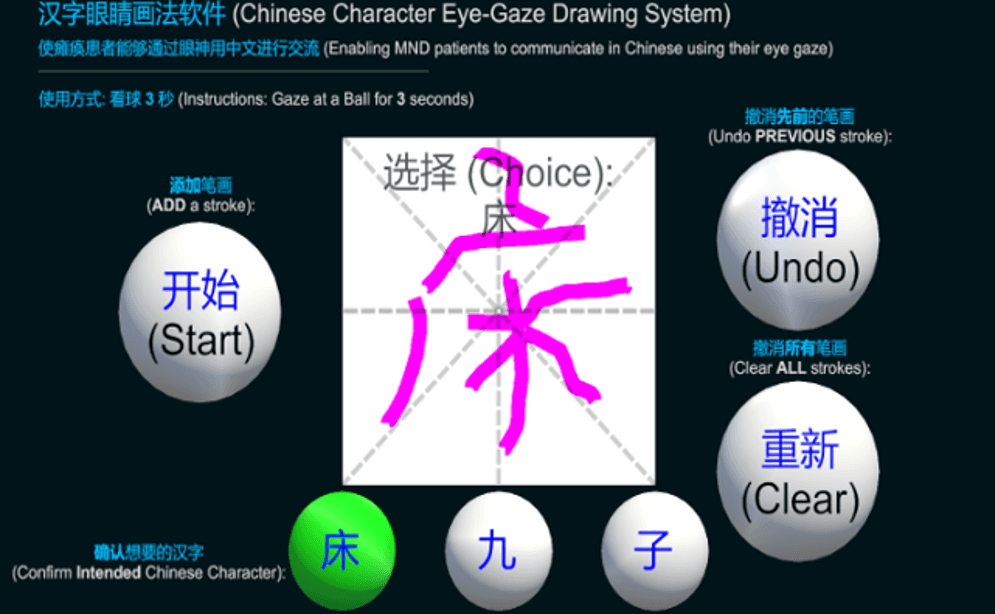
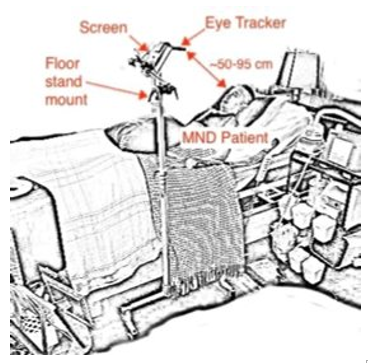
This project uses a technique that uses eye gaze as an input modality to identify Mandarin characters.
Problem Statement:
Elderly patients with motor neuron disease (MND) and who have limited language literacy, who are unfamiliar with Mandarin Hanyu Pinyin, and have low technological proficiency, struggle to express their thoughts. Their inability to move or communicate makes it difficult to provide appropriate care.
The system captures eye movements as strokes within a character to predict and identify the intended Mandarin word, enabling MND patients to communicate effectively.
https://doi.org/10.1145/3654702
![[FA] SIT One SITizen Alumni Initiative_Web banner_1244px x 688px.jpg](/sites/default/files/2024-12/%5BFA%5D%20%20SIT%20One%20SITizen%20Alumni%20Initiative_Web%20banner_1244px%20x%20688px.jpg)