

About Course
Quantum computing is moving beyond experimental research into early-stage real-world deployment, supported by sustained global investment and growing enterprise interest. As organisations explore quantum advantage in optimisation, materials simulation, cryptography, and complex system modelling, the demand is increasing for professionals who can translate quantum theory into implementable, scalable solutions. However, many teams face a critical capability gap between conceptual understanding and applied quantum development expertise.
This course prepares learners to bridge that gap by building both strong algorithmic foundations and applied competencies in quantum software engineering. Participants deepen their understanding of quantum circuit design, algorithm implementation, and hybrid classical–quantum workflows, while developing the practical skills required to debug, validate, and optimise programs on real quantum platforms.
Through a structured, project-based approach, learners are guided across the full lifecycle of quantum software development — from problem identification and algorithm selection to circuit construction, simulation, and deployment. By designing and implementing a functional prototype addressing an authentic real-world challenge, participants gain hands-on experience translating theoretical models into executable quantum solutions.
Integrating academic rigour with industry-aligned development practices, the course equips engineers, developers, researchers, and technical professionals with the applied expertise required to contribute meaningfully to emerging quantum initiatives and support organisations in harnessing next-generation computational capabilities.
About the Pathway
This course is part of the Quantum Computing Development Programme, that equips learners with quantum computing foundations and practical development skills, progressing from theory and programming to hands‑on laboratory experimentation to prepare learners for entry-level roles.
sequence | Course |
|---|---|
1 | |
2 | |
3 | Quantum Computing Development: Projects |
Skills you’ll gain
Cloud Computing
Computer Architecture
Programming and Software Development
End-to-End Quantum Design
VIEW ALL SKILLS
Who Should Attend
This course is designed for:
Early‑career technical professionals who have foundational skills in quantum algorithms, seeking to leverage these to build new expertise in advanced computation.
Mid‑career engineers, developers, and researchers looking to pivot into or expand into quantum computing with foundational skills in quantum algorithms looking to pivot into or expand the development capabilities in quantum computing.
Graduates of SIT’s Quantum Foundations and Algorithms and Quantum Computing Development Laboratory seeking to accelerate into real-world quantum solutions.
Job functions including software engineers, data scientists, algorithm developers, systems architects, and R&D staff across computing, finance, healthcare, energy, and logistics.
Professionals involved in next‑generation solutions, advanced modelling, or computational innovation across all industries where quantum advantage may emerge.
Minimum Entry Requirements
- A bachelor’s degree (or equivalent qualification) in Computer Science, Engineering, Physics, Mathematics, or a closely related discipline.
- Familiarity with linear algebra (vectors, matrices, eigenvalues), probability, and basic complex numbers.
- Basic programming experience in Python or another high-level language.
- For applicants without a strong quantitative background, evidence of equivalent industry experience in data science, software engineering, or related technical domains may be considered.
- Certificate of Attainment for Quantum Foundations and Algorithms and Quantum Computing Development: Laboratory as a prerequisite.
Required Softwares
- Python
- Jupyter Notebook
- VSCode
*Please note that these softwares are to be downloaded on your local device.
Learning Outcomes
By the end of the course, participants will be able to:
- Analyse the current quantum computing landscape, including industry developments, hardware advancements, and workforce demands, and evaluate their implications for real-world applications.
- Identify and scope real-world problems suitable for quantum computing approaches, particularly in optimisation, simulation, and cryptography contexts where classical methods face scalability limits.
- Design and develop a functional quantum software prototype, applying quantum programming frameworks and hybrid classical–quantum methodologies.
- Plan and execute a full quantum software development lifecycle project, defining objectives, coordinating roles, managing milestones, and allocating resources effectively within a collaborative team environment.
- Integrate theoretical quantum computing principles with applied development skills, translating foundational knowledge into practical implementation strategies.
- Validate and evaluate quantum solutions through simulation, testing, and performance analysis, interpreting results within the constraints of current quantum hardware.
- Collaborate with academic and industry mentors in project-based environments to align technical development with authentic industry workflows and standards.
- Communicate technical findings and project outcomes through structured written documentation and concise oral or visual presentations tailored to both technical and non-technical stakeholders.

Teaching Team
Dr David Sanan
Assistant Professor, Singapore Institute of Technology
View profile
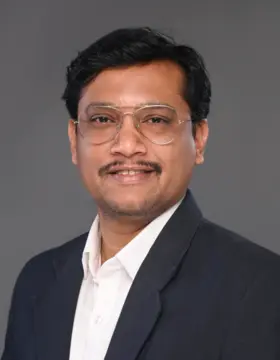
Dr Chetan Waghmare
Head of Education Outreach – Quantum Computing, Accelequant
View profile

Dr Vivek Balachandran
Associate Professor, Infocomm Technology, Singapore Institute of Technology
View profile
Course Details
Learning Hours
Total: 60 hours
- Live online sessions: 4 hours
- Self-paced online content: 55 hours
- In-Person Assessment: 1 hour
Certificate and Assessment
A Certificate of Attainment will be issued to participants who:
- Attend at least 75% of the course
- Undertake and pass non-credit bearing assessment during the course
Participants who meet the attendance requirement but do not pass the assessment will receive a Certificate of Participation.
Assessment Plan
The course assessments include the following modalities:
- Project Prototype Demonstration
- Final Project Presentation
- Technical Written Report
Fee Structure
The full fee for this course is S$7,194.00.
| Funding Category | Eligible Funding | Course Fees Payable After Funding |
|---|---|---|
| Singapore Citizen (Below 40) | 70% | S$2,158.20 |
| Singapore Citizen (Above 40) Funded under SkillsFuture Mid-Career Enhanced Subsidy (MCES) | 90% | S$838.20 |
| Singapore PR / LTVP+ Holder | 70% | S$2,158.20 |
| Non-Singapore Citizen | Not Eligible | S$7,194.00 |
Note:
- All fees above include GST. GST applies to individuals and Singapore-registered companies.
For Organisations
Interested in this course for your business or team?
Tailored to your organisation's specific training needs, we can help you design and develop custom courses to grow key talent and build specialist expertise to meet the future demands of work.
Course Runs
Learning Pathway

Earn a Graduate Certificate
The Graduate Certificate in Sustainability Principles and Practices is designed to equip professionals with the sustainability-related expertise to navigate industry demands, regulatory shifts, and sustainability challenges in the evolving landscape.
Explore More
New Engineering Micro-credentials Launching Soon!
Exciting news! We are introducing new micro-credentials in Electrical and Electronic Engineering & Infrastructure and Systems Engineering. Be among the first to know by registering your interest today! Register now →