
About Course
The global shift toward sustainable mobility is accelerating, and Singapore’s Green Plan targets a cleaner energy vehicle landscape by 2040. Electric Vehicles (EVs) and their charging infrastructure are at the heart of this transformation, offering opportunities to reduce emissions, improve energy efficiency, and reshape land transportation systems. Yet, adoption comes with technical, economic, and operational challenges that professionals must navigate.
This 5-day executive education programme provides a comprehensive understanding of sustainable transportation systems, focusing on EV technologies, charging infrastructure, and their integration into urban mobility. Participants will explore global and national trends, assess environmental and economic impacts, and examine the technical components of EVs—from batteries and power electronics to drivetrains and control systems. The course also addresses policy frameworks, lifecycle sustainability, and the role of EVs in autonomous mobility.
Through interactive lectures, case studies, and an industry visit hosted by Schneider Electric, participants will gain practical insights into EV systems and charging solutions. The learning journey combines technical deep dives with real-world applications, enabling professionals to evaluate challenges, design strategies, and contribute to decarbonisation goals confidently.
Skills you’ll gain
Transport Engineering
Sustainability
Energy Efficiency
Executive Education
Who Should Attend
Transportation professionals
Environmental Advocates
Professionals interested in sustainable transportation and EVs
Prerequisites
A degree or diploma in engineering or disciplines related to land transport, sustainability, energy, or the environment
Learning Outcomes
By the end of this course, participants will be able to:
- Apply fundamental smart grid principles
Understand how smart grids enhance grid reliability, efficiency, and sustainability through real-time data, analytics, and automation. - Explain smart grid architecture and communication integration
Describe the components of smart grid systems and their interoperability with communication networks and IoT technologies. - Assess the role of Advanced Metering Infrastructure (AMI)
Evaluate how AMI supports energy monitoring, demand response, and consumer engagement in modern energy systems. - Analyse integration of distributed energy resources and microgrids
Examine interconnection requirements and interoperability standards for solar, energy storage systems (ESS), and other distributed resources. - Evaluate electricity market dynamics in a smart grid environment
Understand how smart grids influence pricing, demand-side management, and market operations. - Identify cybersecurity vulnerabilities and mitigation strategies
Use tools and frameworks to assess risks and implement security measures for smart grid infrastructure. - Explore emerging technologies and trends in smart grids
Investigate the role of IoT, automation, and advanced analytics in shaping future energy ecosystems. - Develop strategies for integrating renewable energy and electric vehicles
Formulate approaches to incorporate clean energy sources and EV charging infrastructure into smart grid systems.

Teaching Team
Ng Bor Kiat
Associate Professor, Engineering, Singapore Institute of Technology
View profile
Dr. Zheng Jianxin
Associate Professor / Prog Leader, Engineering, Singapore Institute of Technology
View profile
Er. Dr. Lock Kai Sang
Professor, Engineering, Singapore Institute of Technology
View profile

Stephanie Tan
CEO, EV-Electric (EVe) Charging Pte Ltd
View profile

Sin Jia Hau
Product Application Leader (Asia Pacific), Schneider Electric
View profile

Chan Cher Leong
Director, Engineering, BYD Singapore
View profile
Chiam Sing Yang
Technical Director, Singapore Battery Consortium and Deputy Executive Director, IMRE & A*STAR
View profile

Nadarajan Sivakumar
Associate Professor, Engineering, Singapore Institute of Technology
View profile
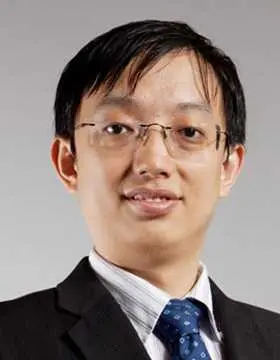
Zhou Yi
Associate Professor, Engineering, Singapore Institute of Technology
View profile
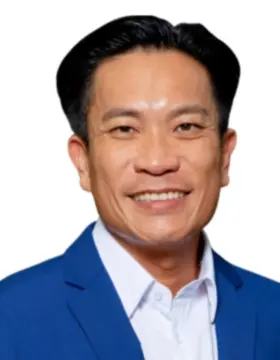
James Ng
Managing Director, BYD Singapore and the Philippines
View profile
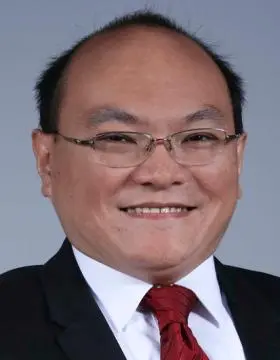
Dan Chia
Associate Professor, Singapore Institute of Technology
View profile
Course Details
| Course Run | Dates | Time |
|---|---|---|
| April 2026 Run | 6 - 10 Apr 2026 | 9:00 am – 6:00 pm |
Course Schedule
| Day | Topic | Venue | Time |
|---|---|---|---|
| Day 1 | Introduction to Green Transportation
| SIT Punggol Campus | 8:30am - 6:15pm |
| Day 2 | Major Systems in Electric Vehicles
| SIT Punggol Campus | 9:00am - 5:30pm |
| Day 3 | EV and AV Design & Applications and Industrial Visit
| SIT Punggol Campus and industry partner’s facility | 9:00am - 5:30pm |
| Day 4 | Charging Infrastructure Design & Applications and Industrial Visit 2
| SIT Punggol Campus and industry partner’s facility | 9:00am - 5:30pm |
| Day 5 | Electric Vehicle Batteries
| SIT Punggol Campus | 9:00am - 6:30pm |
Certificate and Assessment
A Certificate of Attainment will be issued to participants who:
- Attend at least 75% of the course
- Undertake and pass non-credit bearing assessment during the course
Participants who meet the attendance requirement but do not pass the assessment will receive a Certificate of Participation.
Fee Structure
The full fee for this course is S$5,450.
| Funding Category | Eligible Funding | Course Fees Payable After Funding |
|---|---|---|
| Singapore Citizen (Below 40) | 70% | S$1,635.00 |
| Singapore Citizen (Above 40) Funded under SkillsFuture Mid-Career Enhanced Subsidy (MCES) | 90% | S$635.00 |
| Singapore PR / LTVP+ Holder | 70% | S$1,635.00 |
| Non-Singapore Citizen | Not Eligible | S$5,450.00 |
Note:
- All fees above include GST. GST applies to individuals and Singapore-registered companies.
For Organisations
Interested in this course for your business or team?
Tailored to your organisation's specific training needs, we can help you design and develop custom courses to grow key talent and build specialist expertise to meet the future demands of work.
Course Runs
New Engineering Micro-credentials Launching Soon!
Exciting news! We are introducing new micro-credentials in Electrical and Electronic Engineering & Infrastructure and Systems Engineering. Be among the first to know by registering your interest today! Register now →