

About Course
Singapore’s semiconductor ecosystem continues to expand with new wafer fabrication and advanced manufacturing investments, increasing the demand for engineers who understand both device physics and manufacturing realities. To sustain competitiveness in this highly technical sector, employers need talent that can translate theory into manufacturable, reliable, and high‑yield semiconductor devices. This course addresses a critical skills gap by building applied expertise in semiconductor processing, testing, and fabrication technology aligned with current industry needs.
The Specialist Certificate in Semiconductor Devices and Fabrication Technology micro-credential equips learners with practical and analytical competencies to analyse, design, fabricate, and evaluate semiconductor devices that underpin modern electronics.
You will develop a strong foundation in CMOS devices, device scaling trends, and power devices based on wide bandgap materials. The course also covers wafer processing, device characterisation and reliability testing, ensuring you understand the complete semiconductor process flow from materials and design to fabrication and performance validation.
Learning is structured across three integrated topic areas covering Exploring Semiconductor Materials and Devices, Semiconductor Material characterization and Devices testing and Semiconductor Fabrication Technology. By combining theoretical grounding with applied engineering perspectives, the course enables you to connect device behaviour with fabrication decisions, process integration, and reliability outcomes.
This micro-credential is part of the CSM Pathways in Electrical and Electronics Engineering and Infrastructure and Systems Engineering.
Skills you’ll gain
Electronics Engineering
Competency-based Education
Advanced Manufacturing
Electrical Engineering
Who Should Attend
Professionals seeking to deepen technical expertise in semiconductor device manufacturing, testing, and process integration within the electronics and semiconductor sectors, including:
- Process Engineer, Process Integration Engineer, Yield Enhancement Engineer
- Equipment Engineer
- Product Engineer, Test Engineer
- Electronics Engineer
- Packaging Engineer
Also suitable for: Assistant engineers, associate engineers, and early‑to‑mid‑career professionals who want to advance into higher‑responsibility technical roles within semiconductor fabs or related organisations.
Prerequisites
- Knowledge of basic mathematics with at least a pass in O‑Level Mathematics or higher.
- A background in electronics, electrical engineering, or a related technical discipline is advantageous, though not mandatory for motivated learners with relevant industry exposure.
Assumed Prior Knowledge
- Learners should possess analytical skills for problem-solving and decision-making, as well as basic statistical knowledge.
- Basic communication and writing skills are required to create content and complete written exercises.
Learning Outcomes
This micro-credential is predominantly delivered through a competency-based education (CBE) approach where learners acquire and demonstrate mastery of knowledge and skills that are directly relevant to job functions. This prepares you to be industry-ready where you can apply their newly acquired competencies to their work.
List of Competency Units
| Code | Competency Unit Title | Credits |
|---|---|---|
| Exploring Semiconductor Materials and Devices | 6 | |
| Semiconductor Devices testing, characterization and modelling | 6 | |
| Semiconductor Fabrication Technology | 6 |
Upon completion of this micro-credential, you will be able to:
- Explain semiconductor properties, energy bands, and band gaps, including the behaviour of intrinsic and extrinsic carriers.
- Analyse the role of electron‑hole pairs, mobility, recombination, and doping in determining device performance.
- Describe the operating principles and characteristics of key semiconductor devices including diodes, BJTs, MOSFETs, and integrated circuits.
- Relate device functionality to applications in power electronics, digital logic, signal processing, and advanced industry sectors.
- Differentiate between semiconductor wafers and packaged chips, and understand their respective testing requirements.
- Apply wafer‑level and device‑level testing techniques to evaluate electrical performance and identify defects.
- Use device modelling and simulation concepts to predict behaviour and assess design trade‑offs.
- Analyse defect generation during wafer processing and evaluate its impact on yield, reliability, and device degradation.
- Interpret characterisation data to support reliability analysis and yield enhancement strategies.
- Describe complete CMOS fabrication flows including unit processes, layout considerations, and process integration.
- Apply wafer surface preparation and cleanroom protocols such as RCA and solvent cleaning.
- Compare thin film deposition techniques including oxidation, PVD, CVD, and LPCVD, and assess their impact on film quality and device performance.
- Evaluate doping technologies such as ion implantation and diffusion and their effects on electrical characteristics.
- Explain patterning, etching, and planarisation techniques including photolithography, wet and dry etching, and CMP.
- Apply metrology and inspection concepts to inline process control, defect detection, and manufacturing optimisation.

Coaching for Success
During the course, you will have access to a team of qualified success coaches who can work with you on learning strategies or to develop a personalised learning plan. Through the success coaches, you can gain access to a wide range of resources and support services, and be empowered with the necessary tools to navigate your learning journey successfully.
Teaching Team
Dr. Soh Chew Beng
Assoc Professor/Deputy Cluster Dir, Engineering, Singapore Institute of Technology
View profile
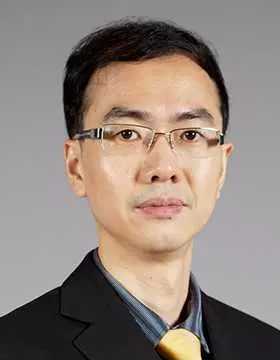
Dr. Zheng Jianxin
Associate Professor / Prog Leader, Engineering, Singapore Institute of Technology
View profile
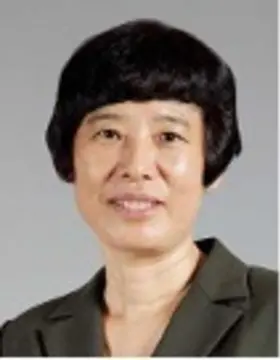
Dr. Xiang Ning
Associate Professor, Singapore Institute of Technology
View profile

Dr. Feng Hanhua
Senior Lecturer, Temasek Polytechnic
View profile
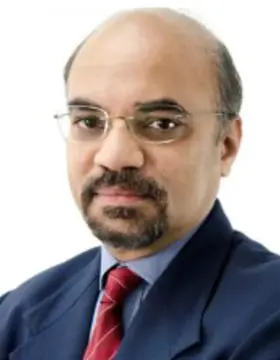
Dr. Ramam Akkipeddi
Principal Professional Officer, Singapore Institute of Technology
View profile
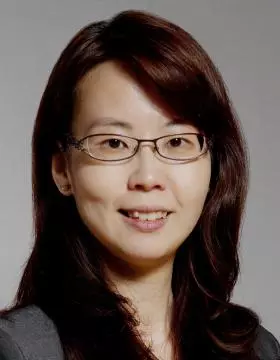
Dr. Shen Lu
Senior Lead Professional Officer, Singapore Institute of Technology
View profile
Course Details
Certificate and Assessment
A Specialist Certificate in Semiconductor Devices and Fabrication Technology will be issued to learners who:
- Attend at least 75% of the course and
- Undertake and pass all credit bearing assessments
Assessment Plan
- The learner will undertake a combination of written assessments (short answers, technical reports), projects, assignments and presentations.
Fee Structure
The full fee for this course is S$10,006.20.
| Category | After Skillsfuture Funding |
|---|---|
| Singapore Citizen (Below 40) | S$3,001.86 |
| Singapore Citizen (40 & Above) | S$1,165.86 |
| Singapore PR / LTVP+ Holder | S$3,001.86 |
| Non-Singapore Citizen | S$10,006.20 (No Funding) |
Note:
- A one-time, non-refundable matriculation fee of $54.50 will be collected before course commencement.
- All fees above include GST. GST applies to individuals and Singapore-registered companies.
- Should you decide to convert to the degree pathway, you will be subject to SIT’s tuition fees and may qualify for the Ministry of Education (MOE) tuition grant, based on eligibility criteria set by MOE. Please note that the SkillsFuture subsidy will no longer be applicable once you convert to the degree pathway.
For Organisations
Interested in this course for your business or team?
Tailored to your organisation's specific training needs, we can help you design and develop custom courses to grow key talent and build specialist expertise to meet the future demands of work.
Course Runs
Learning Pathway
Earn specialist certificates through micro-credentials in the following CSM pathways. Stack these micro-credentials towards a bachelor's degree at SIT.


New Engineering Micro-credentials Launching Soon!
Exciting news! We are introducing new micro-credentials in Electrical and Electronic Engineering & Infrastructure and Systems Engineering. Be among the first to know by registering your interest today! Register now →