About Course
Power systems today face growing challenges from aging assets, increasing complexity, and the integration of renewables, power electronics, and energy storage. To maintain reliability, safety, and performance, power engineers must move beyond reactive maintenance towards condition-based asset management.
This course addresses the industry-wide need for professionals who can assess asset health, anticipate failures, and optimise asset life cycles. As utilities and asset owners manage both aging infrastructure and new technologies such as solar PV, batteries, and converters, effective condition monitoring is essential for resilient and sustainable power systems.
Learners will gain in-depth knowledge of deterioration mechanisms, failure modes, and reliability of major power system equipment, along with practical condition-monitoring techniques. The course combines theory with real-world applications across three key areas:
- Rotating Electrical Machines: Monitoring generators and motors using thermal, vibration, chemical, and electrical techniques.
- High-Voltage Equipment: Assessing the condition of transmission lines, cables, transformers, and switchgear through gas, oil, and partial discharge analysis.
- Emerging Assets and Advanced Techniques: Understanding failure mechanisms in energy storage systems, solar PV, and power electronic converters, and the role of data analytics, sensing, and computational intelligence in modern smart grids.
By the end of this course, learners will be equipped to make informed, data-driven condition-monitoring decisions that support reliable operation, cost-effective maintenance, and long-term asset sustainability.
Skills you’ll gain
Power and Clean Energy
Electrical Engineering
Sustainability
Who Should Attend
Engineers working in the power and energy sector
IT professionals in any power and energy-related businesses
Electrical and electronic engineering professionals
Researchers and educators in electrical engineering and urban sustainability-related areas
Prerequisites
- Bachelor degree in Engineering
- At least one-year of relevant working experience
Learning Outcomes
Upon successful completion of this course, learners will be able to:
- Analyse asset failure modes and reliability risks - Evaluate deterioration mechanisms and failure modes of major power system assets, and assess their reliability and operational risks across the asset life cycle.
- Design and evaluate condition monitoring systems - Select and apply appropriate instrumentation, sensing methods, and signal processing techniques to acquire and interpret condition data from power system equipment.
- Apply multi-physics condition monitoring techniques - Diagnose asset health using temperature-based, chemical-based, vibration-based, electrical measurement, and partial discharge monitoring techniques, and interpret results in an integrated manner.
- Perform integrated condition assessment and health prognosis - Combine data from multiple monitoring sources to assess asset condition, estimate remaining useful life, and support informed operational and maintenance decisions.
- Leverage computational intelligence for advanced diagnostics - Apply data analytics and computational intelligence techniques to enhance fault detection, diagnostics, and predictive health assessment in modern power systems.
- Evaluate emerging asset monitoring challenges - Analyse condition monitoring and failure mechanisms associated with emerging assets such as energy storage systems, solar photovoltaic installations, and power electronic converters.
- Develop condition-based maintenance and asset management strategies - Translate condition monitoring insights into condition-based maintenance, replacement, and asset management strategies that improve reliability, safety, and cost effectiveness.
- Make professional engineering judgements using condition data - Synthesize technical evidence, operational constraints, and asset management objectives to recommend sound engineering decisions in real-world power system contexts.

Teaching Team
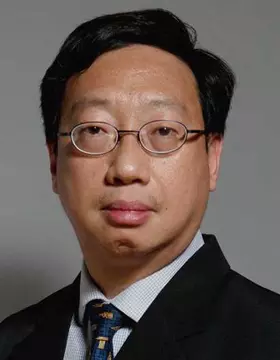
Tseng King Jet
Professor, Engineering, Singapore Institute of Technology
View profile
Course Details
| Course Run | Dates | Time |
|---|---|---|
| May - Jul 2026 | 7 May – 30 Jul 2026 (Every Thursday*) | 7:00 pm - 10:00 pm |
Certificate and Assessment
A Certificate of Attainment will be issued to participants who
- Attend at least 75% of the module; and
- Undertake and pass credit-bearing assessment during the module; and
Participants who meet the attendance requirement but do not pass the assessment will receive a Certificate of Participation.
Fee Structure
The full fee for this course is S$3,606.88.
| Funding Category | Eligible Funding | Course Fees Payable After Funding |
|---|---|---|
| Singapore Citizen (Below 40) | 70% | S$1,082.06 |
| Singapore Citizen (Above 40) Funded under SkillsFuture Mid-Career Enhanced Subsidy (MCES) | 90% | S$420.25 |
| Singapore PR / LTVP+ Holder | 70% | S$1,082.06 |
| Non-Singapore Citizen | Not Eligible | S$3,606.88 |
Note:
- All fees above include GST. GST applies to individuals and Singapore-registered companies.
For Organisations
Interested in this course for your business or team?
Tailored to your organisation's specific training needs, we can help you design and develop custom courses to grow key talent and build specialist expertise to meet the future demands of work.
Course Runs
New Engineering Micro-credentials Launching Soon!
Exciting news! We are introducing new micro-credentials in Electrical and Electronic Engineering & Infrastructure and Systems Engineering. Be among the first to know by registering your interest today! Register now →