
About Course
Rising energy costs, tightening carbon targets, and increasing resilience demands are transforming the way industries design, operate, and manage energy systems. Organisations today need skilled professionals who can reduce energy waste, optimise high‑impact systems, and implement sustainable solutions that are technically sound, financially viable, and compliant with regulations.
The Specialist Certificate in Energy Systems Efficiency micro-credential equips learners with the knowledge and practical skills to analyse energy consumption, model and optimise engineering systems, and deliver measurable efficiency improvements across industrial and built‑environment applications.
You will address real‑world challenges such as HVAC optimisation, industrial heat transfer efficiency, grid and system reliability, energy auditing, and the design of net‑zero energy buildings. The course also builds competence in energy management, renewable integration, and regulatory considerations, enabling you to drive carbon reduction while maintaining system performance.
Learning is applied and practice‑driven, anchored in three modules covering Thermal Systems and Efficiency, Modelling and Simulation, and Sustainable Energy Management, culminating in an interdisciplinary capstone project.
This micro-credential is part of the Competency-based Stackable Micro-credential (CSM) Pathway in Electrical and Electronic Engineering and Infrastructure and Systems Engineering.
Skills you’ll gain
Electronics Engineering
Systems Engineering
Competency-based Education
Chemical Engineering
VIEW ALL SKILLS
Who Should Attend
Professionals and aspiring specialists seeking to advance their expertise in energy efficiency, system optimisation, and sustainable energy management in the Energy & Power, Built Environment, and Energy & Chemical sectors, including:
Power Plant Engineer, Utilities Engineer, Distributed Energy Resources Engineer
District Cooling Engineer, HVAC Engineer, Building Energy Analyst
Built‑Environment Systems Engineer, Green Building Consultant, Sustainability Engineer
Plant Efficiency Specialist, Energy Auditor, Energy Efficiency Opportunity Assessor
Also suitable for:
Facilities/Operations Managers, ESCO practitioners, and consultants seeking deeper technical rigour.
Mid‑career engineers transitioning into energy management and net‑zero roles.
Early‑career graduates in relevant engineering disciplines aiming to stand out with hands‑on modelling and audit capabilities.
Minimum Entry Requirements
- Familiarity with the International System of Units
- Basic understanding of thermodynamics, heat transfer, fluid mechanics, and physics.
- Basic knowledge of energy system operation and common energy‑saving practices.
- Experience with CAD modelling or computer‑aided drawing.
- A minimum Diploma in a relevant engineering discipline or equivalent industry experience.
Assumed Prior Knowledge
- Learners should possess analytical skills for problem-solving and decision-making, as well as basic statistical knowledge.
- Basic communication and writing skills are required to create content and complete written exercises.
Stack Towards an SIT Degree
Upon attaining the Specialist Certificate in this micro-credential, learners may stack their qualification towards selected SIT degree programmes:
- Bachelor of Engineering (Honours) in Electrical and Electronic Engineering (via the CSM Pathway)
- Bachelor of Engineering (Honours) in Infrastructure and Systems Engineering (via the CSM Pathway)
- Bachelor of Integrated Studies (Hons) in Technology and Management with Specialisation in Supply Chain
These routes to a degree enable learners to progressively build recognised academic qualifications while advancing their expertise in computing, engineering and technology-related disciplines.
Learning Outcomes
This micro-credential is predominantly delivered through a competency-based education (CBE) approach where learners acquire and demonstrate mastery of knowledge and skills that are directly relevant to job functions. This prepares you to be industry-ready where you can apply their newly acquired competencies to their work.
List of Modules
| Code | Module Title | Credits |
|---|---|---|
| Thermal Systems and Efficiency | 6 | |
| Modelling and Simulation | 6 | |
| Sustainable Energy Management | 6 |
Upon completion of this micro-credential, you will be able to:
- Evaluate HVAC processes using psychrometric charts and thermodynamic calculations; diagnose inefficiencies in air‑conditioning and refrigeration cycles.
- Assess and improve heat‑exchanger performance (e.g., effectiveness/NTU analysis); recommend design and control modifications to reduce energy consumption and improve COP.
- Pre‑process and set up numerical models (geometry/CAD import, meshing, boundary conditions, solver selection) with assumptions appropriate to the problem.
- Solve, post‑process, and validate results, comparing against theory/benchmark data; extract decision‑ready insights (e.g., temperature fields, pressure drops, heat‑transfer coefficients).
- Communicate engineering findings through clear technical reports and stakeholder‑focused presentations that support investment decisions.
- Analyse energy management in context—political, regulatory, and fiscal influences—and select suitable efficiency technologies across industrial and building domains.
- Plan and execute energy audits: instrument metering systems, establish baselines, correlate productivity with energy use, and quantify savings, payback, and risk for strategic decision‑making.
- Design net‑zero and renewable integration strategies (demand‑side management, storage, and controls) to improve energy resilience and compliance.

Coaching for Success
During the course, you will have access to a team of qualified success coaches who can work with you on learning strategies or to develop a personalised learning plan. Through the success coaches, you can gain access to a wide range of resources and support services, and be empowered with the necessary tools to navigate your learning journey successfully.
Teaching Team
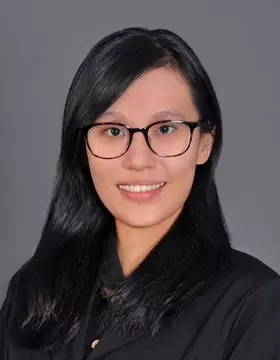
Elisa Ang Yun Mei
Assistant Professor, Engineering, Singapore Institute of Technology
View profile

Steven Huang
Senior Research Fellow, Singapore Institute of Technology
View profile
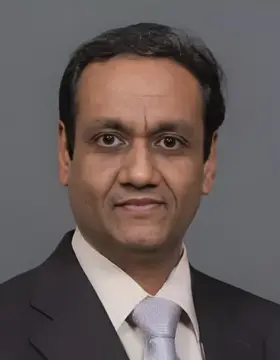
Swapnil Dubey
Assistant Professor, Singapore Institute of Technology
View profile
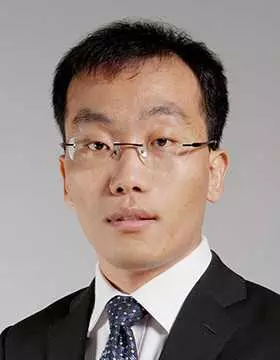
An Hui
Associate Professor / Prog Leader, Engineering, Singapore Institute of Technology
View profile

Chen Yihang
Research Engineer, Singapore Institute of Technology
View profile
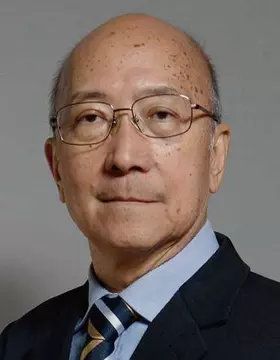
Er. Dr. Lock Kai Sang
Professor, Engineering, Singapore Institute of Technology
View profile
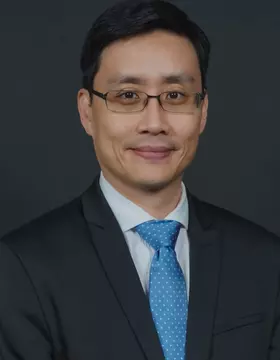
Eugene Wong Wai Leong
Associate Professor / Director of Prog, Engineering, Singapore Institute of Technology
View profile
Course Details
Schedule
| Week | Learning Activity | Delivery and Time |
|---|---|---|
| 1 – 12 | Self-directed learning (pre-recorded videos) | Asynchronous online |
| 1 – 12 | Integrated sessions | Zoom |
| 6, 8, 11, 13 | Assessments | In-person Time TBC |
Certificate and Assessment
A Specialist Certificate in Energy Systems Efficiency will be issued to learners who:
- Attend at least 75% of the course and
- Undertake and pass all credit bearing assessments
Assessment Plan
- The learner will undertake a combination of written assessments (short answers, technical reports), projects, assignments and presentations.
Fee Structure
The full fee for this course is S$10,006.20.
| Funding Category | Eligible Funding | Course Fees Payable After Funding |
|---|---|---|
| Singapore Citizen (Below 40) | 70% | S$3,001.86 |
| Singapore Citizen (Above 40) Funded under SkillsFuture Mid-Career Enhanced Subsidy (MCES) | 90% | S$1,165.86 |
| Singapore PR / LTVP+ Holder | 70% | S$3,001.86 |
| Non-Singapore Citizen | Not Eligible | S$10,006.20 |
Note:
- A one-time, non-refundable matriculation fee of $54.50 will be collected before course commencement.
- All fees above include GST. GST applies to individuals and Singapore-registered companies.
- Should you decide to convert to the degree pathway, you will be subject to SIT’s tuition fees and may qualify for the Ministry of Education (MOE) tuition grant, based on eligibility criteria set by MOE. Please note that the SkillsFuture subsidy will no longer be applicable once you convert to the degree pathway.
SkillsFuture Credit
Learners may use their SkillsFuture Credit and Additional SkillsFuture Credit (Mid-Career Support) to further offset out-of-pocket course fees.
SkillsFuture Mid-Career Training Allowance (Part-time)
Singapore Citizens, aged 40 and above, and in-employment in the past 12 months are eligible for Training Allowance of $300 per month. Login to SkillsFuture Portal with your SingPass to check your eligibility.
For Organisations
Interested in this course for your business or team?
Tailored to your organisation's specific training needs, we can help you design and develop custom courses to grow key talent and build specialist expertise to meet the future demands of work.
Frequently Asked Questions
Fee Subsidy & Funding
-
Who qualifies for SkillsFuture course fee subsidy?
Singapore Citizens, Permanent Residents and LTVP+ holders are eligible for SkillsFuture Course Fees Funding. Refer to Fee Structure for details.
-
If I fail or drop out of the programme, what will happen to the funding I’ve received?
If you fail the programme or drop out without a valid reason, you may be required to refund the course fee subsidy you received. Learners are encouraged to complete all modules and pass the assessments to fully benefit from the programme and retain the funding support.
-
What if I turn 40 years old in the middle of the programme?
If you turn 40 years old during the programme, you will become eligible for the Mid-Career Enhanced Subsidy from the month you turn 40. This subsidy can cover up to 90% of programme fees.
SkillsFuture Mid-Career Training Allowance (Part-time)
-
Who is eligible for SkillsFuture Mid-Career Training Allowance?
Singapore Citizens aged 40 years old and above and is in-employment with income in the last 12 months are eligible for SkillsFuture Mid-Career Training Allowance (Part-time) when they enrol into a Competency-based Stackable Micro-credential. Subject to application approval by SkillsFuture Singapore.
-
When and how do I apply for the training allowance?
You can login to SkillsFuture Portal with your SingPass to submit your application for the SkillsFuture Training Allowance (Part-time) up to two (2) months before the course start date.
-
How much training allowance will I receive upon successful application?
You will receive an allowance of $300 per month for the period of your 3-month micro-credential course.
-
What are the requirements I need to fulfil in order to receive the monthly training allowances?
You will need to fulfill a minimum of 75% attendance of the course.
Course Runs
Learning Pathway
Earn specialist certificates through micro-credentials in the following CSM pathways. Stack these micro-credentials towards a bachelor's degree at SIT.


New Engineering Micro-credentials Launching Soon!
Exciting news! We are introducing new micro-credentials in Electrical and Electronic Engineering & Infrastructure and Systems Engineering. Be among the first to know by registering your interest today! Register now →