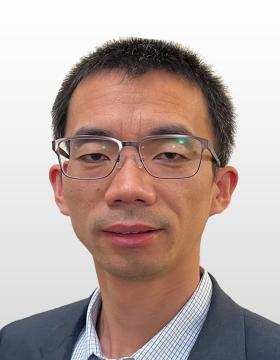
Martin Ma
Profile
Biography
Dr. Martin Ma (martin.ma@singaporetech.edu.sg) is an Assistant Professor at the Singapore Institute of Technology (SIT), where he leads the Applied Systems Modeling, Analytics, Research & Technology (A-SMART) Lab. Prior to joining SIT, he was a Research Scientist at New Mexico Tech and a Staff Scientist at Los Alamos National Laboratory. He earned his Ph.D. in Petroleum Engineering from the University of Alberta (Canada) in 2018, followed by postdoctoral appointments at the University of Alberta, Stanford University, and Los Alamos National Laboratory.
Dr. Ma's research develops AI-enabled modeling and optimization methods for secure, resilient, and economically sustainable energy production and infrastructure under uncertainty. Over the past 14 years, Dr. Ma has applied advanced computational methods, optimization algorithms, machine learning models, numerical simulation, and software development to address challenging problems in science and engineering. His research spans energy production process optimization, decarbonization and clean energy generation, carbon capture, utilization, and storage (CCUS), and environmental risk mitigation.
He has served as principal investigator or co-principal investigator on numerous projects in Canada and the United States. His portfolio includes U.S. Department of Energy sponsored efforts such as the SimCCS Development and Applications program, the Science Informed Machine Learning for Accelerating Real Time Decisions in Subsurface Applications (SMART) initiative, and the Consortium Advancing Technology for Assessment of Lost Oil & Gas Wells (CATALOG) program. As co PI, he helped enhance the SimCCS tool for large scale CCUS infrastructure simulations, advancing the United States’ leadership in carbon storage modeling.
Dr. Ma’s innovations in modeling and simulation have earned several honors, including Los Alamos National Laboratory’s SPOT Award. To date, he has published more than 36 peer reviewed journal articles and 26 conference papers, and has presented widely at international conferences and workshops. He has delivered invited talks and lectures at venues including the AGU Fall Meeting, The University of Texas at Austin, and Penn State University, and has mentored three postdoctoral researchers and more than ten graduate and undergraduate students.
In addition to his research and mentorship, Dr. Ma plays an active leadership role in the international CCUS community. He is helping to organize and lead major conferences, serving on the program committees for CCUS 2025 and CCUS 2026, where he contributes to shaping the scientific agenda and fostering collaboration among global experts in CCUS.
SIT Appointments
- Member, SIT Emerging Technologies Initiative (SETI)– Present
- Assistant Professor– Present
Education
- PhD in Petroleum EngineeringUniversity of Alberta , Canada
- Msc in Earth Science & EngineeringKing Abdullah University of Science and Technology , Saudi Arabia
- BS in Petroleum EngineeringChina University of Petroleum (East China) , China
Professional Memberships
- American Geophysical Union– Present
- Society of Petroleum Engineers– Present
Corporate Experience
- Adjunt Faculty in Petroleum and Natural Gas Engineering, New Mexico TechPresent
- Research Scientist, New Mexico Tech–
- Staff Scientist, Los Alamos National Laboratory–
- Postdoctoral Research Associate, Los Alamos National Laboratory–
- NSERC Postdoctoral Research Fellow, Stanford University–
Research
Research Interests
- Machine learning
- Optimization
- Process control
- Clean energy production and storage
- Carbon capture, utilization, and storage (CCUS)
Current Projects
- Risk-Adjusted Techno-Economic Analysis of Cross-Border CO2 Maritime Transport: A Stochastic and Machine Learning Framework for Singapore-Linked Corridors– Present
- PI
- Funded by AcRF Tier 1
- Ai-Assisted Integrated Verification & Tracing System for Rebar Delivery– Present
- Co-PI
- Funded by Industry Alignment Fund – Industry Collaboration Projects (IAF–ICP)
- The Southwest Carbon, Capture, Utilization, and Storage Training and Research Partnership– Present
- Co-PI
- Funded by the US Department of Energy
Past Projects
- CUSP: Four Corners Regional Initiative–
- Co-I
- Funded by the US Department of Energy
- Four Corners Storage Project CarbonSAFE Phase III–
- Co-I
- Funded by the US Department of Energy
- Power Sector CO2 Pipeline Analysis Using SimCCS–
- Co-PI
- Funded by the US Department of Energy
- Consortium Advancing Technology for Assessment of Lost Oil & Gas Wells–
- Task 7 lead
- Funded by the US Department of Energy
- SimCCS Development and Applications–
- Co-PI
- Funded by the US Department of Energy
- Science-informed Machine Learning to Accelerate Real Time (SMART) Decisions in Subsurface Applications, Phase 2–
- Co-I, main contributor for machine learning-based optimization and history matching
- Funded by the US Department of Energy
- National Scale CCS Pipeline Modeling–
- Co-PI
- Funded by the US Department of Energy
- Development of Novel Machine Learning-Based Dynamic Proxy Frameworks for Production Optimization–
- PI
- Funded by Smart Fields at Stanford University
- Development of an Innovative Fast Reservoir Simulation Tool using Big Data Analytics and Artificial Intelligence–
- PI
- Funded by Natural Sciences and Engineering Research Council of Canada
- Reservoir Management and Advanced Optimization for Thermal And Thermal-Solvent Based Recovery Processes Using Fundamentals–
- Co-I
- Funded by the Canada First Research Excellence Fund (CFREF) via the Future Energy Systems
Publication
Journal Papers
Marcato, A., Colman, R., Milazzo, D., Guiltinan, E., Ma, Z., O'Malley, D., Viswanathan, H., and Santos, J. E. Synthetic training enables deployment on raw drone data: An attention-based framework for detecting orphan wells. Sensors 26, 9 (2026). https://doi.org/10.3390/s26092573
Velasco-Lozano, M., Chen, B., Ma, Z., and Pawar, R. Unified deep-learning workflow for uncertainty reduction in subsurface carbon storage modeling through data assimilation of seismic-inverted CO2 maps. International Journal of Greenhouse Gas Control 150 (2026), 104582. https://doi.org/10.1016/j.ijggc.2026.10458
Ma, Z.*, Chen, B., and Pawar, R. Leveraging existing CO2 pipelines and pipeline rights-of-way for large-scale ccs deployment. Geoenergy Science and Engineering 255 (2025), 214063 https://doi.org/10.1016/j.geoen.2025.214063
Ma, Z., Yuan, Q., Xu, Z., and Leung, J. Y. A dynamic solvent chamber propagation estimation framework using RNN for warm solvent injection in heterogeneous reservoirs. Geoenergy Science and Engineering 244 (2025), 213405. https://doi.org/10.1016/j.geoen.2024.213405
Zheng, F., Ma, Z., Viswanathan, H., Pawar, R., Jha, B., and Chen, B. Deep learning assisted multi-objective optimization of geological CO2 storage performance under geomechanical risks. SPE Journal (2025), 1–16. https://doi.org/10.2118/220850-PA
Malki, M. L., Heimerl, J., Ma, Z., Chen, B., Van Wijk, J., and Mehana, M. Assessing the feasibility of retrofitting legacy wells for CO2 geological sequestration. International Journal of Greenhouse Gas Control 144 (2025), 104389 https://doi.org/10.1016/j.ijggc.2025.104389
Sayani, J. K. S., Wang, M., Ma, Z., Sharan, P., Mehana, M., and Chen, B. Techno-economic analysis of hydrogen transport via repurposed natural gas pipelines: Flow dynamics and infrastructure tradeoffs. International Journal of Hydrogen Energy 147 (2025), 150033 https://doi.org/10.1016/j.ijhydene.2025.150033
Ma, Z., Pachalieva, A. A., Sweeney, M. R., Chen, B., Viswanathan, H., and Hyman, J. D. Efficient approximations of effective permeability of fractured porous media using machine learning: A computational geometry approach. Mathematical Geosciences (2025), 1–41 https://doi.org/10.1007/s11004-025-10197-2
Ma, Z., Santos, J. E., Lackey, G., Viswanathan, H., and O'Malley, D. Information extraction from historical well records using a large language model. Scientific Reports 14, 1 (2024), 31702. https://doi.org/10.1038/s41598-024-81846
O'Malley, D., Delorey, A. A., Guiltinan, E. J., Ma, Z., Kadeethum, T., Lackey, G., Lee, J., Santos, J. E., Follansbee, E., Nair, M. C., Pekney, N. J., Jahan, I., Mehana, M., Hora, P., Carey, J. W., Govert, A., Varadharajan, C., Ciulla, F., Biraud, S. C., Jordan, P., Dubey, M., Santos, A., Wu, Y., Kneafsey, T. J., Dubey, M. K., Weiss, C. J., Downs, C., Boutot, J., Kang, M., and Viswanathan, H. Unlocking solutions: Innovative approaches to identifying and mitigating the environmental impacts of undocumented orphan wells in the United States. Environmental Science & Technology 58, 44 (2024), 19584-19594. https://doi.org/10.1021/acs.est.4c02069
Velasco-Lozano, M., Ma, Z., Chen, B., and Pawar, R. Optimizing large-scale CO2 pipeline networks using a geospatial splitting approach. Journal of Environmental Management 370 (2024), 122522. https://doi.org/10.1016/j.jenvman.2024.122522
Heimerl, J., Nolt-Caraway, S., Ma, Z., Chen, B., van Wijk, J., and Mehana, M. Sustainable energy solutions: Well retrofit analysis and emission reduction for a net-zero future in the Intermountain West, United States of America. Journal of Environmental Management 361 (2024), 121271. https://doi.org/10.1016/j.jenvman.2024.121271
Ma, Z., Ou, X., and Zhang, B. Development of a convolutional neural network based geomechanical upscaling technique for heterogeneous geological reservoir. Journal of Rock Mechanics and Geotechnical Engineering 16, 6 (2024), 2111-2125. https://doi.org/10.1016/j.jrmge.2024.02.009
Chen, B., Morales, M. M., Ma, Z., Kang, Q., and Pawar, R. J. Assimilation of geophysics-derived spatial data for model calibration in geologic CO2 sequestration. SPE Journal (2024), 1-10. https://doi.org/10.2118/212975-PA
Mao, S., Chen, B., Malki, M., Chen, F., Morales, M., Ma, Z., and Mehana, M. Efficient prediction of hydrogen storage performance in depleted gas reservoirs using machine learning. Applied Energy 361 (2024), 122914. https://doi.org/10.1016/j.apenergy.2024.122914
Chen, F., Chen, B., Ma, Z., and Mehana, M. Economic assessment of clean hydrogen production from fossil fuels in the Intermountain-West region, USA. Renewable and Sustainable Energy Transition 5 (2024), 100077. https://doi.org/10.1016/j.rset.2024.10007
Xiao, T., Chen, T., Ma, Z., Tian, H., Meguerdijian, S., Chen, B., Pawar, R., Huang, L., Xu, T., Cather, M., et al. A review of risk and uncertainty assessment for geologic carbon storage. Renewable and Sustainable Energy Reviews 189 (2024), 113945. https://doi.org/10.1016/j.rser.2023.113945
Chen, F., Ma, Z., Chen, B., Mehana, M., and van Wijk, J. Capacity assessment and cost analysis of geologic storage of hydrogen: A case study in Intermountain-West Region USA. International Journal of Hydrogen Energy 48, 24 (2023), 9008-9022. https://doi.org/10.1016/j.ijhydene.2022.11.29
Zhang, B., Ma, Z., Zheng, D., Chalaturnyk, R. J., and Boisvert, J. Upscaling shear strength of heterogeneous oil sands with interbedded shales using artificial neural network. SPE Journal 28, 02 (2023), 737-753. https://doi.org/10.2118/208885-PA
Ma, Z., Chen, B., and Pawar, R. Phase-based design of CO2 capture, transport, and storage infrastructure via SimCCS. Scientific Reports 13 (2023), 6527. https://doi.org/10.1038/s41598-023-33512-5
Chen, F., Ma, Z., Hadi, N., Chen, B., Mehana, M., and van Wijk, J. Reuse of produced water from the petroleum industry: Case studies from the Intermountain-West region, USA. Energy & Fuels 37, 5 (2023), 3672-3684. https://doi.org/10.1021/acs.energyfuels.2c04000
Ma, Z., Coimbra, L., and Leung, J. Y. Design of steam alternating solvent process operational parameters considering shale heterogeneity. SPE Production & Operations 37 (2022), 586-602. https://doi.org/10.2118/210557-PA
Ma, Z., Kim, Y. D., Volkov, O., and Durlofsky, L. J. Optimization of subsurface flow operations using a dynamic proxy strategy. Mathematical Geosciences 54 (2022), 1261-1287. https://doi.org/10.1007/s11004-022-10020-2
Molina, I. M., Ma, Z., and Leung, J. Y. Design of optimal operational parameters for steam-alternating-solvent processes in heterogeneous reservoirs - a multi-objective optimization approach. Computational Geosciences 26 (2022), 1503-1535. https://doi.org/10.1007/s10596-022-10170-6
Ma, Z., Volkov, O., and Durlofsky, L. J. Multigroup strategy for well control optimization. Journal of Petroleum Science and Engineering 214, 04 (2022), 110448. https://doi.org/10.1016/j.petrol.2022.110448
Hunyinbo, S., Ma, Z., and Leung, J. Y. Incorporating phase behavior constraints in the multi-objective optimization of a warm vaporized solvent injection process. Journal of Petroleum Science and Engineering 205 (2021), 108949. https://doi.org/10.1016/j.petrol.2021.108949
Yuan, Q., Ma, Z., Wang, J., and Zhou, X. Influences of dead-end pores in porous media on viscous fingering instabilities and cleanup of NAPLs in miscible displacements. Water Resources Research 57, 11 (2021), e2021WR030594. https://doi.org/10.1029/2021WR030594
Ma, Z., and Leung, J. Y. Efficient tracking and estimation of solvent chamber development during warm solvent injection in heterogeneous reservoirs via machine learning. Journal of Petroleum Science and Engineering 206 (2021), 109089. https://doi.org/10.1016/j.petrol.2021.109089
Ma, Z., and Leung, J. Y. A knowledge-based heterogeneity characterization framework for 3D steam-assisted gravity drainage reservoirs. Knowledge-Based Systems 192 (2020), 105327. https://doi.org/10.1016/j.knosys.2019.105327
Ma, Z., and Leung, J. Y. Design of warm solvent injection processes for heterogeneous heavy oil reservoirs: A hybrid workflow of multi-objective optimization and proxy models. Journal of Petroleum Science and Engineering 191 (2020), 107186. https://doi.org/10.1016/j.petrol.2020.107186
Ma, Z., and Leung, J. Y. Integration of deep learning and data analytics for SAGD temperature and production analysis. Computational Geosciences 24 (2020), 1239-1255. https://doi.org/10.1007/s10596-020-09940-x
Ma, Z., and Leung, J. Y. Integration of data-driven modeling techniques for lean zone and shale barrier characterization in SAGD reservoirs. Journal of Petroleum Science and Engineering 176 (2019), 716-734. https://doi.org/10.1016/j.petrol.2019.01.106
Ma, Z., Leung, J. Y., and Zanon, S. Integration of artificial intelligence and production data analysis for shale heterogeneity characterization in steam-assisted gravity-drainage reservoirs. Journal of Petroleum Science and Engineering 163 (2018), 139-155. https://doi.org/10.1016/j.petrol.2017.12.046
Wang, C., Ma, Z., Leung, J. Y., and Zanon, S. D. Correlating stochastically distributed reservoir heterogeneities with steam-assisted gravity drainage production. Oil & Gas Science and Technology-Revue d'IFP Energies nouvelles 73 (2018), 9. https://doi.org/10.2516/ogst/2017042
Ma, Z., Leung, J. Y., and Zanon, S. Practical data mining and artificial neural network modeling for steam-assisted gravity drainage production analysis. Journal of Energy Resources Technology 139, 3 (2017). https://doi.org/10.1115/1.4035751
Ma, Z., Leung, J. Y., Zanon, S., and Dzurman, P. Practical implementation of knowledge-based approaches for steam-assisted gravity drainage production analysis. Expert Systems with Applications 42, 21 (2015), 7326-7343. https://doi.org/10.1016/j.eswa.2015.05.047
Teaching
Teaching Modules
Pharmaceutical Engineering, BEng (Hons)
- PHE3019 - Process Safety
Chemical Engineering, BSc
- TCE4011 - Integrated Work Study Programme
- TCE4012 - Bachelor Thesis
Past
- FDT1032 Data Analytics