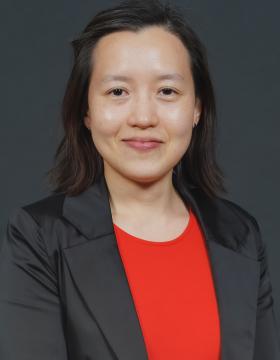
Seh Ling Kwong
Profile
Biography
Dr Kwong Seh Ling is an Assistant Professor in the Health and Social Sciences Cluster at the Singapore Institute of Technology (SIT) and a speech-language therapist specialising in dysphagia assessment and rehabilitation. She completed her PhD in Speech and Language Sciences at the University of Canterbury, New Zealand, where her doctoral research focused on high-resolution pharyngeal manometry and swallowing physiology. Her research contributed to advancing the understanding of upper oesophageal sphincter function and pressure generation during swallowing.
Alongside her academic appointment, Dr Kwong maintains an active clinical role at Tan Tock Seng Hospital, where she has practised since 2009. She established the High-Resolution Pharyngeal Manometry (HRPM) service at TTSH and continues to perform instrumental swallowing assessments including videofluoroscopic swallowing studies (VFSS), fibreoptic endoscopic evaluation of swallowing (FEES) and HRPM as part of clinical care and research.
Her research interests focus on advanced assessment of dysphagia, swallowing physiology, dysphagia rehabilitation, and the use of biofeedback technologies to improve rehabilitation outcomes. More recently, her work has expanded into food-based approaches for dysphagia management, including transitional foods and novel texture-modified food products. She also conducts research in health professions education, with a focus on the use of immersive technologies to support the teaching of anatomy and dysphagia assessment skills.
SIT Appointments
- Assistant Professor, Health and Social Sciences– Present
- Adjunct Lecturer–
Education
- Speech and Language Sciences PhDUniversity of Canterbury , New Zealand
- Bachelor of Speech Pathology (1st Class Honours)La Trobe University , Australia
Professional Certification
- Modified Barium Swallow Impairment Profile (MBSImP™) Trained
- McNeill Dysphagia Therapy Program (MDTP) Trained
Professional Memberships
- Registered Speech-Language Therapist, Allied Health Professions Council (AHPC), SingaporePresent
Research
Research Interests
- My research focuses on the assessment and rehabilitation of dysphagia, with particular interests in swallowing physiology and the use of advanced instrumental assessment techniques. My doctoral research examined swallowing function using High-Resolution Pharyngeal Manometry (HRPM), and I continue to investigate the application of HRPM, videofluoroscopic swallowing studies (VFS), and fibreoptic endoscopic evaluation of swallowing (FEES) to improve understanding of swallowing disorders. Current research interests also include dysphagia rehabilitation, biofeedback interventions, transitional foods, texture-modified foods for dysphagia management, and innovative approaches to healthcare education.
Current Projects
- Disappearing Delights: Innovative Foam Food for Dysphagia– PresentPrincipal Investigator. Development and evaluation of innovative foam-food products designed to improve the safety, nutrition and eating experience of individuals with dysphagia. The project combines food science, swallowing physiology and clinical evaluation to develop novel dysphagia-friendly foods
- Transitional Foods with Designed Texture for Dysphagia Management– PresentCo-Investigator. Investigation of texture design principles and food structures for the development of transitional foods that safely transform during oral processing for individuals with dysphagia.
Past Projects
- Virtual Immersive Learning for Developing Anatomical Knowledge and Dysphagia Assessment Skills in Speech and Language Therapy Students–Principal Investigator. Development of immersive learning resources, including 360-degree videos and interactive 3D anatomical models, to support the teaching of swallowing anatomy and clinical dysphagia assessment skills in speech-language therapy education.
- Multidisciplinary Characterisation of Pureed Foods for Dysphagia–Collaborator. Research examining the physical, sensory and swallowing-related properties of pureed foods to improve texture-modified diets for people with dysphagia.
- Development of Speech Therapy Technology for Aphasia Rehabilitation–Clinical collaborator. Development of a technology-assisted speech therapy application incorporating speech recognition and machine-learning approaches to support aphasia rehabilitation.
Publication
Journal Papers
Goh, S. M., Nishinari, K., & Kwong, S. L. (2026). Textural considerations in the design of transitional foods for dysphagia. Translational Food Sciences, 2, vxag003. https://doi.org/10.1093/trfood/vxag003
Kwong, S. L., Lee, J. M. W., Goh, S. M., Lim, V. P. C., Stoyanov, S. D., & Nishinari, K. (2026). Qualitative insights from practicing speech and language therapists on key textural attributes of transitional foods for dysphagia management. Journal of Texture Studies, 57(1), e70064. https://doi.org/10.1111/jtxs.70064
Goh, S. M., Lee, J. M. W., Tan, S. N., Stoyanov, S. D., Lim, V. P. C., Kwong, S. L., & Nishinari, K. (2025). Marshmallow as a model foamed gel for dysphagia-friendly transitional food. Applied Food Research, 101568. https://doi.org/10.1016/j.afres.2025.101568
Kwong, S. L., Lee, J. M. W., Lim, V. P. C., Chow, B. J. W., Stoyanov, S. D., & Goh, S. M. (2026). Transitional foods in dysphagia and feeding management: Perspectives of speech-language therapists in Singapore. Dysphagia. Advance online publication. https://doi.org/10.1007/s00455-026-10955-2
Kwong, S. L., Hernandez, E. G., Winiker, K., Gozdzikowska, K., Macrae, P., & Huckabee, M. L. (2022). Effect of topical nasal anesthetic on comfort and swallowing in high-resolution impedance manometry. Laryngoscope, 132(11), 2124-2131. https://doi.org/10.1002/lary.30010
Winiker, K., Gozdzikowska, K., Guiu Hernandez, E., Kwong, S. L., Macrae, P., & Huckabee, M. L. (2022). Potential for behavioural pressure modulation at the upper oesophageal sphincter in healthy swallowing. Dysphagia, 37(4), 1044-1053. https://doi.org/10.1007/s00455-021-10324-1
Winiker, K., Gozdzikowska, K., Guiu Hernandez, E., Kwong, S. L., Macrae, P., & Huckabee, M. L. (2021). Potential for volitional control of resting pressure at the upper oesophageal sphincter in healthy individuals. Dysphagia, 36(3), 374-383. https://doi.org/10.1007/s00455-020-10146-7
Conferences
Kwong, S. L. (2025). Exploring Speech and Language Therapists' Perspectives on Transitional Foods in Feeding. 2nd Asia Dysphagia Symposium, Bangkok, Thailand.
Kwong, S. L. (2025). Defining Transitional Food Characteristics for Dysphagia Management: Insights from Speech and Language Therapists in Singapore. 2nd Asia Dysphagia Symposium, Bangkok, Thailand.
Kwong, S. L., Cai, X., Kuang, J. Z., & Chia, C. T. W. (2024). Swallowing characteristics of individuals with significant dysphagia from subacute or chronic medullary infarcts on videofluoroscopic swallowing studies and high-resolution pharyngeal manometry: A case series. European Society for Swallowing Disorders (ESSD) 14th Annual Congress.
Cai, X., Kuang, J. Z., Chia, C. T. W., & Kwong, S. L. (2024). Pharyngeal mis-sequencing (PM) and associated UES dysfunction on High-Resolution Pharyngeal Manometry (HRPM) with impedance. Dysphagia Research Society 32nd Annual Meeting. Dysphagia, 39(Suppl 1), 190-279. https://doi.org/10.1007/s00455-024-10747-6
Kwong, S. L., Huckabee, M. L., & Macrae, P. (2017). Measures of upper esophageal sphincter function in videofluoroscopy and high-resolution manometry: Subject variance within and across sessions. Dysphagia, 32(6), 835-836. https://doi.org/10.1007/s00455-017-9805-3
Teaching
Teaching Modules
Speech and Language Therapy, BSc (Hons)
- SLT2105 - Dysphagia Management in Adults
- SLT4205 - Professional Issues and Management of Complex Cases in Speech Therapy
- SLT1204 - Anatomy and Physiology for Human Communication and Swallowing